

ASTM A123/A123M Zinc Coatings (Hot-Dip Galvanized) on Iron and Steel Products
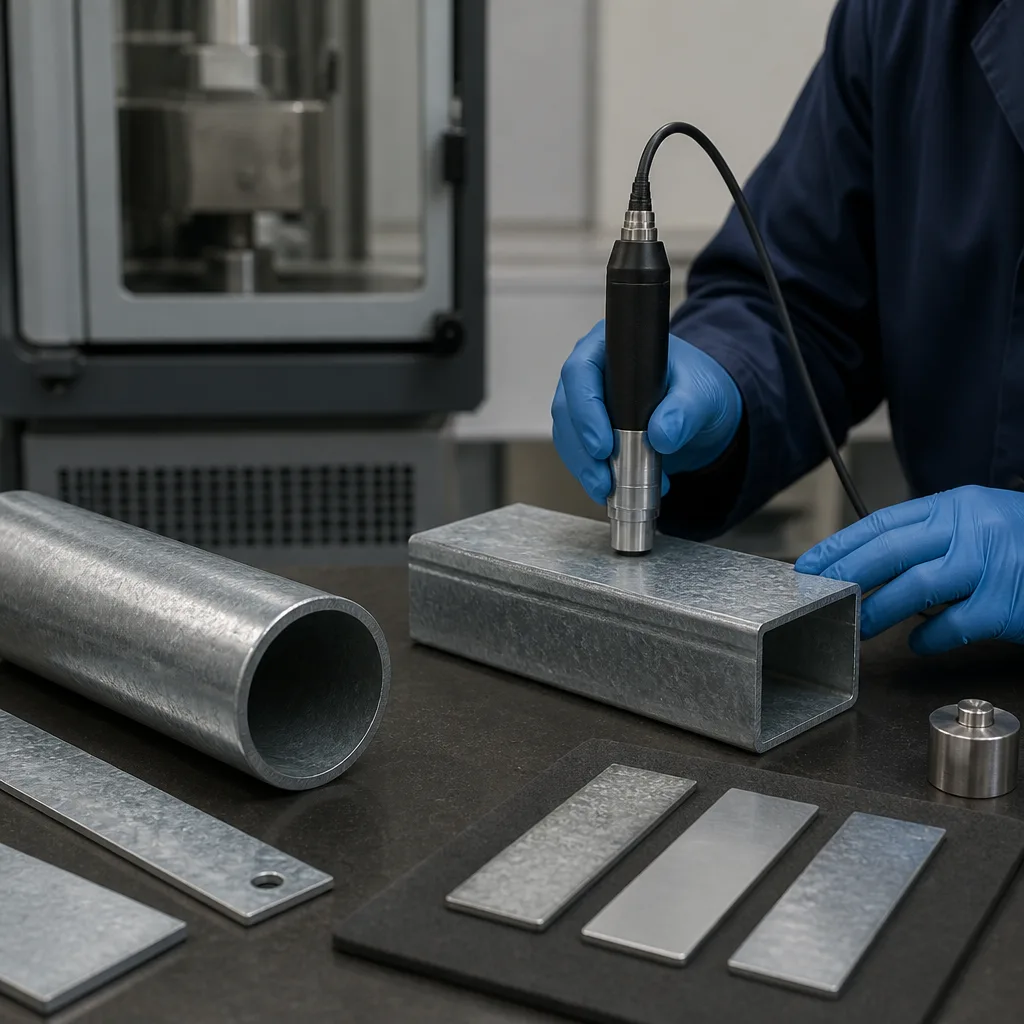
The ASTM A123/A123M standard specification for zinc coatings (hot-dip galvanizing) on iron and steel products, developed by the American Society for Testing and Materials (ASTM), describes the requirements for hot-dip zinc coating (galvanizing) on iron and steel products made from rolled, pressed, and forged forms, castings, sheets, bars, and strips.
This specification covers both raw and processed products. For example, assembled steel products, structural steel fabrications, large pipes bent or welded before galvanizing, and wirework manufactured from uncoated steel wire. This specification also covers steel forgings and iron castings incorporated into manufactured parts before galvanizing, or that are too large to be centrifuged (or otherwise processed to remove excess galvanizing bath metal).
This standard covers products previously addressed in ASTM A123 and ASTM A386 standards. However, it does not apply to wire, pipe, tube, or steel sheet galvanized on special or continuous lines, or to steel thinner than 0,76 mm.
Galvanizing of hardware parts (such as bolts and similar threaded fasteners, castings, and rolled, pressed, and forged parts) that will undergo centrifugal or other processing to remove excess zinc is carried out in accordance with ASTM A153/A153M standard.
This standard is the leading industry standard regulating requirements for hot-dip galvanizing (zinc) coatings on iron and steel products. Whether it's a large structural beam for a bridge or a small bracket for an industrial enclosure, this specification ensures the protective coating meets rigorous quality and performance criteria.
This standard covers both individual products and assemblies manufactured from rolled, pressed, and forged forms, castings, sheets, bars, and strips. It applies to materials that are galvanized after manufacturing. The ASTM A123 standard differs from similar standards in the following way:
The hot-dip galvanizing process described in this standard involves cleaning the steel and immersing it in a molten zinc bath maintained at approximately 450 degrees. This creates a metallurgical bond between the zinc and the steel, resulting in a series of zinc-iron alloy layers coated with a layer of pure zinc.
The ASTM A123 standard defines coating quality based on several critical factors:
Compliance is verified through specific test protocols:
Compliance with the ASTM A123 standard is vital for corrosion protection. Zinc coating provides two types of protection:
Common material categories include:
By adhering to the ASTM A123/A123M standard, engineers and manufacturers ensure that steel structures can withstand decades of harsh environmental exposure with minimal maintenance.
In short, the ASTM A123/A123M standard is one of the most widely used standards for hot-dip galvanizing of iron and steel products. It defines the technical requirements for applying a zinc coating that protects steel from corrosion in harsh environments.
This standard applies to:
This standard covers both individual components and fully assembled products prior to galvanizing.
This standard is designed for batch (general) galvanizing, not for continuous processes. It applies to:
However, this does not apply to the following:
This standard specifies the minimum zinc coating thickness (or weight) depending on the type and thickness of the steel. Thicker coatings generally provide longer-lasting corrosion protection. There is no maximum thickness limit, but the coatings must remain functional.
In conclusion, the ASTM A123/A123M standard is a fundamental specification for hot-dip galvanized steel, ensuring durability, safety, and long-term performance in corrosive environments. Its detailed requirements for coating thickness, adhesion, and surface treatment make it indispensable for engineers, fabricators, and galvanizers working with steel structures.
For many years, our organization, with its competent and experienced team, has been understanding the needs of its clients, providing the advanced testing services they require, and assisting them in the establishment, implementation, and improvement of management systems. Within this framework, we also provide testing services in accordance with the ASTM A123/A123M standard.
To get an appointment, to get more detailed information or to request an evaluation, you can ask us to fill in our form and reach you.

