

The ASTM D2583-13a standard, developed by the American Society for Testing and Materials (ASTM), introduces a test method for determining the indentation hardness of both reinforced and non-reinforced rigid plastics using a Barcol Impressor, Model No. 934-1 and Model No. 935.
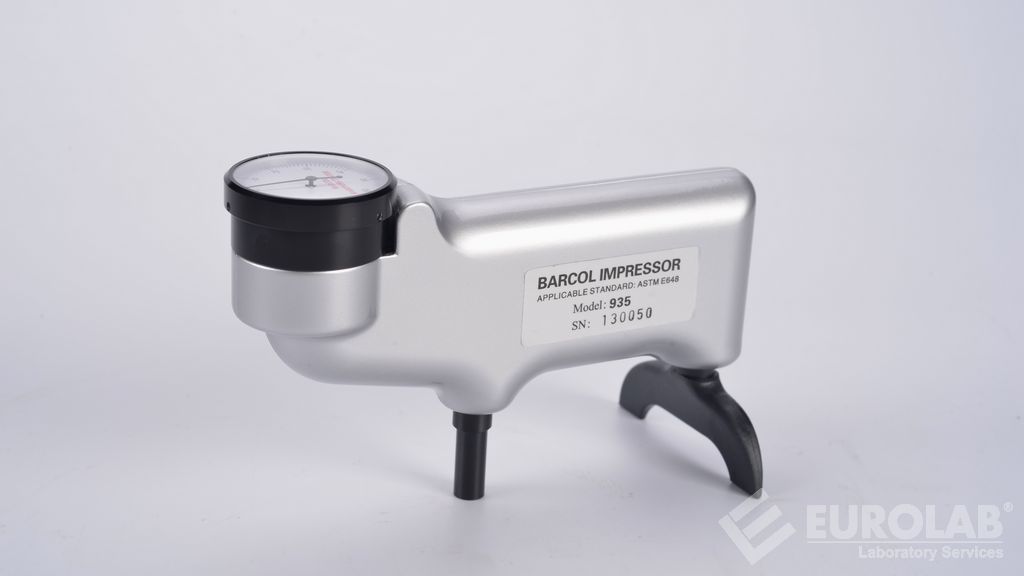
The Barcol Impressor is portable and therefore suitable for determining the hardness of manufactured parts and individual test specimens for production control purposes. It is used to determine the hardness of a variety of materials, including aluminum, aluminum alloys, copper, brass, plastics, and fiberglass. The device is designed for use on fabricated parts and assemblies, as well as raw stock. Easy to use and requiring no prior experience, the hardness reading is displayed instantly on the dial.
Before proceeding with this test method, it is necessary to refer to the properties of the material under test. ASTM D4000 The table in the 20 standard classification system standards for the identification of plastic materials lists the ASTM material standards currently available. Any test specimen preparation, conditioning, dimensions, or test parameters or combinations covered in the relevant ASTM material specification take precedence over those specified in the test method described in ASTM D2583-13a. If there is no relevant ASTM material specification, the default terms are considered valid.
Plastic hardness refers to the resistance of a plastic to penetration by a harder body. Harder material will abrade or scratch softer material. Plastic stiffness is an important engineering parameter for building appliances, consumer products or industrial parts. This feature becomes apparent when considering aesthetic effects such as scratching or loss of surface gloss caused by the friction of the two materials. The same is true for wear from moving parts. There are a number of experimental hardness scales developed to try to mimic the scratch, friction, and wear conditions between two materials. The Barcol Impressor is the most widely used device.
Among the numerous tests, measurements, analyses, and evaluations our organization provides for businesses in various sectors, we also offer testing services to determine the indentation hardness of rigid plastics using the Barcol Impressor device within the scope of the ASTM D2583-13a standard, thanks to our trained and expert staff and advanced technological equipment.
To get an appointment, to get more detailed information or to request an evaluation, you can ask us to fill in our form and reach you.

