

The “ASTM C182-19 Standard test method for thermal conductivity of insulating firebrick” standard developed by the American Society for Testing and Materials (ASTM) complements the “ASTM C201-93(2019)e1 Standard test method for thermal conductivity of refractories” standard and It is used in conjunction with that test method to determine thermal conductivity.
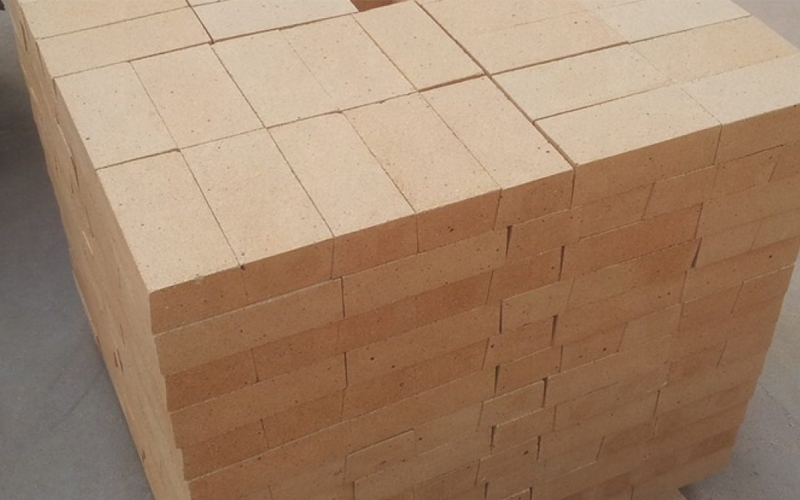
The thermal conductivity of the insulating firebrick is a necessary characteristic for the selection of this brick in terms of a certain thermal performance. Users choose insulation firebrick to ensure a certain heat loss and cold surface temperature without exceeding the temperature limitation of the brick. This testing method allows thermocouples to be inserted and test samples placed into the calorimeter. It is recommended that this test method be used in conjunction with the test method described in the ASTM C201-93 standard.
The device used in these tests consists of the equipment described in the ASTM C201-93 standard with the addition of thermocouples, drilling jig and refractory fiber paper.
On the other hand, the test sample should be selected and prepared as described in the ASTM C201-93 standard.
When performing the test, thermocouples are placed at three points on the test sample to measure the temperature. For temperatures below 760 degrees, Kromel-Alumel thermocouples are used, and for temperatures above this temperature, platinum or 10 percent rhodium/platinum thermocouples are used. Platinum thermocouples can also be used at lower temperatures, but the electromotive force is not as high as when base metal thermocouples are used. AWG 28 (0,320 mm) wire is used in the construction of both types of thermocouples.
When installing thermocouples, holes for the thermocouple wires are drilled along the 114 mm dimension of the test sample using a drilling jig to ensure correct placement of the thermocouples. Three thermocouples are placed so that the hot junction of the first pair is 5,1 mm below the hot face of the test specimen, the junction of the second is at the midpoint, and the junction of the third pair is 5,1 mm above the cold face.
Thermocouple cables coming out of the hot junctions are placed in planes parallel to the calorimeter surface. In order for the hot junctions to be on the center of the calorimeter, they are placed at right angles to the 228 x 114 mm area of the test sample and on an axis passing through the centre. Insulation firebrick, which cannot be prepared with this precision due to the structure of the product, is prepared in accordance with the chamotte dense refractory instructions.
While testing, the heating chamber is placed in place, water flow is started from the calorimeter device and the current is given to the heating unit. At a temperature above 800 degrees, the furnace atmosphere contains at least 0,5 percent oxygen and 0 percent combustible materials. Take the atmospheric sample conveniently from the furnace room, preferably as close as possible to the test sample. The water flow rate through the calorimeter is maintained between 120 and 200 g/min and is determined by weighing the amount of water collected over a measured period of time. The mass of the collected water should not be less than 200 grams and is weighed to the nearest 60,5 grams. The flow rate should be constant between 6 and 1 percent throughout the test period.
At the end of the test, the sample is removed and cut in half near the thermocouple connections. The sample is then ground to expose the hot junctions and the distance between the centerlines is measured to the nearest 0,3 mm. If the test sample shows abnormal internal voids or cracks when cut in half, this will be noted in the report as the results will not be representative of the material.
Recording of test data, calculations and reporting are done in accordance with ASTM C201-93 standard.
Among the numerous testing, measurement, analysis and evaluation studies it provides for businesses in various sectors, our organization also provides testing services defined in the "ASTM C182-19 Standard test method for thermal conductivity of insulating firebrick" standard, with a trained and expert staff and advanced technological equipment.
To get an appointment, to get more detailed information or to request an evaluation, you can ask us to fill in our form and reach you.

