PSA D51 1485 Adhesives - Right Angle Peel
The purpose of the “PSA D51 1485 Adhesives - Right-angle peel” standard, developed by the French automobile company Renault, is to evaluate cohesive failure by peeling and characterize between a rigid substrate and a flexible cover.
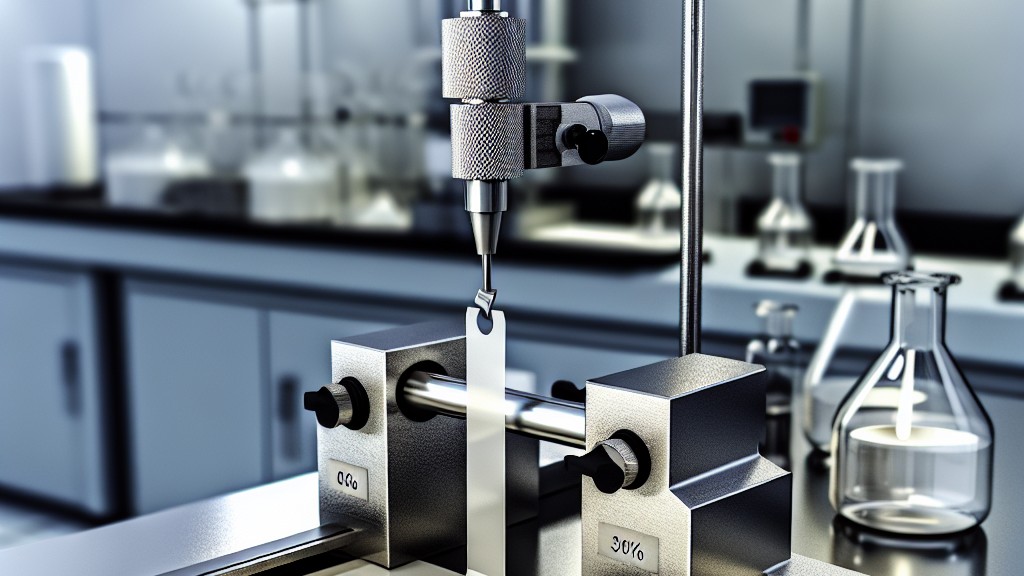
Three processes can be used in this testing method:
- Process A: For hot or ambient curable adhesives applied to any rigid substrate.
- Process B: For adhesives in solution (aqueous or organic) or in emulsion.
- Process C: For adhesives that are pre-deposited onto the substrate or cover during manufacture (e.g. an adhesive sheet protected by a non-stick layer).
For methods B and C, the flexible cover can be a textile, a rubber or plastic coated textile, a rubber sheet, a plastic sheet, double-sided adhesive tape, etc. The flat rigid substrate can be any type of material such as degreased or painted steel sheet and plastic, etc.
These test methods consist principally of measuring the force required to cause separation by peeling at a 90 degree angle:
- Adhesive tape applied to a rigid substrate (process A).
- Flexible sheathing of rigid substrate (processes B and C).
The equipment used in these tests includes:
- Tensile testing machine. It is an inertial type tensile testing machine with a sensitivity range of 1 Newton to 1000 Newton. The lower movable jaw shall comply with the fixture fixing for right angle peel test and the upper jaw shall ensure that the adhesive tape is clamped from the end. Unless otherwise specified, the moving jaw movement speed is set at 100 mm/min plus/min 10 mm/min. The machine shall be equipped with a recording device that gives the development of the load in terms of the movement of the movable jaw.
- Fixture. Suitable for right angle peel test in accordance with this standard and allows displacement of the test specimen and movement of the movable jaw by servo control to keep the peel angle close to 90 degrees. The right angle peel device described in this method does not provide a constant angle in cases where the flexible cover is subject to significant elongation under the load required for separation (in the case of knitted textiles, coated knitted textiles, highly flexible sheets, adhesive tapes). In this case, it is recommended to reinforce the flexible cover with adhesive tape.
- Conditioned room. Has a temperature of 23 degrees plus/minus 2 degrees and a relative humidity of 50 percent plus/minus 5 percent.
- Substrate. Its dimensions are 200 mm x 100 mm and its minimum thickness is 0,9 mm.
- Flexible cover. Dimensions 250 mm x 50 mm, width may be less than 10 mm provided that it remains at least equal to 50 mm.
- Template (2 millimeters thick). Or any other size defined in the standard documents for the deposition of the adhesive layer.
- Template (4 millimeters thick). See the standard insert for possible calibration of the second deposited adhesive layer.
- Metal reinforcement. Dimensions 200 mm x 25 mm x 0,2 mm and equal to 0,5 mm and porous.
- Reinforced or non-reinforced adhesive tape.
- Cutting tool
- Filmograph. For liquid adhesives of the type specified in the standard, with an aperture of 250 µm and an application width greater than 55 mm.
- Pressure application device. To apply a pressure of 0,02 MPa or any other pressure specified in the standards to the test specimen.
- Spacer plates. Dimensions 190 mm x 50 mm or any other size required by the fixture, cut from a semi-flexible cellular material such as spongy rubber, expanded vinyl polychloride or polyurethane foam, of equal thickness between 3 mm and 6 mm, reinforced with a rigid plate with a buoyancy force close to 50 N/dm200 of P2.
- Stopwatch.
- Solvent. Heptane or any other solvent compliant with applicable legislation.
Test samples should be representative of the size to be characterized. To ensure this representation, it is necessary to find the basic characteristics of the population under study. Selection criteria for test samples should be stated in the test report in accordance with the PSA A10 0156 standard. In case of doubt about sampling, PSA should be contacted for the rules to be followed.
Our organization has a strong staff that closely follows the developments in the world in the field of science and technology and constantly improves itself. Among the numerous test, measurement, analysis and evaluation studies provided for businesses in various sectors, there are also test services in accordance with the "PSA D51 1485 Adhesives - Right-angle peel" standard.



