Bosch Norm N67F Internal Standard Series for Surface Treatment and Corrosion Protection Coatings
The Bosch Norm N67F standard series is a set of internal engineering and surface treatment standards developed by Robert Bosch GmbH for metal components used in automotive, industrial, and electronics manufacturing. These standards define how metal parts should be machined, coated, and protected against corrosion, wear, and environmental effects.
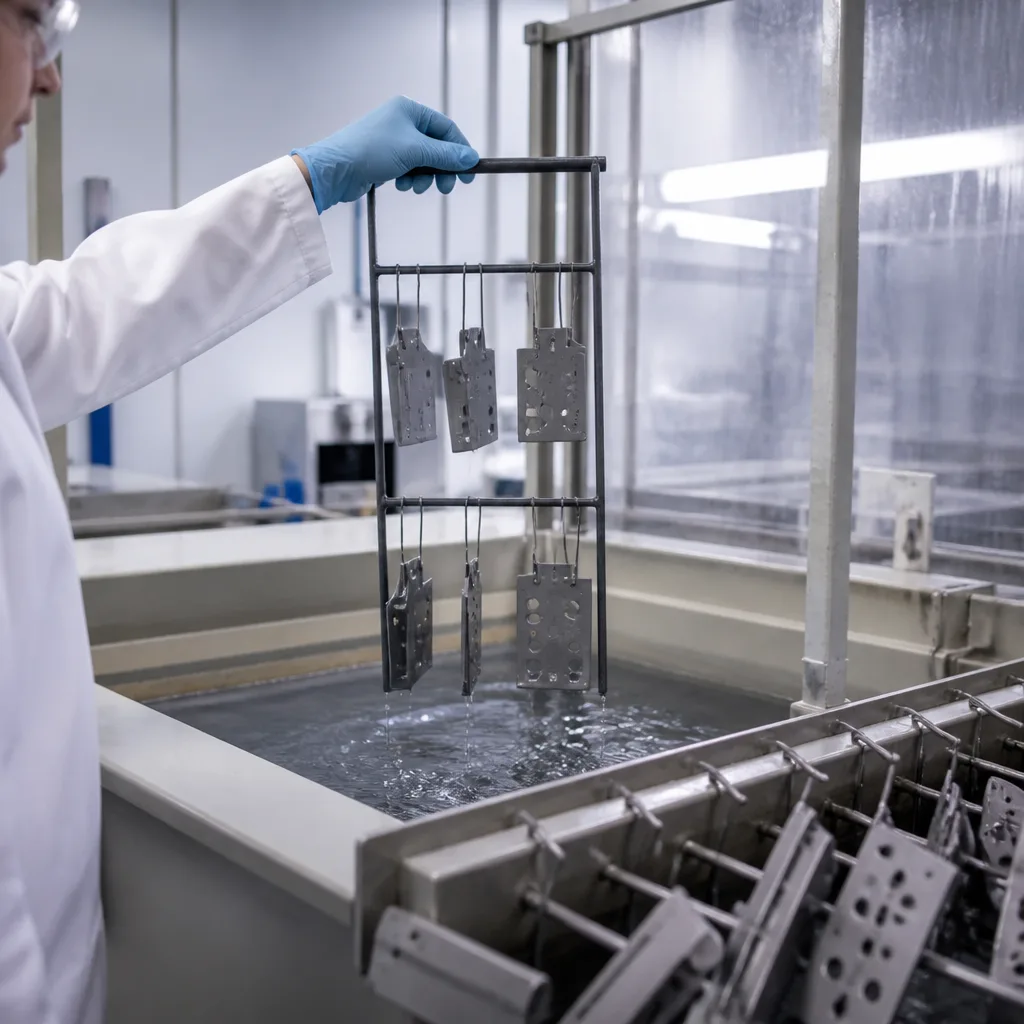
These standards are frequently referenced in supplier drawings and procurement specifications. They are particularly important in industries where long-term durability and consistent coating quality are critical.
The Bosch Norm N67F family primarily deals with the following:
- Surface treatment
- Zinc and phosphate coatings
- Corrosion protection
- Passivation processes
- Oil sealing and pretreatment.
- Coating thickness requirements
- Salt spray resistance test
A version of this standard, N67F 314 04, defines the lubricated zinc-phosphate immersion process for steel, aluminum, and zinc parts. The specification focuses on improving paint adhesion and corrosion resistance. This standard requires:
- Fine crystalline zinc phosphate coatings
- 2–5 g/m2 coating weight
- Salt spray resistance according to Bosch corrosion test procedures.
Bosch N67F standards are typically used for:
- Automotive fasteners
- Brackets and housings
- Engine and transmission components
- Electronic enclosures
- Chassis hardware
- Stamped or machined parts produced by the supplier.
This equipment helps prevent the following:
- Red rust formation
- Galvanic corrosion
- Paint peeling
- Early oxidation
A key feature of Bosch N67F standards is corrosion verification. Tests typically include:
- Salt spray/mist exposure
- moisture resistance
- Coating adhesion checks
- Thickness measurements
- Visual pass rating
The main variants encountered in supplier documentation and industrial coating references are as follows:
- The “N67F 821-01 Transparent Passivation Zinc Coating” standard is a Bosch surface treatment specification for transparent passivation electroplating zinc coatings, primarily applied to ferrous components for corrosion protection in automotive and industrial applications.
The main characteristics have been identified as follows:
- Coating type: Electroplating zinc
- Minimum coating thickness: At least 5 µm
- Passivation: Transparent / clear
- Chromium(VI): Does not contain hexavalent chromium.
- Main material: Steel and iron alloys.
- Main purpose: Corrosion protection.
According to current industrial references, this standard is equivalent to “ISO 2081 Metallic and other inorganic coatings - Electroplating of zinc coatings by additional treatment on iron or steel”.
The N67F 821-01 standard generally includes the following:
- Surface pretreatment and cleaning
- Zinc electroplating
- Transparent passivation
- Optional sealing/top coating
The coating produces the following:
- Silver / clear metallic appearance
- Thin protective zinc layer
- Improved resistance against white rust and red rust.
Bosch standards use the following salt spray tests for corrosion resistance:
- DIN EN ISO 9227 standard
- Bosch internal corrosion rating procedures
The N67F 821-01 standard is commonly used in the following areas:
- Connectors
- Brackets
- Clips
- Sheet metal parts
- Automotive equipment
- Electrical assembly components
The “N67F 822-01 Blue Passivation Zinc Coating” standard is a Bosch specification for thick-film blue passivation electrolytic zinc-coated steel parts designed to provide enhanced corrosion resistance for automotive and industrial components. Compared to the N67F 821-01 series coatings, the N67F 822-01 series generally offers:
- Better salt spray resistance.
- Thicker passivation layers
- Improved resistance in humid or aggressive environments.
The main characteristics have been identified as follows:
- Plating process: Electrolytic zinc plating
- Main material: Steel / iron alloys
- Zinc thickness: Typically at least 5 µm
- Passivation: Thick film blue passivation
- Chromium(VI): Does not contain hexavalent chromium.
- Appearance: Light blue or iridescent silver
The N67F 822-01 standard generally includes the following:
- Cleaning and degreasing
- Acid activation
- Electrolytic zinc deposition
- Thick film trivalent passivation
- Optional sealing/top coating
Thick film passivation creates a more protective conversion layer compared to the clear passivation used in the N67F 821-01 standard. This standard is designed for parts exposed to moisture, road salt, condensation, and light industrial environments.
The N67F 822-01 standard is commonly used in the following areas:
- Automotive fasteners
- Engine compartment brackets
- Sheet metal press molds
- Clips and holders
- Chassis hardware
- Electrical assembly parts
The “N67F 822-05 Thicker zinc layer (at least 8 µm)” standard is a Bosch specification for electrolytic zinc-coated steel parts with thick film trivalent passivation and increased zinc thickness, designed for applications requiring higher corrosion resistance than standard zinc coatings.
The main characteristics have been identified as follows:
- Coating type: Electrolytic zinc plating
- Main material: Steel/iron-based materials.
- Zinc thickness at least 8 µm
- Passivation: Thick film blue / trivalent
- Chromium(VI): Does not contain hexavalent chromium.
- Appearance: Light blue/pearlescent silver
A thicker zinc coating, conforming to the N67F 822-05 standard, improves the following:
- salt spray resistance
- Long-term atmospheric corrosion protection
- Resistance to humid and salty environments.
The N67F 822-05 standard generally includes the following:
- Alkaline or acidic cleaning
- Surface activation
- Electrolytic zinc plating
- Thick film trivalent passivation
- Optional organic sealant/top coat.
Thick film passivation creates a dense conversion layer that slows zinc oxidation and delays red rust formation.
Corrosion performance is generally as follows:
- White corrosion resistance: Extended neutral salt spray exposure time.
- Red rust resistance has been significantly improved compared to Zn5 coatings.
- Environmental compliance: RoHS/ELV compliant
The “N67F 314-04 Zinc-phosphate immersion coating (with lubrication)” standard is a Bosch surface treatment specification for oil-protected zinc-phosphate conversion coatings, primarily applied to steel components to improve corrosion resistance, lubrication behavior, and paint adhesion. Unlike the N67F 821/822 series, which are based on electrolytic zinc plating, this series utilizes a chemical phosphate conversion process.
The main characteristics have been identified as follows:
- Coating type: Zinc-phosphate conversion coating
- Processing method: Immersion / phosphating process
- Additional treatment: Oil absorption or protection.
- Basic materials: Steel, galvanized steel, some aluminum/zinc alloys.
- Appearance: Grey to dark grey matte finish
- Main purpose: Corrosion protection + lubrication
The N67F 314-04 standard is designed for the following purposes:
- To increase temporary corrosion resistance.
- To reduce friction during assembly.
- Improving paint adhesion
- To provide a good substrate for subsequent coatings.
- Protecting components during storage and transport
The oil-based phosphate coating also helps with the following:
- To prevent instantaneous rusting.
- Improving shaping and sliding behavior.
- To reduce wear between contacting surfaces.
The N67F 314-04 standard generally includes the following:
- Degreasing and cleaning
- Surface activation
- Zinc-phosphate dipping process
- Rinse
- Lubrication or protective application
- Drying
The phosphate layer forms chemically on the metal surface rather than being deposited electrolytically.
This standard includes corrosion testing requirements using the following methods:
- Salt spray test
- Bosch internal evaluation procedures
- Passive rating methods
The oil-protected phosphate layer provides the following:
- Moderate short-term corrosion protection.
- Better performance than raw steel.
- Lower corrosion resistance than zinc plating or zinc-nickel systems.
Phosphate coatings are generally used for the following purposes rather than long-term decorative corrosion protection:
- Functional coatings
- Base layers for painting
- Coatings that facilitate assembly
The N67F 314-04 standard is commonly used in the following areas:
- Connectors
- Bows
- Clips
- Stamped steel parts
- Engine and transmission equipment
- Components requiring controlled friction
- Parts that will be painted later or assembled with lubrication-sensitive connections.
For many years, our organization, with its competent and experienced team, has been understanding the needs of its customers, providing the advanced testing services they require, and assisting them in the establishment, implementation, and improvement of management systems. Within this framework, we also provide testing services in accordance with the Bosch Norm N67F standard.



