

In the standard “TS 1265 Timber - Coniferous timber - For use in structures” published by the Turkish Standards Institute (TSE), the construction timbers obtained from coniferous (soft) trees defined in this standard and whose safety stresses are given in the standard “TS 647 Calculation and construction rules for wooden structures” are described, classified and their properties as well as the methods of supply to the market and inspection principles are explained.
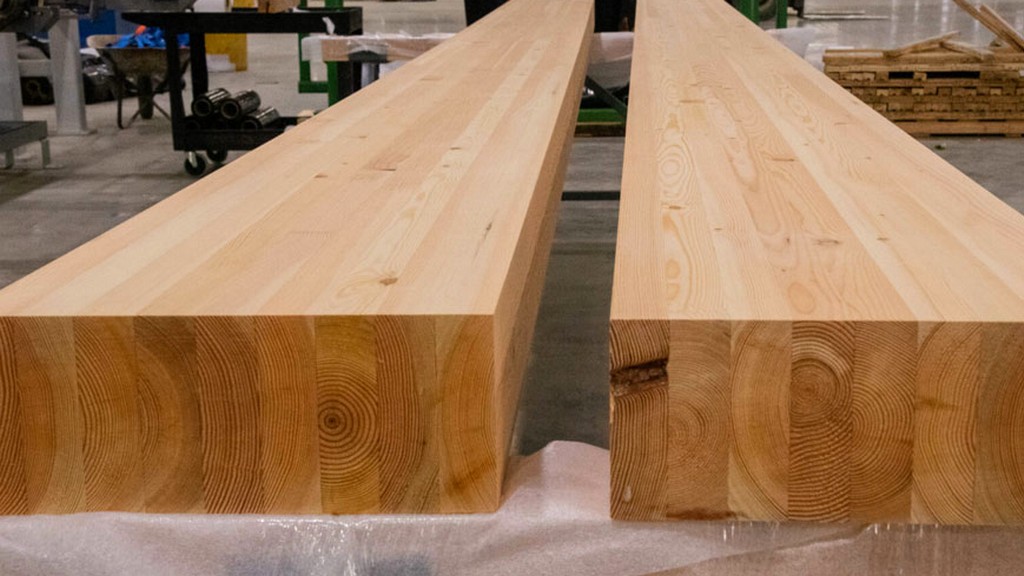
Non-load-bearing coniferous (softwood) timber used for joinery and veneer timber, as well as for the manufacture of windowsills, railings, verandas, cabinets and similar products, and for decorative purposes are outside the scope of this standard.
For the purposes of this standard, in addition to the terms and definitions given in TS 51, TS 343, TS 344, TS 647, TS EN 844-4, TS EN 844-7, TS EN 844-8, TS EN 844-9, TS EN 844-12 and TS EN 1001 standards, the following definitions are valid:
In this standard, the classification is made as follows:
In general, the general characteristics of coniferous (obtained from softwood) construction timbers are included in the "TS 51 Timber - Spruce and fir timbers - For general purposes" standard. Coniferous (obtained from softwood) construction timbers must be within the irrigation tolerances, with square or rectangular cross-sections, opposite faces parallel to each other and sawn without bark, and irrigations must be cleaned.
In pines, the sapwood is yellowish or reddish white, while the heartwood is reddish brown. The resin canals are abundant and can be seen with the naked eye. Pine wood is a medium soft, medium weight, medium elastic modulus and bending strength material that is easy to process, glues well and holds nails well. It has a wide range of uses.
In cedar timber, sapwood is wide, slightly reddish to yellowish in color, heartwood is light yellowish to reddish brown. Traumatic resin channels are common. Longitudinal sections are quite bright. Wood is medium hard and medium weight, with a pleasant aromatic odor. It is easily processed and split. Its fibers are smooth. It is difficult to color and polish. It is well glued, its resistance properties are moderate. Since it is resistant to fungi and insect damage, it is used in sleepers, wire poles, fence posts, interior and exterior door and window joinery in buildings, and exterior cladding.
In spruce timber, sapwood and heartwood are not different in color. Its wood is yellowish white, longitudinal sections are shiny. It has a fairly thin and uniform texture, and its fibers are straight. Its wood is soft and medium-weighted, and splits easily. Its resistance values and elasticity modulus are low. It has resin channels. It is low-durability and impregnated with difficulty. It is used as a building material and stairs in buildings, in shipbuilding, in mechanical and chemical wood pulp, packaging sawdust, in the production of particle board and fiber board, and in musical instruments.
Firs do not have dark heartwood and resin canals. The color of their wood is yellowish white and gray white. Their dull, light, soft wood splits easily. Their fibers are smooth and uniform in texture. Their resistance values are low. They are easy to process and glue, but they are not good at painting and nail holding. They are not resistant to humid conditions. They are generally used in the interior of building constructions and furniture parts. They are less resistant to fungal and insect damage.
Timber dimensions are measured according to the standard “TS 1309-1 Round and sawn wood (timber) - Method for measuring dimensions - Part 1: Sawn wood (timber)”.
The average moisture content in softwood timber with a cross-sectional area of 200 cm2 or less must not exceed 30 percent, and in softwood timber with a cross-sectional area of 200 cm2 or more, it must not exceed 35 percent.
Among the numerous testing, measurement, analysis and evaluation studies that our organization has carried out for businesses in various sectors, it also provides testing services defined in the “TS 1265 Timber - Coniferous tree timber - For use in structures” standard with its trained and expert staff and advanced technological equipment.
To get an appointment, to get more detailed information or to request an evaluation, you can ask us to fill in our form and reach you.

