

The standard “ISO 3386 Flexible cellular polymeric materials - Determination of stress-strain properties in compression” developed by the International Standards Organization (ISO) consists of the following sections under the same title:
ISO 3386-1 Part 1: Low Density Materials
This standard describes a test method for determining the compressive stress/strain characteristics of flexible cellular materials with low densities up to 250 kg/mXNUMX. This standard also includes a method for calculating the compressive stress value of such materials.
The compressive stress/strain characteristic is a measure of the load-carrying properties of the material, but not a measure of its capacity to sustain a long-term load.
The compressive stress/strain characteristic differs from the indentation hardness characteristic, which is known to be influenced by the thickness and tensile properties of the flexible cellular material under test, the shape of the pressure plate and the shape and size of the test piece (indentation hardness is determined in accordance with the standard “ISO 2439 Flexible cellular polymeric materials - Determination of hardness (indentation technique)”).
The ISO 3386-2 standard defines a method for high density materials and differs from the ISO 3386-1 standard in the following way:
For the purposes of the ISO 3386-1 standard, the following definitions apply:
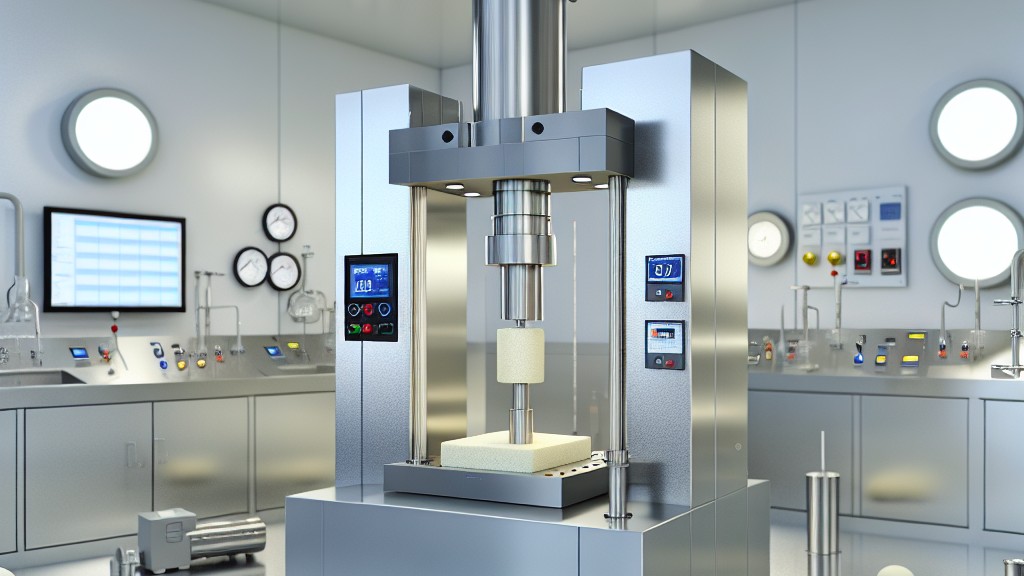
The testing machine used in these tests shall be capable of compressing the test piece between a support surface and a pressure plate having a uniform relative movement rate in the vertical direction of 100 plus/minus 20 mm/min. The testing machine shall be capable of measuring the force required to produce the specified compression to an accuracy of plus/minus 2 percent and shall be capable of measuring the test piece thickness under load to an accuracy of plus/minus 0,2 mm. Autographite recording of stress-strain values is preferred.
Unless otherwise specified, the test piece shall be supported on a smooth, flat, horizontal, hard surface which shall be ventilated by holes approximately 6 mm in diameter and approximately 20 mm apart, larger than the test piece, allowing air to escape from under the test piece.
The pressure plate shall be of any suitable size and shape, provided it overlaps the test piece in all directions. The substrate shall be flat and smooth, but not polished, and shall be kept parallel to the supporting surface.
ISO 3386-2 Part 2: High Density Materials
This standard describes a test method for determining the compressive stress-strain properties of flexible cellular polymeric materials with a density greater than 250 kg/m3. The compressive stress-strain property is a measure of the load-carrying properties of the material, but is not a measure of its ability to sustain a long-term load.
The compressive stress/strain characteristic differs from the indentation hardness characteristic, which is known to be influenced by the thickness and tensile properties of the flexible cellular material under test, the shape of the pressure plate and the shape and size of the test piece (indentation hardness is determined in accordance with the standard “ISO 2439 Flexible cellular polymeric materials - Determination of hardness (indentation technique)”).
The ISO 3386-1 standard defines a method for low density materials and differs from the ISO 3386-2 standard in the following way:
For the purposes of the ISO 3386-2 standard, the following definitions apply:
The apparatus used in these tests consists of a testing machine capable of compressing the test piece by means of a compression plate moving at a uniform speed of 5 plus/minus 1 mm/min. Autographic recording of stress-strain values is preferred.
The pressure plate shall be held parallel to the base plate. The testing machine shall have means of measuring the test piece thickness under load with an accuracy of plus/minus 0,1 mm. It shall be capable of maintaining the specified pressure rating for the time specified by the procedure appropriate to the material being tested.
The testing machine must be capable of measuring the force that will produce the specified compression with an accuracy of plus/minus 2 percent.
The test piece shall be supported on a smooth, flat, hard surface larger than the test piece. The pressure plate may be of any suitable size or shape, provided it overlaps the test piece in all directions. The surface of the pressure plate shall be smooth but not polished.
Among the numerous testing, measurement, analysis and evaluation studies that our organization has carried out for businesses in various sectors, our organization also provides testing services defined in the standard “ISO 3386 Flexible cellular polymeric materials - Determination of stress/strain properties under pressure” with its trained and expert staff and advanced technological equipment.
To get an appointment, to get more detailed information or to request an evaluation, you can ask us to fill in our form and reach you.

