

The standard “ISO 14243-2 Implants for surgery - Wear of total knee joint prostheses - Part 2: Measurement methods” developed by the International Organization for Standardization (ISO) describes measurement methods for assessing the wear of the tibial component of total knee joint prostheses using the gravimetric technique for components tested according to ISO 14243-1 or ISO 14243-3 standards, as appropriate.
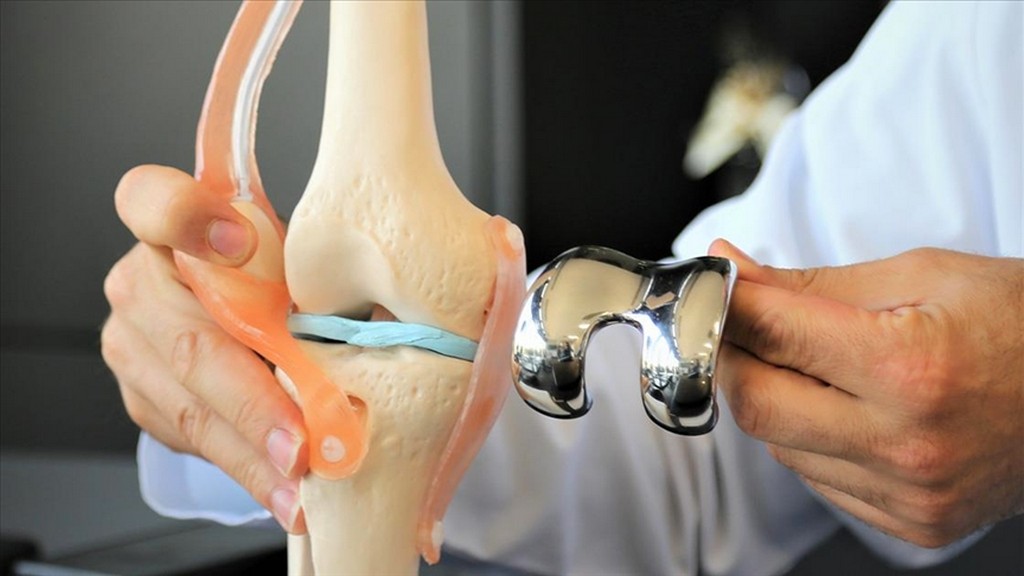
For the purposes of this standard, wear refers to the loss of material from the components of a prosthetic joint due to combined movement and loading.
In principle, when applying this measurement method, the test specimen is immersed in a lubricant. It is repeatedly removed from the lubricant, cleaned, dried and weighed until a constant rate of liquid absorption is achieved. The test specimen is then evaluated for wear by testing for mass loss in a knee-hip simulator. A non-jointed control specimen, loaded or unloaded, immersed in the same lubricant liquid medium is designed to provide liquid absorption and undergoes the same procedure for reference purposes.
Reagents and materials used in these tests include:
The equipment used in these tests includes:
Test and control samples must have the following properties:
For gravimetric measurements, test and control samples must be prepared in advance by wetting conditioning. For this, the test sample and the control sample are kept in the liquid test medium for 48 hours plus/minus 4 hours. Then, the test sample and the control sample are removed from the liquid test medium and cleaned in an ultrasonic cleaner.
A typical cleaning process in an ultrasonic cleaner is as follows: vibrate in deionized water for 10 minutes, rinse in deionized water, vibrate in a mixture of ultrasonic cleaning detergent at a concentration recommended by the detergent manufacturer for 10 minutes, rinse in deionized water, vibrate in deionized water for 10 minutes, rinse in deionized water, vibrate in deionized water for 3 minutes, rinse in deionized water, and dry in a vacuum drying chamber. Attention is paid to preventing abrasion that may cause a change in mass in the ultrasonic cleaner.
The test sample and the control sample are then dried with a filtered inert gas jet, then immersed in isopropyl alcohol for 5 minutes plus/minus 15 seconds. The test sample and the control sample are then dried with a filtered inert gas jet, then dried at a vacuum better than 30 Pa plus/minus 13,3 Pa for at least 0,13 minutes. The test sample and the control sample are weighed alternately on the balance twice within 90 minutes of removal from the vacuum. If the two readings per sample do not agree within 0,1 mg, continue taking readings alternately until at least two readings per sample agree within 0,1 mg. Between weighings, the test sample and the control sample are stored in a closed, dust-free container. The preceding steps are repeated at intervals until the incremental mass change of the sample within 24 hours is less than 10 percent of the previous cumulative mass change.
Among the numerous tests, measurements, analyses and evaluations that our organization has carried out for businesses in various sectors, it also provides testing services defined in the standard “ISO 14243-2 Implants for surgery - Wear of total knee joint prostheses - Part 2: Measurement methods” with its trained and expert staff and advanced technological equipment.
To get an appointment, to get more detailed information or to request an evaluation, you can ask us to fill in our form and reach you.

