

The European standard “EN 10289 Steel pipes and fittings for onshore and offshore pipelines - External liquid-applied epoxy and epoxy-modified coatings” describes the requirements for liquid-applied external coatings (epoxy and epoxy-modified) for corrosion protection of pipes and pipe fittings.
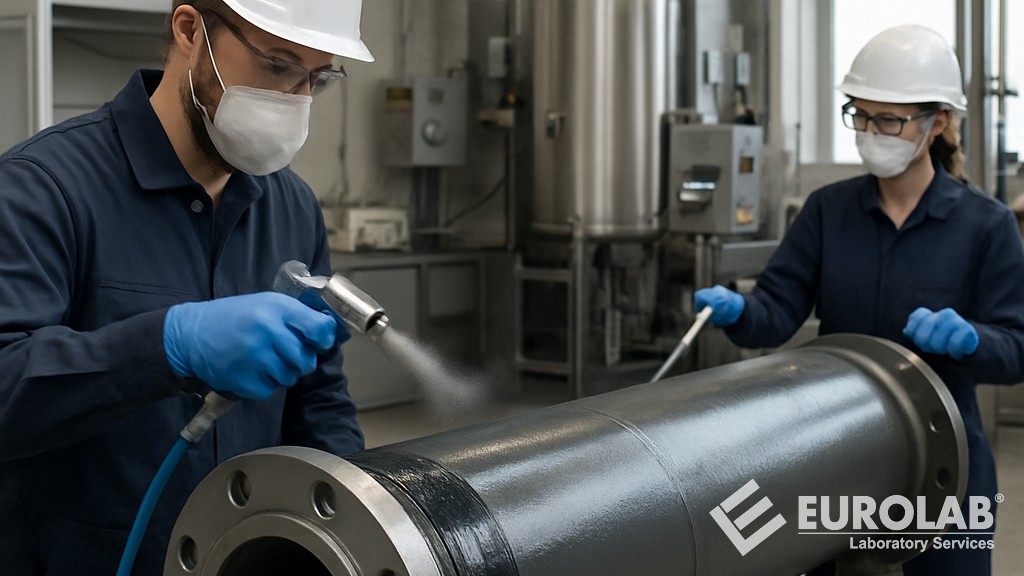
This standard coating can be applied to longitudinally or spirally welded and seamless steel pipes and fittings used in the construction of pipelines carrying liquids or gases. If cold bending of the component is required, the coating should be applied after bending unless otherwise approved by the buyer.
The coating should generally consist of a single coat of liquid product applied by brush or airless spray technique. Depending on the product type, other application methods may be recommended by the product manufacturer.
This coating can be used, according to the specified combination, for the protection of buried or submerged steel pipes serving at the following temperatures and in three thickness classes: A (400 µm), B (800 µm), and C (1500 µm):
Other temperatures may be agreed upon, in which case the tests should be carried out at the required temperature. This standard uses the term "components" for pipes and fittings. The frequency of tests on fittings should be agreed upon by the parties at the ordering stage. Components coated with such coatings can be further protected with cathodic protection.
A two-component coating typically consists of a base (epoxy resin) and a curing agent. The base (epoxy resin) and curing agent should have different colors to allow verification of the correct mixture and checking the homogeneity of the color of the mixed product. The coating is considered cured when it reaches the hardness recommended by the product manufacturer.
In the world of industrial infrastructure, pipelines are the unsung heroes that transport vital resources like oil, gas, and water over vast distances, both on land and at sea. However, these steel pipes face relentless threats from corrosion caused by challenging environmental conditions such as soil acidity, seawater salinity, and temperature fluctuations.
The EN 10289 standard ensures that steel pipes and fittings withstand decades of service life, minimizing leaks, environmental hazards, and costly repairs.
Corrosion is not just a surface problem, but also a problem that can compromise pipeline integrity and lead to catastrophic failures. Despite being durable and cost-effective, steel oxidizes when exposed to moisture and oxygen, and this oxidation accelerates in aggressive environments such as coastal waters or acidic soils.
Epoxy coatings provide a strong barrier that chemically bonds to the steel surface, preventing moisture ingress and electrochemical reactions. The EN 10289 standard focuses on the following:
These coatings can be applied in the factory or in the field and are often used in conjunction with cathodic protection systems for hybrid defense. The standard's emphasis on liquid application ensures uniform coatings on complex geometries such as pipe elbows and fittings where powder coatings may be insufficient.
The EN 10289 standard covers everything from raw materials to post-coating inspections. The key elements of this standard are as follows:
Specific temperatures beyond this range require additional testing.
Thicker coatings (Class C) are essential for Type 3 applications and ensure a longer service life under harsh conditions.
The testing frequencies of the fittings are determined at the ordering stage, taking into account their varying shapes.
The fit ensures the coating maintains its integrity for 20-30 years, consistent with the pipeline design lifespan.
For many years, our organization, with its competent and experienced staff, has been understanding the needs of its customers, providing the advanced testing services they require, and assisting in the establishment, implementation, and improvement of management systems. Within this framework, we also provide testing services to businesses in accordance with the "EN 10289 Steel pipes and fittings for onshore and offshore pipelines - Epoxy and epoxy modified coatings with external liquid application" standard.
To get an appointment, to get more detailed information or to request an evaluation, you can ask us to fill in our form and reach you.

