

The ISO 3471 standard, “Tillage machinery - Tipping protection structures - Laboratory tests and performance requirements,” developed by the International Organization for Standardization (ISO), describes the performance requirements for metallic tilt protection structures for tillage machinery and defines a method for evaluating compliance with these requirements in a consistent and repeatable manner through laboratory tests using static loading on a representative specimen. The structure can also provide falling object protection.
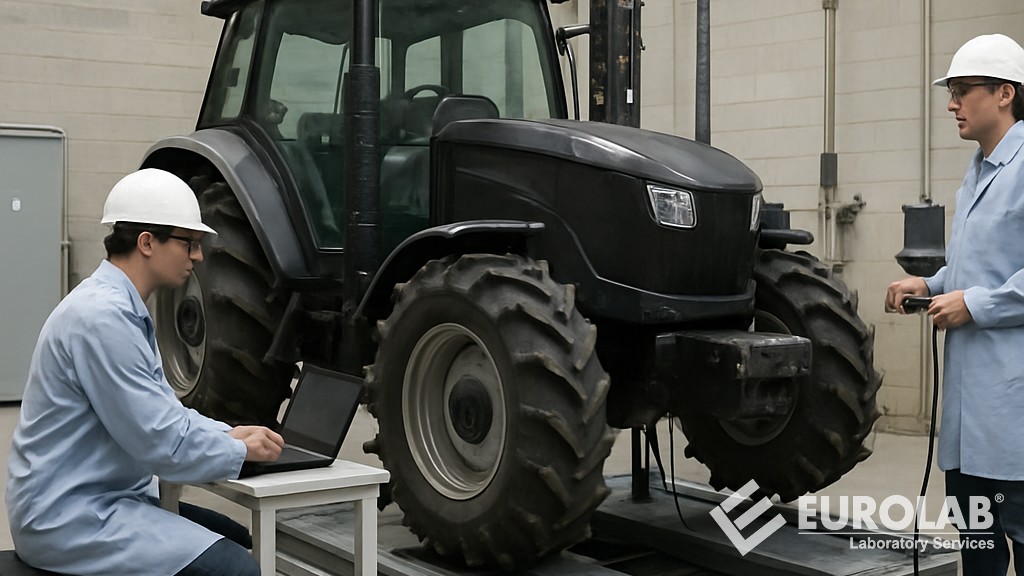
This standard applies to metallic rollover protection structures designed for the following mobile machines with a seated operator and a mass of 700 kg or more, as defined in ISO 6165:
However, this standard does not apply to training seats or additional seats for operating an attachment. This standard also does not cover forestry machinery (those covered by ISO 8084 or related standards) or very small equipment below the mass threshold.
A reasonable crush protection for an operator wearing a seatbelt is expected to be provided, at least on a hard clay surface, at a maximum incline of 30 degrees in the direction of rolling and during 360-degree rolls around the machine's longitudinal axis, without loss of contact with the incline, under initial forward speed conditions of between 0 km/h and 16 km/h.
ISO 3471 is an international standard focusing on safety in heavy machinery. Specifically, it addresses rollover protection structures (ROPS). These are reinforced frames or cabins designed to protect operators in the event of a tillage machine tipping over during operation. These structures are critical in industries such as construction, mining, and land development, where rollovers can occur on uneven terrain or slopes.
This standard defines performance criteria and standardized test methods to ensure that rollover protection structures can withstand rollover forces without collapsing into the operator's area. It helps manufacturers design, test, and certify life-saving protective structures by providing a survivable volume around the operator.
This standard incorporates static laboratory tests instead of dynamic (actual overturning) tests because static loading provides consistent, repeatable, and reproducible results. The tests simulate overturning forces by applying loads in controlled directions to a representative example of an overturning protection structure. The key performance aspects of this method are:
The required force and energy levels are proportional to the machine's reference mass (essentially the working mass without attachments, but including the operator and fluids).
Tipping protection structures conforming to the ISO 3471 standard are mandatory or strongly recommended in the safety regulations for tillage equipment in most countries. For example,
The standards related to this standard are as follows:
The ISO 3471 standard is extremely important because it directly addresses machine rollovers, a leading cause of fatal and serious injuries in the heavy equipment industry. Earthmoving machinery such as bulldozers, loaders, excavators, dump trucks, graders, and compactors often operate on uneven, sloping, or unstable terrain in construction, mining, quarrying, and land development sites. Rollovers are among the most common and fatal accidents in these environments. Without adequate protection, the weight of the machine crushes the operator's cab or open workstation, often resulting in fatal injuries.
The main reasons why this standard is considered important are:
Consequently, the ISO 3471 standard remains a fundamental safety standard for tillage machinery, guaranteeing reliable protection from rollover protection through rigorous, standardized testing.
For many years, our organization, with its competent and experienced staff, has been understanding the needs of its clients, providing the advanced testing services they require, and assisting them in the establishment, implementation, and improvement of management systems. Within this framework, we also provide testing services compliant with the ISO 3471 standard.
To get an appointment, to get more detailed information or to request an evaluation, you can ask us to fill in our form and reach you.

