

The standard “EN ISO 7783 Paints and varnishes - Determination of water vapour transmission”, which is based on a European standard and subsequently published by the International Organization for Standardization (ISO), consists of the following subsections published under the same title:
For the purposes of this standard, the water vapor transmission rate of a coating is the mass of water vapor passing through a test piece of a specified surface area for a specified time under constant relative humidity conditions specified on each face of the test piece. The water vapor transmission rate is expressed in grams per square meter per day under specified relative humidity conditions specified on both faces of the coating.
In this test, plates containing a saturated ammonium dihydrogen phosphate solution, producing an atmosphere with a relative humidity exceeding 93 percent, and covered with a film of the product to be tested are placed in a controlled temperature enclosure. The relative humidity outside the film is varied according to requirements. The plates are weighed at appropriate intervals, and water vapor transmission is determined when the change in mass becomes directly proportional to the time interval.
In the arbitration method, the enclosure temperature is maintained at 23 degrees Celsius plus or minus 2 degrees Celsius and a relative humidity of 50 percent plus or minus 5 percent. Alternative conditions, including the placement of a desiccant on the plate placed in the enclosure, are then permitted by agreement.
The test is intended to provide consistent water vapor transmission rate values using simple apparatus, but the use of the results for any specific application is based on experience. Because the water vapor transmission rate is not a linear function of film thickness, temperature, or relative humidity, a determination made under one set of conditions may not be comparable to a determination made under other conditions. Therefore, it is essential to select test conditions that match the operating conditions as closely as possible.
For any specific application, the test method specified in this standard must be supplemented with additional information.
This method can also be applied to determining the water vapor transmission rate of coatings and coating systems designed for other substrates. The procedure using a porous substrate is not valid for coatings with a dry film thickness of less than 80 µm, as determined by calculation. Certain products that normally have low viscosity or very low solids content, do not form films, or abnormally affect the porosity of porous substrates should not be included when determining the water vapor transmission rate of coating systems. Their practical effects should be agreed upon between the parties involved.
For the purposes of this standard, the following definitions apply:
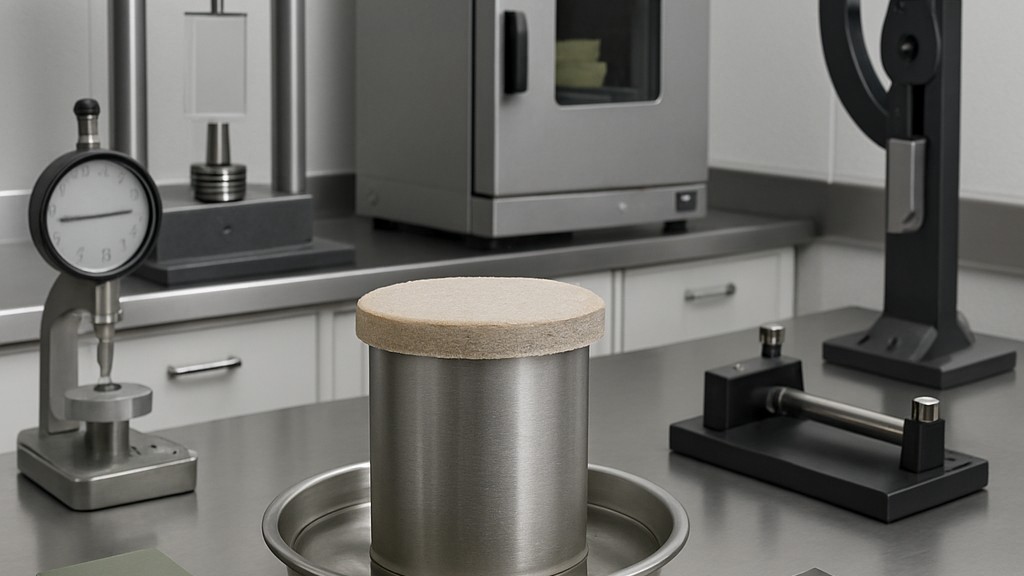
Exterior wall coverings, in principle, play a key role in regulating water vapor exchange between the substrate and the outside atmosphere. This property is evaluated using dishes covered with a porous substrate or product film, coated with the product to be tested, containing a saturated ammonium dihydrogen phosphate solution that produces an atmosphere with a relative humidity above 93 percent. The dishes are placed in an enclosure at controlled temperature and relative humidity. They are weighed at appropriate intervals, and the water vapor transmission rate is determined from the change in mass when this change becomes directly proportional to the time interval.
For testing, a representative sample of the product to be tested, or of each product in the case of a multi-layer system, is taken as described in EN 21512. Each sample is examined and prepared for testing as described in EN ISO 1513.
Our organization, which has been supporting businesses across all sectors for years through a wide range of testing, measurement, analysis, and evaluation activities, has a strong team of employees who closely follow global developments in science and technology and are constantly improving themselves. In this context, we also provide testing services in accordance with the EN ISO 7783 Paints and varnishes - Determination of water vapor transmission standard.
To get an appointment, to get more detailed information or to request an evaluation, you can ask us to fill in our form and reach you.

