

The standard “ASTM F2083-21 Standard specification for knee replacement prosthesis” developed by the American Society for Testing and Materials (ASTM) is intended to cover all common types of knee prostheses commonly used to provide functional articulation. This includes total knee replacement and unicondylar knee replacement prostheses of both fixed and mobile bearing varieties, and primary or revision surgeries. Although a patellar component may be considered an integral part of a total knee prosthesis, detailed description of this component is omitted here (this is described in the standard “ASTM F1672-14 Standard specification for resurfacing of patellar prosthesis”).
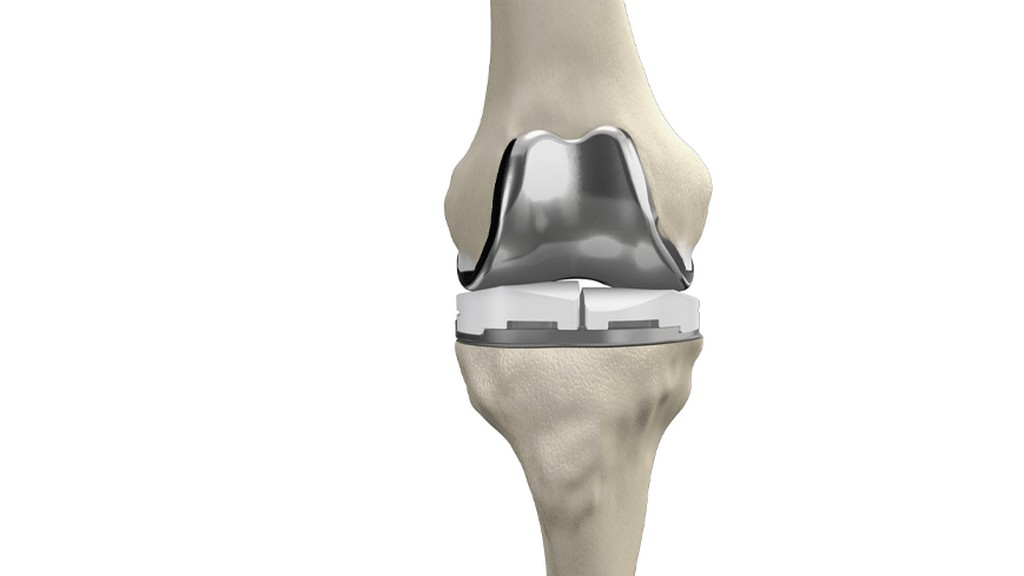
The scope of ASTM F2083-21 includes interchangeable components of modular designs, such as tibial articulating surfaces, and all components that are labeled or can be used with cement, regardless of whether the same components can be used without cement.
This specification is intended to provide basic descriptions of the materials and geometry of the prosthesis. Additionally, features determined to be important for the in vivo performance of the prosthesis are defined. However, compliance with this specification does not in itself define a device that will provide adequate clinical performance.
Hemiarthroplasty devices and patellofemoral prostheses that replace only the femoral or tibial surface but not both are excluded from the scope of this standard. Devices designed for special applications are also not covered by this standard.
The classification is based on the following concepts adopted by the US Food and Drug Administration (FDA):
The choice of materials is understood as a necessary but not sufficient guarantee of the function of the device made from them. All devices conforming to this specification must be manufactured from materials with sufficient mechanical strength and durability, corrosion resistance and biocompatibility.
In terms of mechanical strength, there are many standards (ASTM F75-23, ASTM F90-14, ASTM F136-13, ASTM F138-19, ASTM F562-13, and ASTM F799-19 are just a few) that include some examples of materials from which knee replacement components have been successfully manufactured.
Polymeric bearing components are manufactured from UHMWPE as specified in ASTM F648-21 Standard specification for ultrahigh molecular weight polyethylene powder and manufactured form for surgical implants. Porous coatings are manufactured from materials specified in ASTM F67-13 Standard specification for unalloyed titanium for surgical implant applications (UNS R50250, UNS R50400, UNS R50550, UNS R50700)" and ASTM F75-23 Standard specification for cobalt-28 chromium-6 molybdenum alloy castings and casting alloy for surgical implants (UNS R30075)." Not all of these materials may have sufficient mechanical strength for critically high-stress components or articular surfaces.
For corrosion resistance, materials with limited or no history of successful use for orthopedic implant applications must be determined to exhibit corrosion resistance equal to or better than one of the materials listed in this standard when tested in accordance with ASTM F746-04, Standard Test Method for Pitting or Crevice Corrosion of Metallic Surgical Implant Materials. If a material has less corrosion resistance than one of the materials listed in this standard when tested in accordance with ASTM F746-04, its use must be justified.
For biocompatibility, devices constructed from materials with limited or no history of successful use in orthopedic implant applications must be determined to demonstrate acceptable biological response when tested in accordance with ASTM F748-06, ASTM F981-04, or ISO 10993-1.
Among the numerous testing, measurement, analysis and evaluation studies that our organization has provided for businesses in various sectors, it also provides testing services defined in the "ASTM F2083-21 Standard specification for knee replacement prosthesis" standard with its trained and expert staff and advanced technological equipment.
To get an appointment, to get more detailed information or to request an evaluation, you can ask us to fill in our form and reach you.

