ASTM C578 Standard Specification for Rigid, Cellular Polystyrene Thermal Insulation
The ASTM C578 Standard Specification for Rigid, Cellular Polystyrene Thermal Insulation, developed by the American Society for Testing and Materials (ASTM), describes the types, physical properties, and dimensions of coated or uncoated cellular polystyrene sheets produced by molding (EPS) or extrusion (XPS) of expandable polystyrene. Products manufactured according to this specification are designed for use as thermal insulation at temperatures ranging from -53,9 to +73,9 degrees Celsius. This specification does not apply to laminated products manufactured with any rigid board surface material, including fiberboard, perlite board, gypsum board, or oriented strand board.
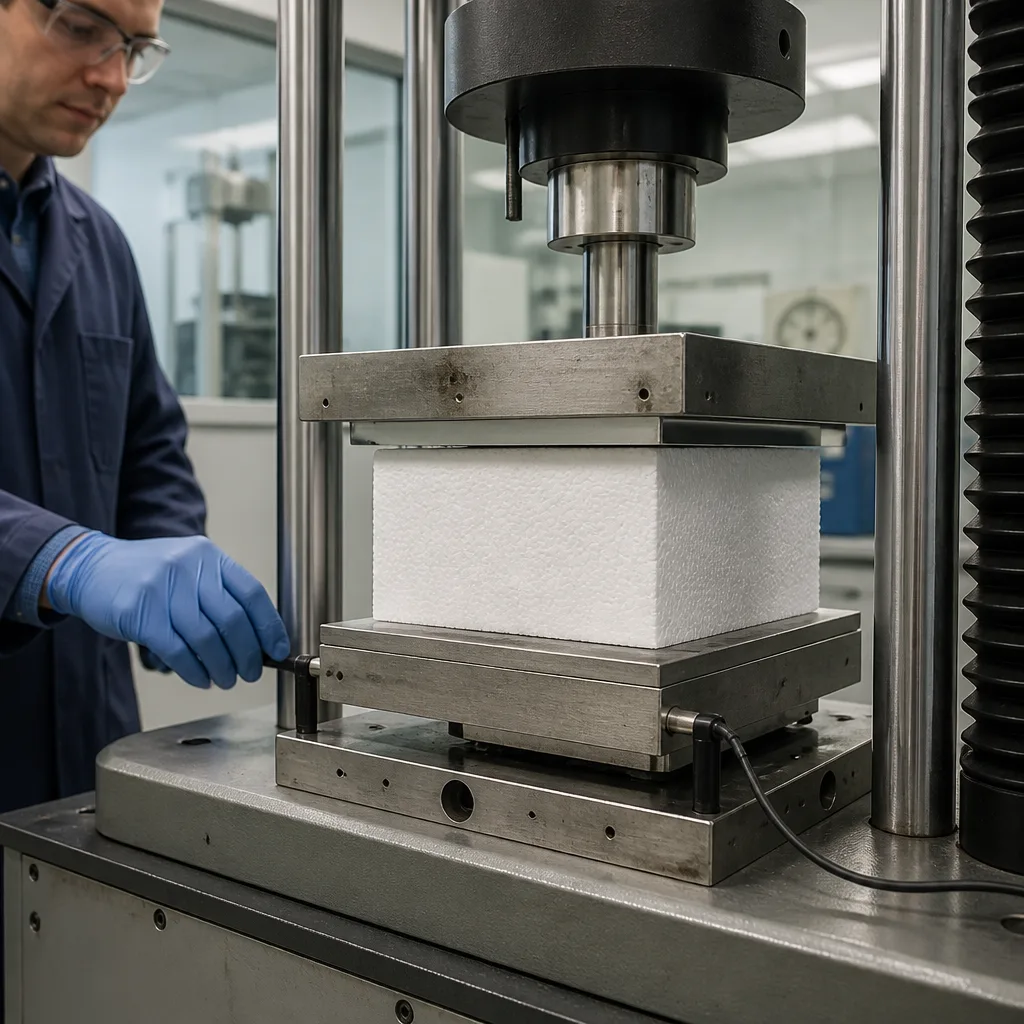
ASTM C578 is one of the widely recognized standards for specifying and evaluating rigid polystyrene insulation materials used in the construction industry. This standard helps architects, engineers, manufacturers, contractors, and building owners select insulation products with predictable thermal performance, compressive strength, moisture resistance, and long-term durability.
The primary objectives of the ASTM C578 standard are as follows:
- To define the minimum performance requirements for rigid cellular polystyrene insulation.
- Classifying insulation products according to their mechanical and thermal properties.
- To ensure consistency among manufacturers.
- To support energy-efficient building design.
- To provide a common specification for construction projects.
The ASTM C578 standard acts as a material specification that refers to numerous ASTM test methods to verify compliance, rather than defining a single test method. It is also used as thermal insulation in the following areas:
- commercial buildings
- Residential buildings
- Industrial plants
- Cold storage facilities
- Foundation insulation
- Roofing systems
- Wall insulation
- Floor insulation
- Underfloor insulation
- Structural insulated panels
This standard does not cover every possible application or installation method, but focuses on material properties.
The types of polystyrene covered are:
- Expanded polystyrene (EPS): EPS consists of vapor-expanded molded beads. Its properties are as follows:
- Light
- Good heat resistance.
- cost-effective
- Excellent dimensional stability.
- Available in various densities.
Typical applications include:
- Wall insulation
- Exterior insulation and cladding systems
- roof insulation
- Packaging
- Foundation insulation
Extruded polystyrene (XPS): XPS is produced using a continuous extrusion method. Its properties are as follows:
- Closed cell structure
- Lower water absorption rate.
- Higher pressure resistance
- Higher moisture resistance
- Excellent durability
Typical applications include:
- Inverted roofs
- Fundamentals
- Underfloor insulation
- Parking lot floors
- Cold storage floors
The ASTM C578 standard classifies insulation into various types primarily based on compressive strength and density. Common classifications and typical compressive strengths are as follows:
- Type I - 10 psi
- Type II - 15 psi
- Type IV - 25 psi
- Type VI - 40 psi
- Type VII - 60 psi
- Type VIII - 15 psi
- Type IX - 25 psi
- Type X - 40 psi
Different building applications require different types of insulation depending on the structural load.
The ASTM C578 standard specifies numerous material properties, including:
- Thermal resistance (R-value): Insulation must provide minimum thermal resistance. Tests are generally performed according to ASTM C518 and ASTM C177 standards. Thermal resistance is one of the most important properties as it directly affects building energy efficiency.
- Compressive strength: Rigid insulation must withstand mechanical loads without excessive deformation. Tests are performed according to the ASTM D1621 standard. Applications requiring high compressive strength include:
- Roof decking
- Parking structures
- Base plates
- Industrial floor coverings
- Bending strength: Bending strength measures the resistance of insulation to bending forces. Tests are performed according to the ASTM C203 standard. This property becomes important during transportation, handling, and installation.
- Water absorption: Moisture can reduce the effectiveness of insulation. Tests are performed according to the ASTM C272 standard. Low water absorption improves the following:
- Long-term thermal performance
- Freeze-thaw resistance
- Mold resistance
- Yapısal bütünlük
- Water vapor permeability: Water vapor permeability is evaluated using the ASTM E96 standard. This property affects condensation control in building structures.
- Dimensional stability: The material is subjected to high temperature and humidity to verify that no excessive shrinkage or expansion occurs. Tests are performed according to the ASTM D2126 standard. Stable dimensions help maintain consistent insulation performance over time.
- Oxygen index (optional): Some products are evaluated for combustion characteristics using the ASTM D2863 standard.
While the ASTM C578 standard addresses specific material properties related to fire performance, compliance with this specification alone does not guarantee that an insulation product meets all building code fire requirements.
Manufacturers who produce insulation conforming to the ASTM C578 standard typically implement the following:
- Density control
- Cell structure control
- Thickness verification
- Dimensional tolerance checks
- Thermal conductivity measurements
- Mechanical property verification
- Routine production tests
- Party monitoring
These quality assurance measures help ensure consistent product performance.
ASTM C578 insulation is commonly used in the following areas:
- Residential construction:
- Exterior walls
- Basement walls
- Ground
- Ceiling voids
- Roofing systems
- Commercial buildings:
- Office buildings
- Schools
- Hospitals
- Shopping malls
- Hotels
- Industrial facilities:
- Refrigerated storage facilities
- Food processing plants
- Production facilities
- Distribution centers
- Construction infrastructure
- Road insulation
- Bridge insulation
- Railway foundations
- Airport pavements
- Infrastructure protection
The following industries rely on the ASTM C578 standard:
- Building construction
- Civil Engineering
- Infrastructure projects
- Cold chain logistics
- Cooling
- green building design
- Roofing systems
- Basic engineering
- modular structure
- Industrial insulation production
The ASTM C578 standard works in conjunction with many other ASTM standards that define test methods used to verify conformity:
- ASTM C518 Heat transfer with heat flow meter
- ASTM C177 Thermal conductivity using a shielded hot plate.
- ASTM D1621 Pressure Properties of Rigid Cellular Plastics
- ASTM C203 Bending properties of block type thermal insulation.
- ASTM C272 Water absorption properties of core materials.
- ASTM E96 Water Vapor Transmission
- ASTM D2126 Response to temperature and humidity (dimensional stability)
- ASTM D2863 Minimum oxygen concentration to support combustion (oxygen index)
For many years, our organization, with its competent and experienced team, has been understanding the needs of its clients, providing the advanced testing services they require, and assisting them in the establishment, implementation, and improvement of management systems. Within this framework, we also provide testing services in accordance with the ASTM C578 standard.



