

The ISO 527-3 Plastics - Determination of tensile properties - Part 3: Test conditions for films and sheets standard, published by the International Organization for Standardization (ISO), describes the conditions for determining the tensile properties of plastic films or sheets thinner than 1 mm, based on the general principles given in the ISO 527-1 standard. For sheets thicker than 1 mm, the ISO 527-2 standard applies.
This standard is not normally suitable for specifying the following tensile properties:
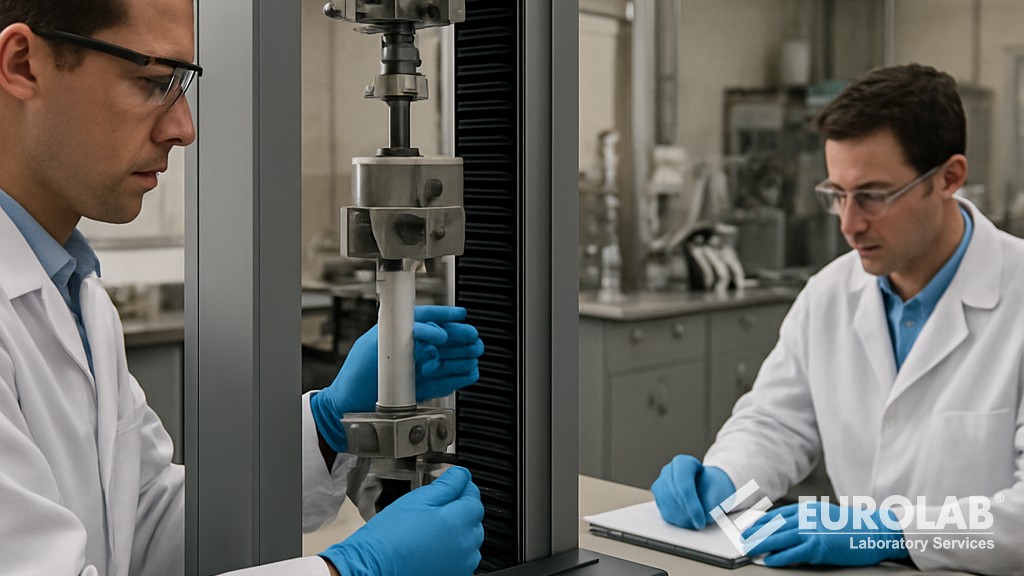
In principle, the test specimen is stretched along its major longitudinal axis at a constant test rate until the specimen fractures or the stress (load) or strain (elongation) reaches a predetermined value. During this process, the stress and elongation experienced by the specimen are measured.
For determining tensile properties using this method, the preferred test specimen form is a strip 10 mm to 25 mm wide and at least 150 mm long, with two parallel measurement marks at 50 mm intervals in the middle of the specimen.
Some film materials have very high elongation values at break, which can cause them to exceed the stretching capacity of the testing machine. In such cases, it is permissible to reduce the initial distance between the clutches to 50 mm.
When required in the specifications of the material being tested or in routine quality control tests, barbell specimens numbered 5, 1B, and 4, in the shape and dimensions shown in the standard, may be used. These specimens allow for easy production and rapid quality control testing.
Sample type 5 is recommended for films and sheets with very high strain at rupture. Sample type 4 is recommended for other types of flexible thermoplastic sheets. Sample type 1B is recommended for rigid sheets.
Test specimens should be cut or punched so that the edges are smooth and free of notches. Inspection with a low-power magnifying glass is recommended to check for the absence of notches. Razor blades, suitable paper cutters, scalpels, or other instruments capable of cutting specimens to the appropriate width and producing straight, clean, and parallel edges without visible defects should be used. Punch dies should be kept sharp by regular honing, and a suitable backing material should be used with the punch dies to ensure a clean edge.
Test specimens should be obtained using punch dies with a suitable backing material to ensure a clean edge. The dies should be kept sharp by regular honing, and the edges of the specimen should be examined with a low-power magnifying glass to ensure there are no notches. Specimens with noticeable defects at the cut edges are discarded.
In the world of materials science and engineering, ensuring the mechanical integrity of plastics, especially for thin and flexible forms such as films and sheets, is of paramount importance. These materials are found everywhere, from food packaging and agricultural coatings to protective layers in electronic devices and even battery components in electric vehicles. The ISO 527-3 standard provides precise guidelines for determining the tensile properties of plastic films and sheets thinner than 1 mm, helping manufacturers, researchers, and quality control professionals make informed decisions regarding material suitability and safety.
This standard provides a reliable framework for consistent testing worldwide, based on fundamental principles. For companies optimizing packaging for sustainability or validating materials for high-risk applications such as electric vehicle batteries, understanding this standard is crucial for innovation and compliance.
The ISO 527-3 standard specifies the conditions under which tensile tests should be performed on thin plastic specimens. This standard applies only to films and sheets thinner than 1 mm, and in this respect differs from the ISO 527-2 standard, which covers molded or extruded sheets thicker than 1 mm. It explicitly states that this standard is not suitable for cellular materials or plastics reinforced with textile fibers, thus directing users to alternative methods.
The primary purpose of the ISO 527-3 standard is to provide information about the strength, ductility, and potential failure points of these materials by measuring how they behave when subjected to tensile forces. By standardizing test parameters such as speed, temperature, and sample preparation, this standard ensures repeatability across laboratories and industries, reducing variability and improving global trade.
The ISO 527-3 standard has a wide-ranging effect. It regulates tensile testing of non-rigid plastics in film or sheet form, commonly used in applications requiring flexibility and barrier properties. The main exceptions are:
This standard is particularly relevant for emerging sectors such as packaging and mulch films where plastic films must withstand stretching without tearing during production and use, and for renewable energy where thin polymer layers are used to insulate or separate components in solar panels or batteries. Because there are no specific standards for electric vehicle battery films, the ISO 527-3 standard serves as a reference for evaluating friction and tensile behavior, which is critical for safety.
The tensile test under ISO 527-3 quantifies the following mechanical properties that define the performance of a material:
These properties are derived from stress-strain curves generated during testing and provide a comprehensive profile of the material's behavior from elastic recovery to ultimate fracture.
For many years, our organization, with its competent and experienced staff, has been understanding the needs of its clients, providing the advanced testing services they require, and assisting in the establishment, implementation, and improvement of management systems. Within this framework, we also provide testing services to businesses in accordance with the "ISO 527-3 Plastics - Determination of tensile properties - Part 3: Test conditions for films and sheets" standard.
To get an appointment, to get more detailed information or to request an evaluation, you can ask us to fill in our form and reach you.

