

The standard “DIN 53506 Rubber tests - Determination of needle tear strength”, published by the German Institute for Standardization (DIN), describes a method for determining the compressive permanent deformation of elastomeric materials such as rubber.
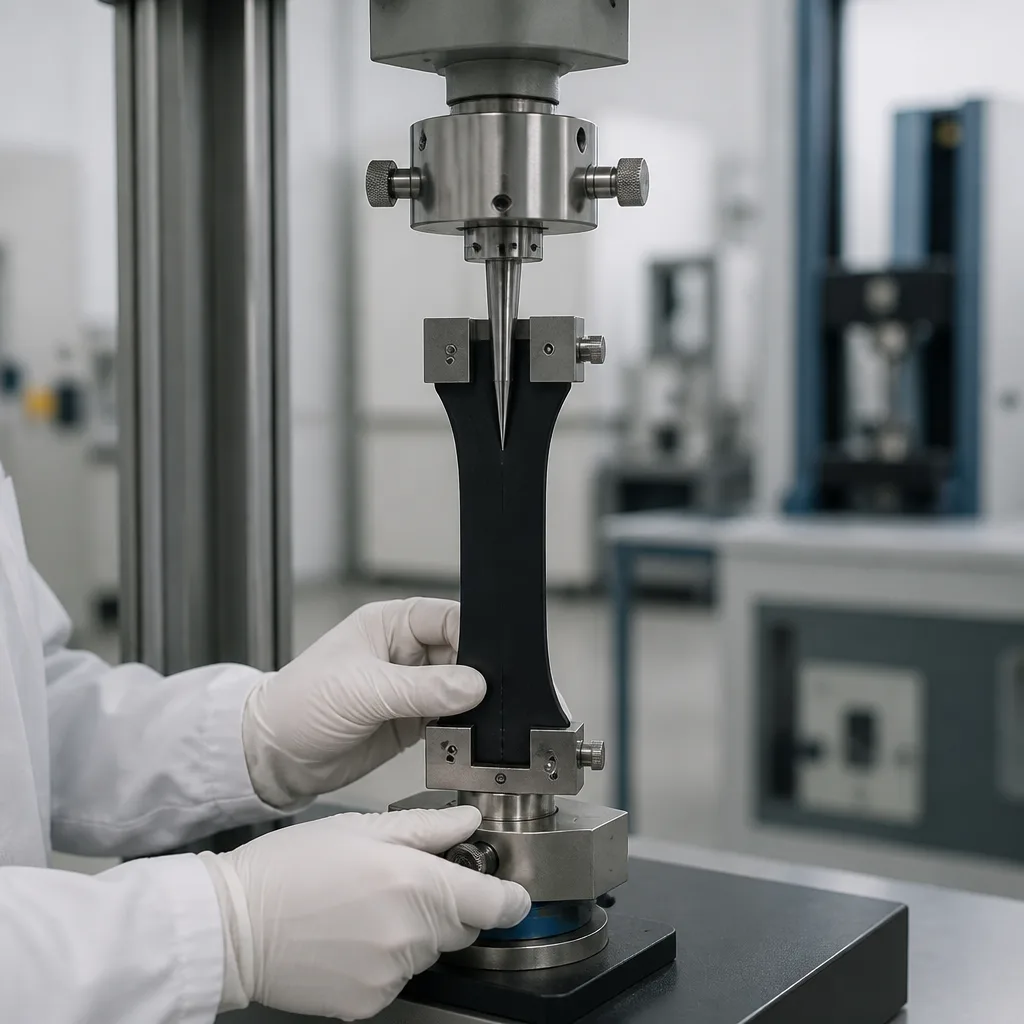
This standard evaluates how well a rubber material can return to its original thickness after being compressed for a specified period of time under specific conditions:
This deformation, known as compressive permanent deformation, is expressed as a percentage of the original thickness.
Compression permanent deformation is a critical property for materials used in sealing and cushioning applications:
Typical applications of this standard include:
The basic test conditions specified in the DIN 53506 standard are as follows:
These parameters ensure the reproducibility and comparability of results between laboratories.
Compressive permanent deformation is calculated according to the formula given in the standard. The result is given as a percentage.
The DIN 53506 standard is widely used in various industries in the following areas:
The DIN 53506 standard is generally compared to the following international standards:
While the basic principle is similar, there may be differences in sample size, conditions, and procedures.
The DIN 53506 standard is not just a laboratory procedure; it is crucial for ensuring that rubber components actually function under real-life conditions where they are subjected to continuous compression. The main reasons why this standard is considered important are as follows:
The DIN 53506 standard guarantees that the material can return to its original shape in a way that closely resembles it and provides a tight seal. Poor materials can lead to leaks or system failure.
This standard simulates these conditions and helps engineers predict durability by showing how the material will behave hours or days later.
Engineers can compare elastomers under the same conditions.
This standard verifies the compression-residual deformation behavior, helping to prevent these risks before products reach the site.
In short, the DIN 53506 standard is necessary because it answers a simple but critical question: “Will this rubber part still function after being compressed for a long time?” Without an answer to this question, manufacturers are forced to guess, leading to unreliable products, failures, and higher costs.
In conclusion, the DIN 53506 standard is a fundamental standard for evaluating the elastic recovery behavior of rubber materials under compression. It plays a crucial role in ensuring the reliability and longevity of sealing systems in many industries. By quantifying permanent deformation, it allows engineers to design safer and more durable products.
For many years, our organization, with its competent and experienced staff, has been understanding the needs of its clients, providing the advanced testing services they require, and assisting them in the establishment, implementation, and improvement of management systems. Within this framework, we also provide testing services in accordance with the DIN 53506 standard.
To get an appointment, to get more detailed information or to request an evaluation, you can ask us to fill in our form and reach you.

