

The standard “DIN 53430 Testing of rigid cellular materials - Tensile test”, published by the German Institute for Standardization (DIN), describes the method of performing tensile tests on rigid cellular materials (rigid foams or rigid cellular plastics) such as rigid polyurethane (PU) foams, polystyrene foams, phenolic foams, and similar lightweight, cellular-structured materials commonly used in insulation, packaging, construction, and industrial applications.
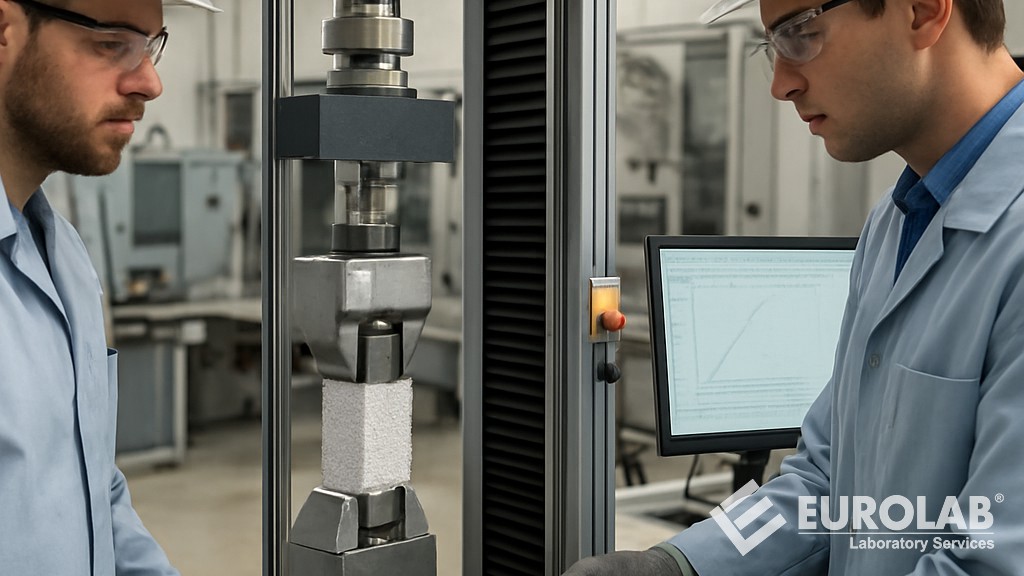
Tensile testing according to the DIN 53430 standard evaluates the behavior of rigid cellular materials under uniaxial tensile load. This standard specifies fundamental mechanical properties, including:
These properties help to assess the material's ductility, brittleness, and suitability for load-bearing or structural applications where tensile forces may occur.
This testing method typically involves the following:
This standard defines sample sizes, test speed, conditioning requirements (e.g., temperature and humidity), and how results are calculated and reported.
DIN 53430 is an old and withdrawn standard. However, many manufacturers of rigid foams still refer to this standard in their technical data sheets (especially for polyurethane expansion foams, fire protection foams, and void-filling foams), and generally report the following values:
However, for new specifications and international trade, this standard has been largely replaced by the following compatible global standards:
Although officially outdated, the DIN 53430 standard is frequently referenced in the following areas:
Even if the required tests are now based on international equivalents, many manufacturers still use the phrase "according to DIN 53430 standard" to ensure consistency.
In short, the DIN 53430 standard focuses on measuring the tensile strength and elongation behavior of materials when subjected to a controlled tensile load. Rigid cellular materials are widely used in industries such as construction, automotive, packaging, and insulation, where their mechanical performance under stress can be critical for structural integrity and durability.
The primary objective of the DIN 53430 standard is to provide a consistent and reproducible test method for evaluating how rigid cellular materials behave when subjected to tensile forces.
This standard enables manufacturers, laboratories, and quality control departments to:
The DIN 53430 standard applies primarily to rigid cellular plastics, including:
These materials typically contain closed or open cell structures that influence their tensile behavior.
The described tensile test involves applying a controlled tensile force to a prepared specimen until fracture occurs. During the test, the specimen is mounted on a tensile testing machine. The machine applies axial stress at a constant rate. The applied force and the corresponding elongation are recorded. The specimen eventually fractures, allowing for the determination of its tensile properties. The test evaluates the maximum stress the material can withstand before fracture.
Typical equipment used in DIN 53430 testing includes:
Correct sample alignment is important to prevent bending stresses or uneven load distribution.
Samples must be carefully prepared to ensure reproducibility. Common characteristics include:
The cellular structure must remain undamaged during cutting, as defects can significantly affect the results.
The test provides several important mechanical parameters:
These values help engineers understand material strength and load-bearing capacity.
Several factors influence the results obtained from the DIN 53430 standard test:
Accurate control of these variables is crucial for reliable measurements.
The DIN 53430 standard test method is important in industries where rigid foams are used as structural or insulation components. For example,
Building insulation panels
The results help determine whether a material can withstand tensile loads during service or installation.
In conclusion, the DIN 53430 standard defines a standardized tensile testing method for rigid cellular materials. By measuring tensile strength and elongation at break, it enables a reliable assessment of the mechanical performance of rigid foams used in structural, insulation, and industrial applications.
For many years, our organization, with its competent and experienced staff, has been understanding the needs of its clients, providing the advanced testing services they require, and assisting them in the establishment, implementation, and improvement of management systems. Within this framework, we also provide testing services in accordance with the DIN 53430 standard.
To get an appointment, to get more detailed information or to request an evaluation, you can ask us to fill in our form and reach you.

