

The “ASTM F2580-18 Standard practice for evaluating modular connection of proximal fixed femoral hip prosthesis” standard developed by the American Society for Testing and Materials (ASTM) describes the fatigue testing procedure for metallic femoral hip prostheses used in hip joint replacements.
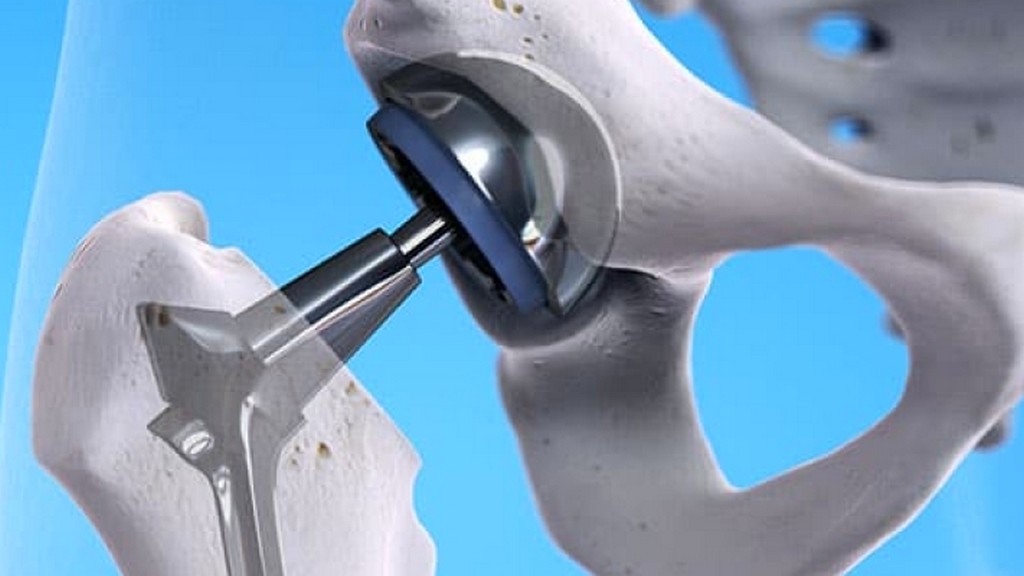
This standard includes a test method for performing fatigue tests on metallic femoral hip stems using a cyclic, constant amplitude force. This test method is applicable to hip prostheses that use proximal metaphyseal fixation and have a modular construction and is intended to evaluate the fatigue performance of modular connections in the metaphyseal inlay, i.e. proximal stem region of the stem.
This standard is intended to provide useful, consistent, and reproducible information on the fatigue performance of metallic hip prostheses when the distal end is retained proximally and not retained by a filling medium.
For the purposes of this document, the following terms and definitions apply:
Briefly, this test method is used to characterize the effects of materials, manufacturing, and design variables on the fatigue performance of metallic femoral hip prostheses subjected to cyclic loading for a large number of cycles. In vivo loading of femoral hip designs is generally different from the loading described in this test method. The results obtained here cannot be used to directly predict in vivo performance. However, this test method is designed to permit comparisons between the fatigue performance of different metallic femoral hip designs when tested under similar conditions.
To ensure that fatigue data on femoral hip prostheses are comparable, reproducible, and correlated across laboratories, it is essential to establish uniform procedures.
The selected test component should have the same geometry as the final product and be in finished condition. The test component should be the worst case size and configuration of the implant family to be tested, i.e. the component that produces the highest stresses. The femoral head component selected for load application should be of the same design and material as an existing product in service, but may have been previously tested. The selected femoral head should present the greatest load offset from the hip centerline to represent the worst case bending scenario during testing.
Among the numerous testing, measurement, analysis and evaluation studies that our organization has provided for businesses in various sectors, our organization also provides testing services defined in the “ASTM F2580-18 Standard practice for evaluation of modular connection of proximal fixed femoral hip prosthesis” standard with its trained and expert staff and advanced technological equipment.
To get an appointment, to get more detailed information or to request an evaluation, you can ask us to fill in our form and reach you.

