

The “ASTM F2887-17 Standard specification for total elbow prostheses” standard developed by the American Society for Testing and Materials (ASTM) includes total elbow replacement (TER) prostheses and hemi-elbow replacement prostheses used to provide functional articulation that allows restoration of motion of the human elbow joint complex using humeral, ulnar or radial components.
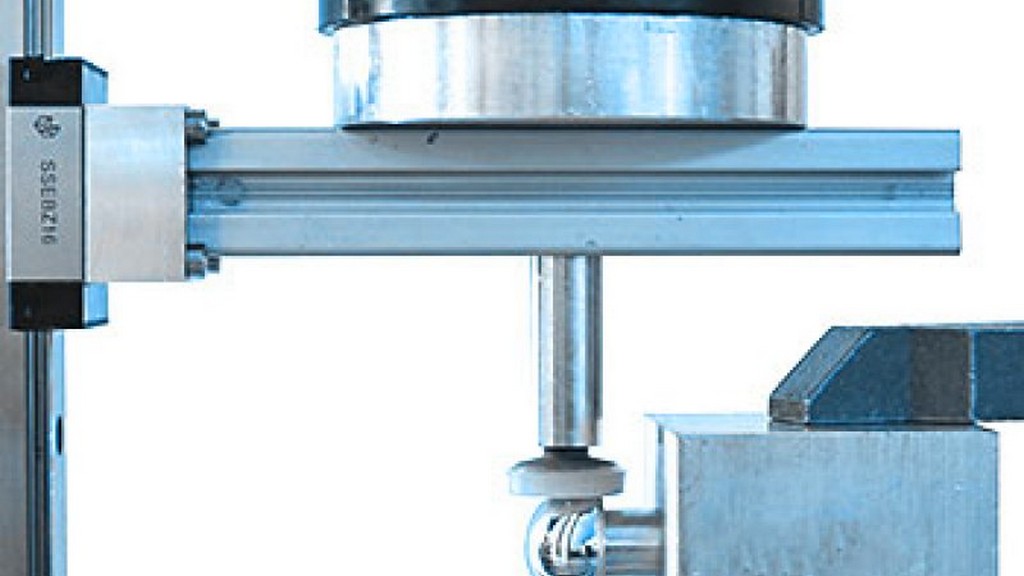
The scope of this standard includes elbow prosthesis components for primary and revision surgery of connected and non-connected designs and components implanted with or without bone cement.
This standard is intended to provide basic descriptions of the materials and geometry of the prosthesis. In addition, properties determined to be important for the in vivo performance of the prosthesis are defined. However, compliance with this standard alone does not guarantee that a device will provide satisfactory clinical performance.
The following classification is recommended by degree of restriction for all total joint prostheses, including total elbow replacement systems, based on concepts adopted by the US Food and Drug Administration (FDA) (21 CFR 888.6, 21 CFR 888.3150, 21 CFR 888.3160, 21 CFR 888.3170, 21 CFR 888.3180 standards):
It is understood that the choice of materials is a necessary but not sufficient guarantee of the functionality of the device made from them. All devices conforming to this specification are manufactured from materials having adequate mechanical strength, durability, corrosion resistance, biocompatibility and wear resistance.
With respect to component function, each component for a total or partial elbow replacement or partial elbow replacement is expected to perform as intended when manufactured in accordance with good manufacturing practices and the requirements of this specification. Components shall be capable of withstanding the expected static and dynamic physiological loads without compromising their function for the intended use and biological environment. All components used for experimental performance measurements shall be equivalent in form and material to the finished product. Components shall be sterilized if this will affect their performance.
For the integrity of modular connections, all modular components should be evaluated for the integrity of their connection mechanisms according to the guidance provided in the guidance document for testing non-jointed, mechanically locked modular implant components. As recommended in ASTM F1814-15, static and dynamic shear tests, bending tests, and tensile tests, or any combination thereof, may be required to determine the performance characteristics. The connection mechanisms should demonstrate adequate integrity for the load range anticipated for the application. Alternatively, a structural fatigue or endurance test may be performed to demonstrate the integrity of a modular system. Such testing should simulate worst-case scenarios to demonstrate that the assembled components can withstand the anticipated physiological loading conditions and are not susceptible to failure modes reported in the literature. Worst-case scenarios should consider patient activity levels, loads, component dimensions, component alignment errors, thickness of bearing inserts, bone support, locking mechanism, edge loading, dissimilar metal contact for the potential for galvanic corrosion or mechanically assisted crevice corrosion, and how these factors may affect the performance of the design.
Among the numerous testing, measurement, analysis and evaluation studies that our organization has carried out for businesses in various sectors, it also provides testing services defined in the "ASTM F2887-17 Standard specification for total elbow prostheses" standard with its trained and expert staff and advanced technological equipment.
To get an appointment, to get more detailed information or to request an evaluation, you can ask us to fill in our form and reach you.

