

The European standard “EN 1644-2 Test methods for nonwoven compresses for medical purposes - Part 2: Finished compresses” describes physical and chemical test methods for the assessment of finished nonwoven compresses.
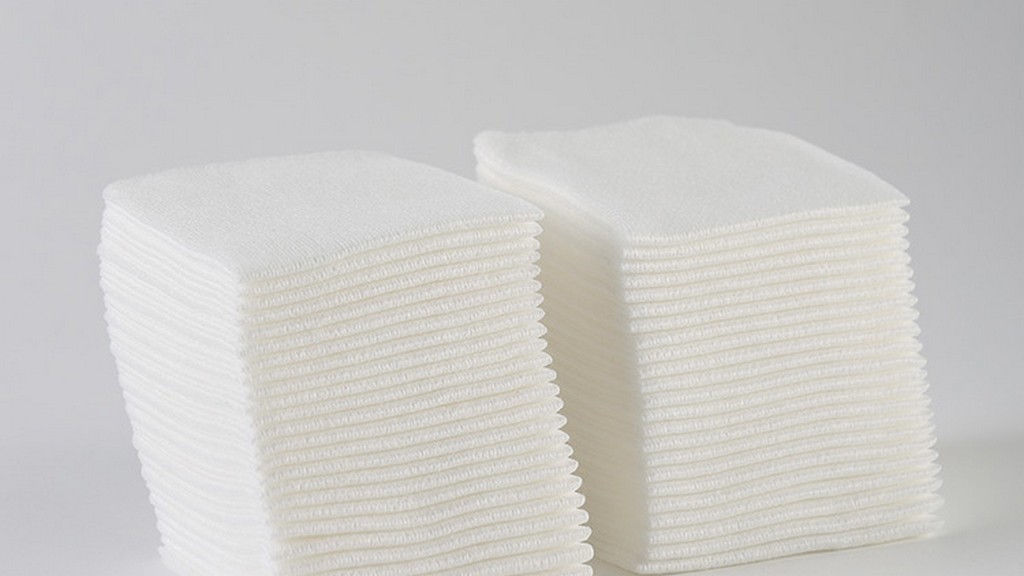
For the purposes of this standard, compress means any piece or pieces of material of any shape, form or size used for one or more of the following purposes:
Before starting the test, the sample is first conditioned. The test method described in this standard is the same as the test method described in the standard “EN 1644-1 Test methods for nonwoven compresses for medical purposes - Part 1: Nonwovens used in the manufacture of compresses”. If the product is to be used sterile, the samples must be sterilized according to the manufacturer's instructions before testing.
To cope with an important feature of compresses, which is their ability to adequately clean wounds, abrasiveness has been included among these physical properties. Due to the great variety of shapes and forms and different routes of application, the kinetic coefficient of friction cannot be determined reliably on the final product, if any, the coefficient determined for the surface material after the final treatment can provide an indication.
The adaptation of the kinetic friction test (used in the paper industry) is foreseen in the EN 1644-1 standard.
The tensile strength of compresses is measured according to the EN 29073-3 standard. The tensile strength of the finished product is adequately covered by testing both the tensile strength of the material and the structural strength of the finished product.
The methods to be taken into consideration for determining the following physical properties are given in the EN 1644-2 standard:
The EN 1644-1 standard provides methods to be considered for determining the following chemical properties:
These properties of the compress can be determined from the results obtained on nonwovens and other materials used in the compress or by applying the methods described in the EN 1644-1 standard to the compresses. In this case, the volumes and masses specified here must be adapted. If the processing of the materials changes their chemical properties, tests for chemical properties must be carried out on the processed material or the compress.
The test method for absorbent capacity covers the evaluation of one aspect of the behavior of nonwoven compresses in the presence of liquids, namely the absorbent capacity or water retention capacity. The absorbent capacity test measures the water retention ability of the compress based on the difference in mass before immersion in water and after immersion, discharge and compression.
During testing, the entire compress is weighed and placed in a stainless steel tray with the perforated surface in direct contact with the tissue or wound, using a surface designed for tissue or wound contact. The tray and material are immersed in Class 3 deionized water (EN ISO 3696) at 18-22 degrees Celsius for 10 seconds. The tray and material are transferred to a stainless steel tank, and the contents are allowed to drain for 10 seconds. A metal weight is placed on the surface of the compress, applying a specific force evenly to the surface of the sample, held for 30 seconds, and then the weight is carefully removed. The compress is immediately transferred to a screened plate using forceps, taking care not to lose water during the process. The water-holding capacity of the compress fabric is weighed and calculated. For practical reasons, e.g., the shape or size of the compress, multiple compresses may be used. This procedure is repeated twice, each time on a fresh compress . In each of the three determinations, the results expressed in grams of liquid absorbed per compress are recorded, and the average water-holding capacity is determined.
The test method for the rate of absorption is used to determine the rate of absorption of compresses. A compress is gently lowered to the surface of a container of water. The time it takes for the compress to sink or become completely wet is a measure of the rate of absorption of the compress.
When performing the test, the container is filled with deionized water of class 3696, in accordance with EN ISO 3, at 18-22 degrees, to a depth of approximately 10 cm. Using forceps, the compress is dropped onto the surface of the water without splashing or submerging it. Using a stopwatch, the time in seconds required for the upper surface of the compress to become completely wet or for the compress to completely sink below the surface of the water is measured. This procedure is repeated twice.
Among the numerous tests, measurements, analyses and evaluation studies that our organization has carried out for businesses in various sectors, it also provides testing services defined in the standard “EN 1644-2 Test methods for nonwoven compresses for medical purposes - Part 2: Finished compresses” with its trained and expert staff and advanced technological equipment.
To get an appointment, to get more detailed information or to request an evaluation, you can ask us to fill in our form and reach you.

