

The ASTM D2990-17 standard, developed by the American Society for Testing and Materials (ASTM), defines test methods for the determination of tensile and compressive creep and creep tearing of plastics under certain environmental conditions. These test methods mainly include the use of three-point loading for the measurement of bending creep. These methods are also used with four-point loading (less often used) and test methods equipment and principles described in the ATSM D790 standard (ASTM D790-10 Standard test methods for flexural properties of non-reinforced and reinforced plastics and electrical insulating materials).
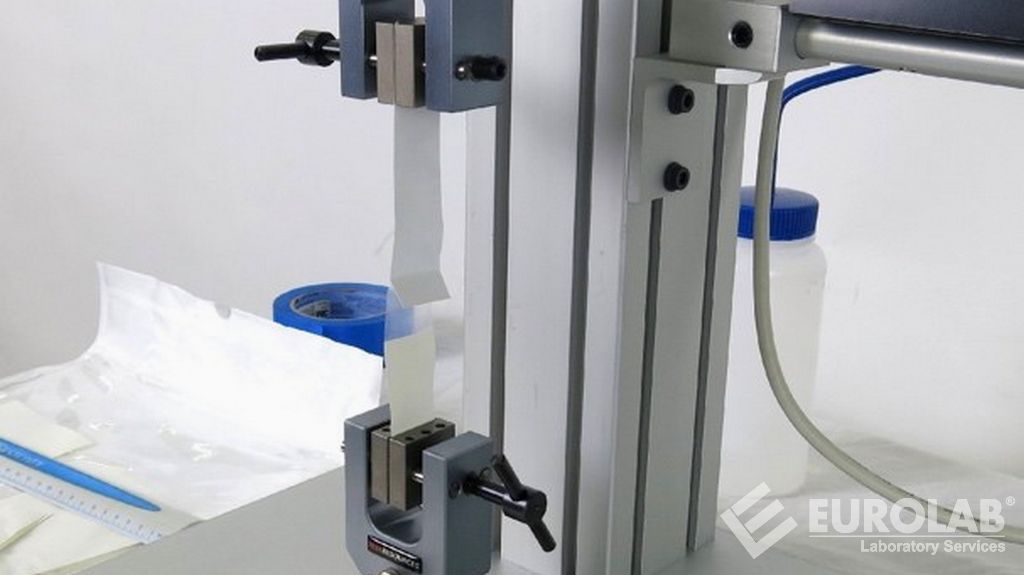
For creep-rupture measurements, stress is the preferred stress mode because for some ductile plastics, bending or compression does not produce rupture. The data obtained by these test methods are suitable for use in engineering design.
Plastics under constant stress succumb to a slow deformation phenomenon known as creep, also called cold flow. Strain force, temperature and time are the three main factors that influence creep tendency. The ASTM D2990 standard specifies test methods for compression, bending, and tensile analysis. Creep modulus and creep strain are two values specific to these test methods. Temperature chambers and weathering equipment are often used to speed up testing and simulate real-world conditions.
Briefly, the test methods described in the ASTM D2990 standard determine the tensile and compressive creep and creep fracture of plastics under specified environmental conditions. Data from creep and creep-rupture tests are used to predict the creep modulus and strength of materials under long-term loads and to predict the dimensional changes that will occur as a result of such loads. The data are used in the design of fabricated parts to compare other materials, to characterize plastics for long-term performance under constant load, and for specification purposes.
Our organization, among the numerous test, measurement, analysis and evaluation studies it has given for businesses in various sectors, with its trained and expert staff and advanced technological equipment, standard test for tensile, compressive and bending creep and creep-breakage of plastics within the scope of ASTM D2990-17 standard. also provides services.
To get an appointment, to get more detailed information or to request an evaluation, you can ask us to fill in our form and reach you.

