

The standard “DIN 53754 Testing of plastics - Determination of wear - Abrasive disc method”, published by the German Institute for Standardization (DIN), describes a method for evaluating the wear resistance (abrasion resistance) of plastics and other materials using a rotating abrasive disc (commonly known as a Taber abrasive or abrasive disc method).
This standard helps determine how well a material resists surface wear caused by abrasive effects. This is critical for quality control in industries where resistance to friction and scratching is important. For example,
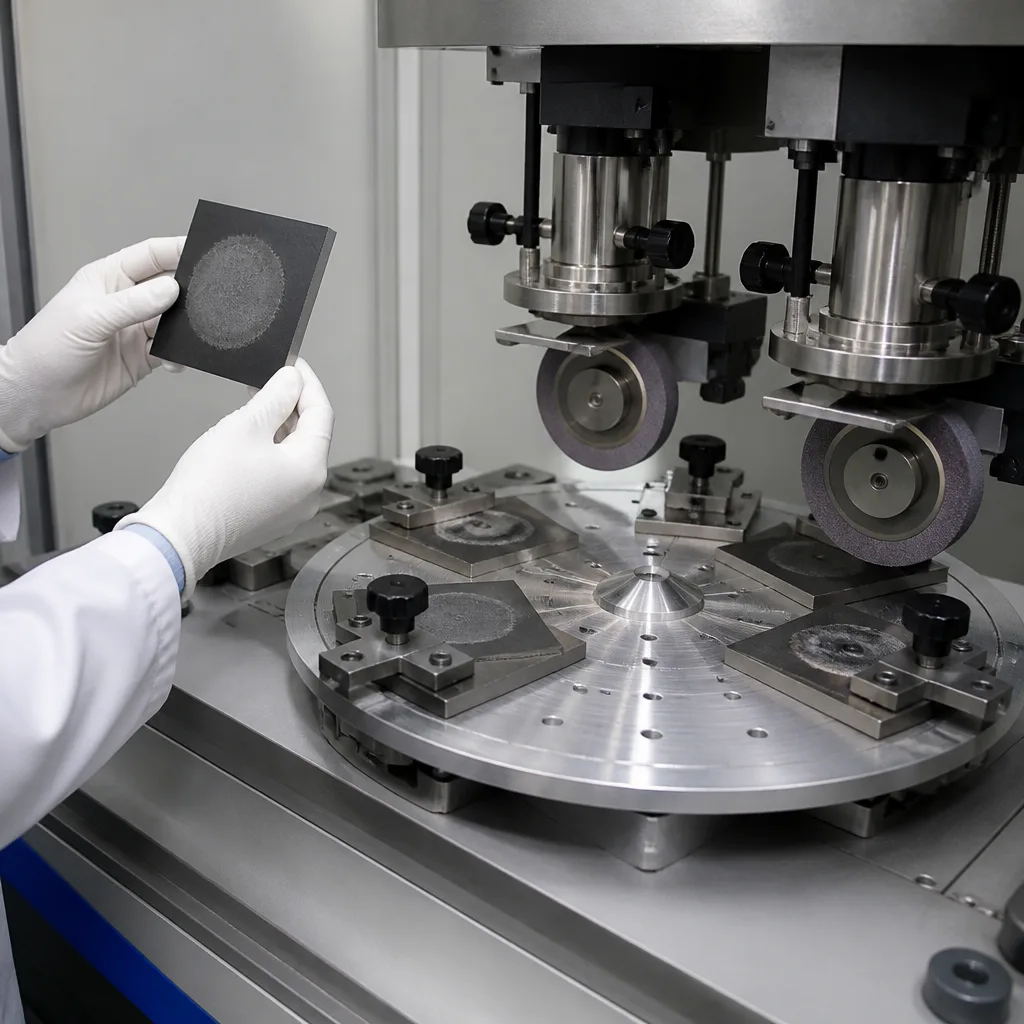
This testing method simulates real-world wear by rubbing a sample of material against standardized abrasive wheels (grinding wheels) under controlled load and rotation. Results are typically expressed as weight loss, volume loss, or wear index after a specific number of cycles.
The testing process generally follows these steps:
This method is sometimes also called the Taber abrasion test because it uses Taber abrasion wheels. This method is compliant with or refers to other standards, including those listed below:
Modern testing equipment, particularly digital Taber-type machines designed for compliance with the DIN 53754 standard, has the following main features:
These machines are commonly used for testing in footwear, leather, coating, and materials science laboratories.
Wear resistance directly affects product lifespan and performance. For example,
This standard provides a repeatable, standardized method for objectively comparing materials. Therefore, this standard is considered important.
In short, the DIN 53754 standard is a test standard used to determine the abrasion resistance of plastic materials. This standard specifically covers tests performed using the abrasive disc method.
The DIN 53754 standard was developed to measure the resistance of plastics to mechanical wear. The test results show that...
This test specifically reveals how the surface behaves under the influence of effects such as friction, scratching, or sanding.
According to the DIN 53754 standard, the basic principle of the test is as follows:
This wear and tear is generally expressed as mass loss or volumetric loss.
Parameters measured according to DIN 53754 standard and results:
This data is used, in particular, to evaluate the impact of different production techniques or additives on performance.
The DIN 53754 standard is widely used in the following sectors:
Wear resistance is a critical property, especially for aesthetic and functional surfaces.
This standard has been superseded and replaced by more current and internationally harmonized standards. For example, the “ISO 9352 Plastics - Determination of resistance to abrasion with abrasive wheels” standard demonstrates a modern approach to abrasion testing.
Although the DIN 53754 standard is now an outdated standard, it is important in the following respects:
However, in modern applications, the use of more up-to-date ISO/DIN standards is preferred.
In conclusion, the DIN 53754 standard is a classic test standard developed to measure the abrasion resistance of plastics. The surface durability of the material is evaluated using the abrasive disc method. Although it has been largely replaced by more advanced standards today, it has played a significant role in the development of material testing.
For many years, our organization, with its competent and experienced staff, has been understanding the needs of its clients, providing the advanced testing services they require, and assisting them in the establishment, implementation, and improvement of management systems. Within this framework, we also provide testing services in accordance with the DIN 53754 standard.
To get an appointment, to get more detailed information or to request an evaluation, you can ask us to fill in our form and reach you.

