

In engineering, shear strength is the resistance of a material or component to yield or type of structural failure when the material or component fails to shear. A shear load is a force that tends to cause shear failure on a material along a plane parallel to the direction of the force. In short, shear force is the capacity of a material or component to withstand shear. A scissor is a classic example to demonstrate cutting force. When a piece of paper is placed between the two metal blades of a scissors, the object is split in half simply by the shear force.
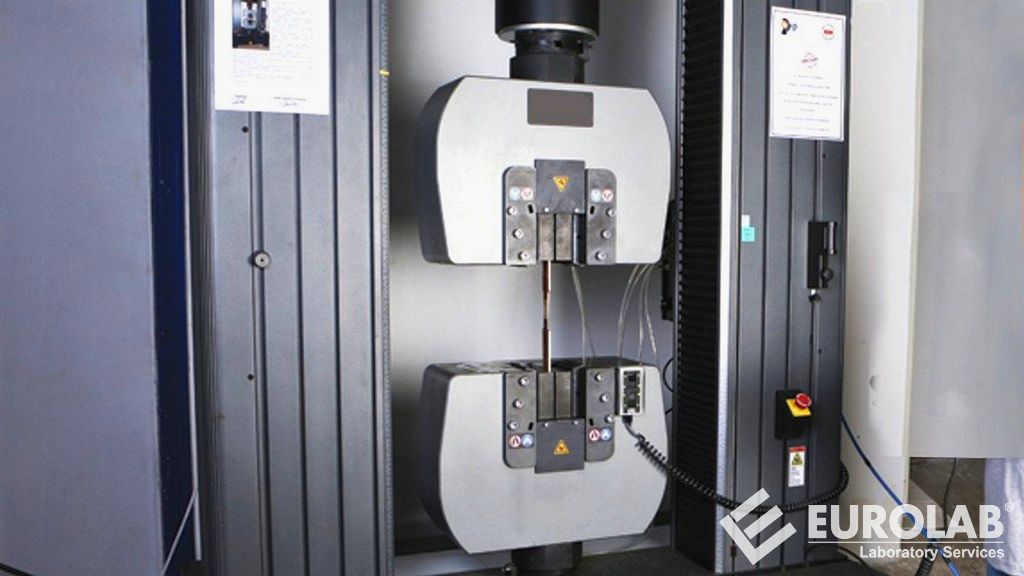
Shear stress is relative and varies with the amount of shear load applied to the material per unit area. On the other hand, shear strength is a fixed and precise value in the general nature of a material.
The strength of a material is, in general, the value of yielding, breaking, or excessive deformation that occurs in a load-bearing member. Shear strength is a material property that describes a material's resistance to a shear load before the component fails in shear. The shearing motion or shear fracture, defined by the shear force, occurs parallel to the direction of the force acting on a plane.
In the construction, automotive, aerospace and other engineering industries, knowing the shear strength of materials is vital for the design of mechanical and structural devices as well as the selection of materials to use for an application. It is also an important consideration when sizing components or parts.
Often for brittle materials the cause of failure is a force in tension. For ductile materials, the cause of failure is usually shear forces.
Shear strength is one of the important considerations in the design of many parts, including fasteners such as pins, bolts and screws. Shear tests are performed in two ways to determine the maximum shear stress. The first method is performed in such a way that a specimen is fixed at both ends so that the material can experience double shearing until fracture by removing its middle section. The second method is achieved by placing the tapered ends of the material in a fixture offset from the vertical axis and then applying a pulling force. Many materials are tested to know their shear strength.
Among the numerous test, measurement, analysis and evaluation studies it provides for businesses in various sectors, our organization also provides shear strength analysis services with its trained and expert staff and advanced technological equipment.
To get an appointment, to get more detailed information or to request an evaluation, you can ask us to fill in our form and reach you.

