

The standard “ISO 6272 Paints and varnishes - Rapid deformation (impact resistance) tests”, which is based on a European standard and later published by the International Organization for Standardization (ISO), consists of the following subsections published under the same title:
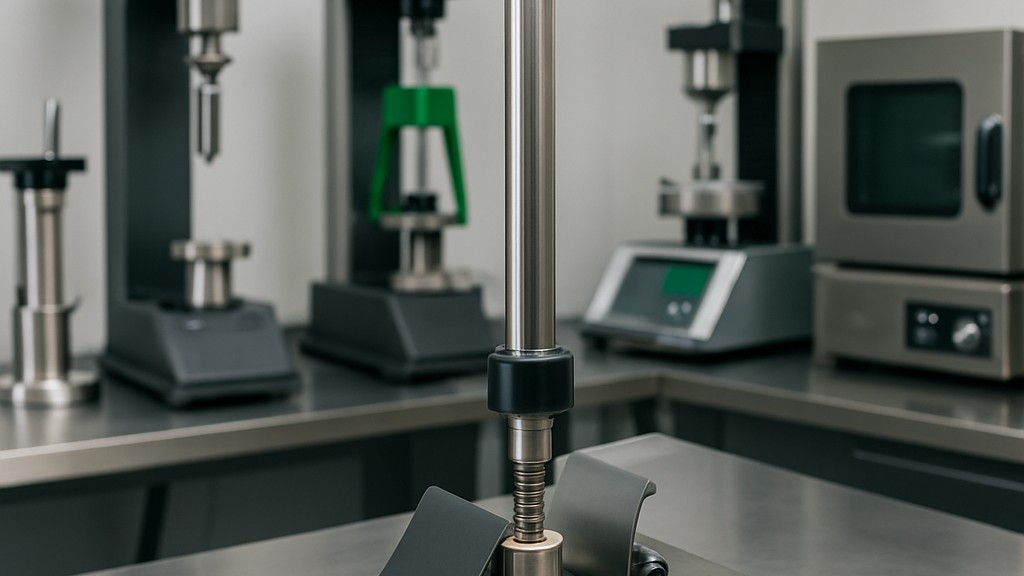
An important feature of the apparatus used in these tests is that it produces a rapid deformation rather than an actual impact.
The described method can be applied as a pass/fail test performed with a specified mass and from a single drop height to test compliance with a specified specification. Or, the method can be applied as a classification test to determine the minimum mass or drop height at which the coating cracks or peels from the substrate by gradually increasing the drop height or mass.
The coating being tested is applied to suitable, thin (normally metal) panels. After the coating has cured, a standard weight is dropped onto each panel from a height that will cause deformation of the coating and the substrate. The test can be performed with the coated side of the panel facing up, toward the weight, or down, away from the weight. By gradually increasing the height from which the weight is dropped, the point at which failure occurs can be determined. Films often fail by cracking, which can be made more visible using a magnifying glass.
A representative sample of the coating material to be tested, or of each product in the case of a multilayer system, is taken as described in ISO 15528. Each sample is examined and prepared for testing as described in ISO 1513.
Before testing, the coated panels are conditioned for a minimum of 16 hours at a temperature of 23°C plus/minus 2°C and a relative humidity of 50% plus/minus 5% (or a temperature and humidity different from those specified in ISO 3270, as agreed upon between the parties involved). The test procedure is started as soon as possible after conditioning, but in any case, it is completed no later than 30 minutes after the test panels are removed from conditioning. The instrument is mounted on a solid surface (e.g., concrete, steel, or stone). The test is conducted at 23°C plus/minus 2°C or at a temperature different from those specified in ISO 3270, as agreed upon between the parties involved. The test temperature at which the test was conducted is stated in the test report. The relative humidity is measured during the test and stated in the test report.
An important feature of the apparatus used in these tests is that it produces a rapid deformation rather than an actual impact.
Due to the low reproducibility of this test method, when results are expressed as numerical values, the method should be limited to testing in only one laboratory. Interlaboratory agreement is improved when rankings are used instead of numerical values.
The coating being tested is applied to suitable thin metal panels. After the coatings have cured, a standard weight is dropped a specified distance to strike an indentation, which deforms the coating and the substrate. The test can be performed with the coated side of the panel facing up (i.e., toward the falling weight and indentation) or down (i.e., away from the weight and indentation). By gradually increasing the distance the weight is dropped, the point at which failure occurs can be determined. Films typically fail by cracking, which can be made more visible by using a magnifying glass or by applying a copper sulfate solution to the steel.
A representative sample of each product, or in the case of a multilayer system, coating material to be tested, is taken as described in ISO 15528. Each sample is examined and prepared for testing as described in ISO 1513.
Before testing, the coated panels are conditioned for a minimum of 16 hours at a temperature of 23°C plus/minus 2°C and a relative humidity of 50% plus/minus 5% (or a temperature and humidity different from those specified in ISO 3270, as agreed upon between the parties involved). The test procedure is started as soon as possible after conditioning, but in any case, it is completed no later than 30 minutes after the test panels are removed from conditioning. The apparatus is placed on a solid surface (e.g., concrete, steel, or stone). The test is performed at 23°C plus/minus 2°C or at a temperature different from those specified in ISO 3270, as agreed upon between the parties involved. The test temperature at which the test was performed is stated in the test report. The relative humidity is measured during the test and stated in the test report.
Our organization, which has been supporting businesses across all sectors for years through a wide range of testing, measurement, analysis, and evaluation activities, boasts a strong team of employees who closely follow global developments in science and technology and are constantly improving themselves. In this context, we also provide testing services in accordance with the "ISO 6272 Paints and varnishes - Rapid deformation (impact resistance) tests" standard.
To get an appointment, to get more detailed information or to request an evaluation, you can ask us to fill in our form and reach you.

