

The ASTM E2009 standard, "Standard test methods for determining the oxidation onset temperature of hydrocarbons by differential scanning calorimetry," developed by the American Society for Testing and Materials (ASTM), describes test methods for determining the oxidative properties of hydrocarbons using differential scanning calorimetry or pressure differential scanning calorimetry under linear heating rate conditions. These methods are applicable to hydrocarbons that are oxidized exothermically in their analyzed forms.
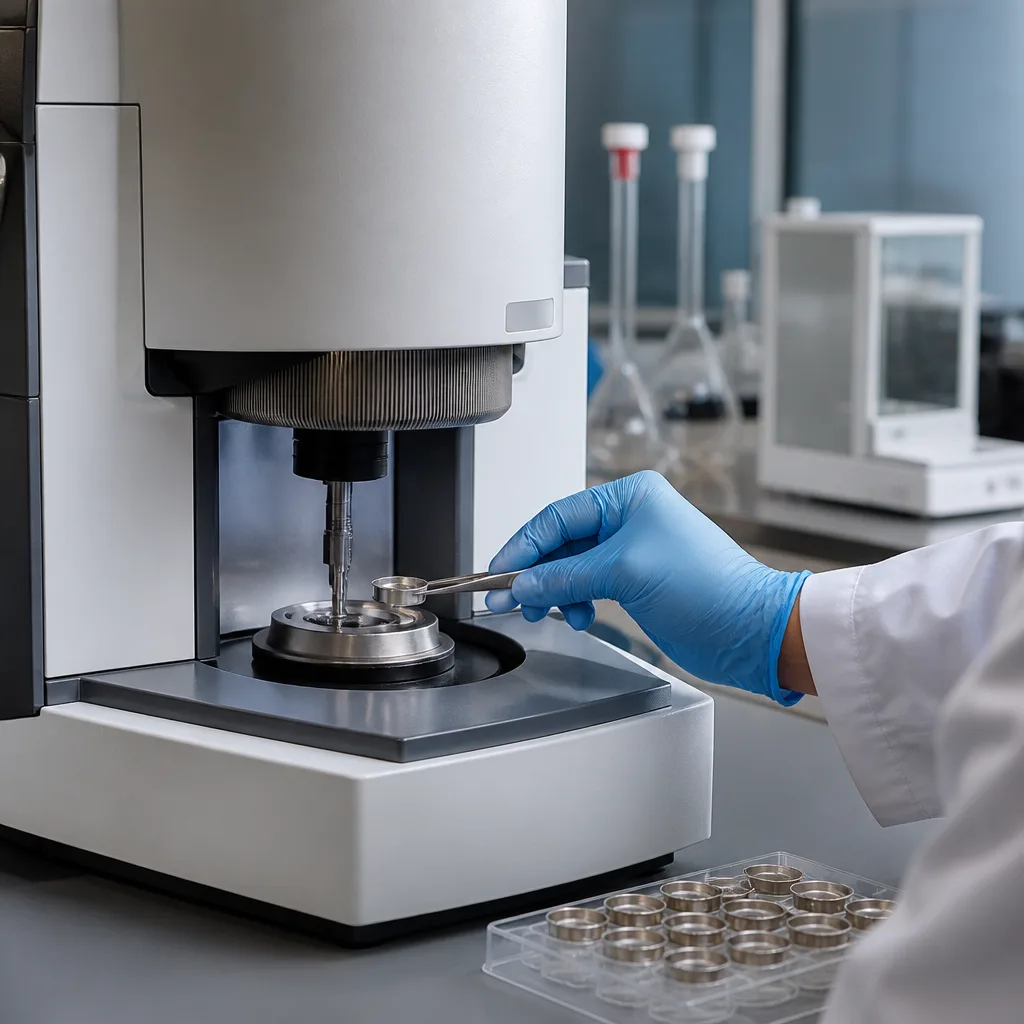
Oxidation onset temperature is a relative measure of the oxidative stability of a material being evaluated at a specific heating rate and in an oxidative environment (e.g., oxygen). The higher this value, the more stable the material. Oxidation onset temperature values can be used for comparison purposes and are not an absolute measurement, such as oxidation induction time at a constant temperature. The presence or effectiveness of antioxidants can be determined using these test methods.
Typical applications of these test methods include the oxidative stability of edible oils and fats (oxidative rancidity), lubricants, greases, and polyolefins.
ASTM E2009 is a critical technical standard primarily used to determine the oxidative stability of hydrocarbons in the automotive, lubricant, and chemical industries. By identifying the specific temperature at which a material begins to react with oxygen, engineers can predict the shelf life and performance limits of fuels, oils, and polymers.
The described test method uses differential scanning calorimetry (DSC). In this procedure, a small sample of the hydrocarbon is placed in a cell and heated at a constant rate while being exposed to a continuous stream of oxygen or air. The device measures the difference in heat flow between the sample and an inert reference. Since oxidation is an exothermic reaction (it releases heat), differential scanning calorimetry detects a sharp increase in energy output when the sample begins to oxidize.
While the ASTM E2009 standard focuses on the oxidation onset temperature, it is often considered in conjunction with the ASTM D3895 standard, which measures the oxidation induction time.
The oxidation onset temperature refers to the temperature at which oxidation begins when the sample is heated at a dynamic rate (e.g., 10 degrees per minute). The oxidation induction time is the time it takes for oxidation to begin while the sample is held at a constant, high temperature.
The ASTM E2009 standard is often preferred for rapid screening of unknown materials because it provides a temperature-based ceiling for stability on a single heating ramp.
The results of this test are vital for various practical applications:
The ASTM E2009 standard measures the physical onset of a rapid exothermic reaction. It does not necessarily account for slow, long-term degradation that may occur at much lower temperatures over the years. Furthermore, factors such as sample mass, oxygen flow rate, and crucible type (aluminum vs. gold-plated) can affect the results, requiring strict adherence to a standardized protocol for reproducible data.
In short, the ASTM E2009 standard focuses on evaluating the performance of protective clothing materials under conditions simulating exposure to molten materials, particularly molten metal splashes. This standard is especially important in industries where workers are exposed to high-temperature hazards, such as metal casting, foundries, welding, and steel production.
The primary purpose of this standard is to evaluate how well a material can resist damage when exposed to molten metal splashes. The test helps determine whether protective fabrics can:
This is crucial for ensuring worker safety in environments where accidental splashing of molten metal is possible.
The key features of the ASTM E2009 standard are as follows:
The ASTM E2009 standard is widely used in the following areas:
This standard supports the development and certification of heat-resistant clothing, such as those listed below:
The ASTM E2009 standard is considered important for the following reasons:
While the ASTM E2009 standard is extremely valuable, it does have some limitations:
Therefore, it is often used in conjunction with other thermal and flame resistance standards.
In conclusion, the ASTM E2009 standard plays a crucial role in evaluating the resistance of protective clothing materials to molten metal splashes.
For many years, our organization, with its competent and experienced team, has been understanding the needs of its clients, providing the advanced testing services they require, and assisting them in the establishment, implementation, and improvement of management systems. Within this framework, we also provide testing services in accordance with the ASTM E2009 standard.
To get an appointment, to get more detailed information or to request an evaluation, you can ask us to fill in our form and reach you.

