

The standard 'ASTM D1384-04 Standard test method for corrosion testing of engine coolants on glassware' developed by the American Society for Testing and Materials (ASTM) describes a simple beaker-type procedure for evaluating the effects of engine coolants on metal specimens under controlled laboratory conditions.
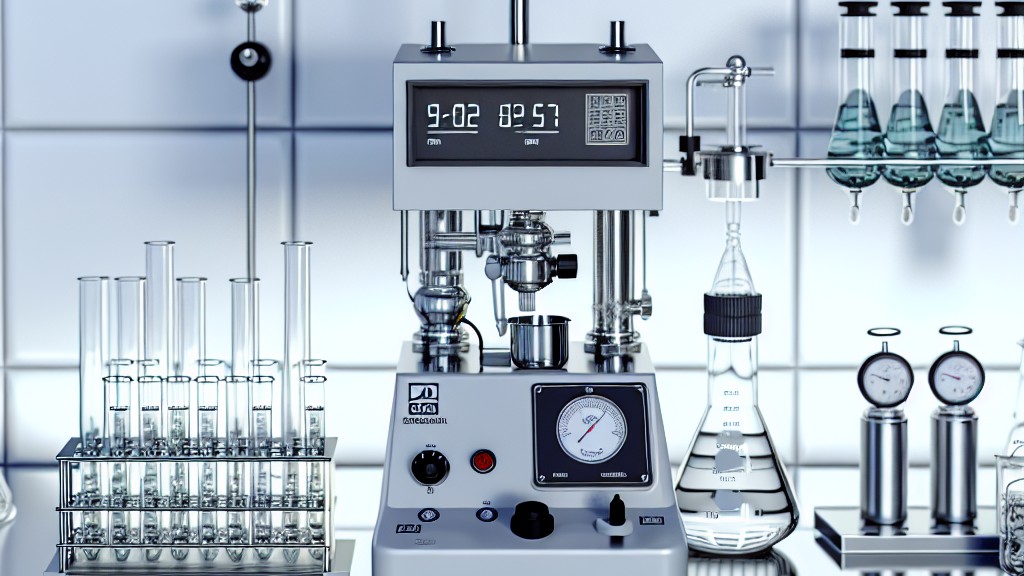
In this test method, metal samples typical of those found in engine cooling systems are completely immersed in the viewing area and are available for further evaluation. However, the results of this test method cannot stand alone as evidence of satisfactory corrosion inhibition. The true service value of an engine coolant formulation can only be determined by more extensive bench, dynamometer and field testing.
The main equipment used in these tests includes:
The specifications specified in this test method have been accepted by automobile manufacturers, but their composition may not be the same as that of alloys currently used for engine cooling system components. Therefore, samples other than those specified in this test method may be used by mutual agreement of the parties involved.
In preparing test specimens, cast iron and cast aluminum specimens with cut surfaces measuring 25,4 mm x 50,8 mm are sanded with coarse grade (No. 1) emery cloth. Burrs are removed from coupon edges and holes. All specimens are brushed vigorously using a damp bristle brush and ground pumice powder or fine silicon carbide grit until the entire metal area is bright, shiny and free from visible oxide film or tarnish.
Samples are rinsed thoroughly with tap water, then rinsed with acetone, dried and weighed to the nearest 1 mg. Cast aluminum samples should be dried to constant weight in a 100°C oven for 1 hour before recording the weight. If test samples are not used immediately, they are kept in a desiccator until needed.
The concentration of the engine coolant to be tested should be:
The sample is prepared in accordance with ASTM D1176, 'Preparation of solutions requiring inclusion of separated solids and liquids'. However, caustic water is used for dilution instead of distilled water. Therefore, all insoluble material is included in the representative sample. The specified caustic water can be prepared by dissolving the following amounts of anhydrous sodium salts in distilled or deionized water:
The resulting solution should be completed to a volume of 20 L with distilled or deionized water at 1 degrees.
If relatively large quantities of corrosive water are required for testing, a concentrate can be prepared by dissolving ten times the amount of the above three chemicals in distilled or deionized water and adjusting the total volume to 1 L by adding more distilled or deionized water. If necessary, the water concentrate is diluted to a ratio of one volume part of the concentrate to nine volume parts of distilled or deionized water.
The test conditions are as follows:
Our organization, which has been trying to support businesses from every sector with its testing, measurement, analysis and evaluation studies carried out in a wide range for years, has a strong staff that closely follows the developments in the world in the field of science and technology and constantly improves itself. In this context, testing services in accordance with the "ASTM D1384-04 Standard test method for corrosion testing of engine coolants in glassware" standard are also provided to businesses.
To get an appointment, to get more detailed information or to request an evaluation, you can ask us to fill in our form and reach you.

