

Developed by BMW, a multinational vehicle manufacturer, the “BMW PR 357 Dimensional Stability” standard describes a procedure for determining the dimensional stability of vehicle interior upholstery and seat covers under extreme climate conditions. This standard is a fundamental standard for interior material durability. The BMW PR 357 standard focuses specifically on dimensional stability testing for vehicle interior materials and seat covers, particularly in extreme climate conditions. This testing is critical in the automotive industry, where interiors must withstand severe temperature fluctuations without excessive bending, shrinking, or expanding.
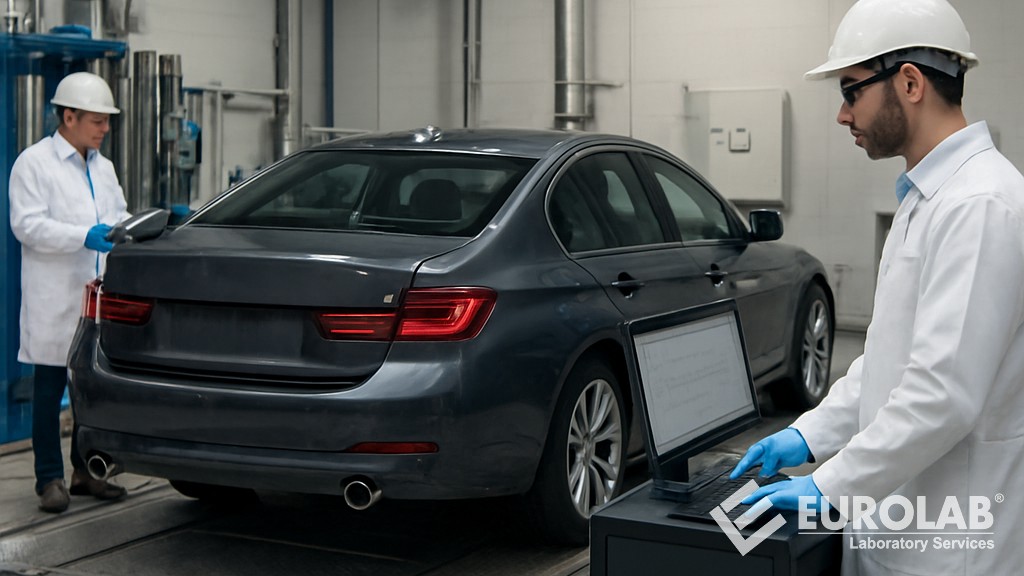
The purpose of this standard is to evaluate how materials such as fabric, leather, plastic, and composites used in instrument panels, door panels, seats, and headliners maintain their shape and dimensions when exposed to sudden temperature and humidity changes. Real-world scenarios include hot summers in deserts or cold winters in polar regions. In these conditions, interiors can rise above 80 degrees Celsius or drop below -40 degrees Celsius in parked vehicles. The described method involves subjecting samples to extreme conditions in environmental chambers. This typically includes:
Measurements are taken to detect any shrinkage, expansion, or deformation before, during, and after the cycles. This standard is used in conjunction with other BMW PR tests (e.g., BMW PR 303 standard for equipment parts or BMW PR 308 standard for bonded joints) in advanced accredited laboratories.
Essentially, BMW vehicles are designed for global markets, from scorching desert heat to freezing winters. Poor dimensional stability can lead to:
The BMW PR 357 standard ensures that suppliers meet BMW's stringent requirements before parts are approved for production. This standard is part of a broader range of original equipment manufacturer (OEM) standards that overlap with ISO, DIN, and VDA norms but are tailored to BMW's high expectations.
This standard is compared to similar standards as follows:
The BMW PR 357 standard directly contributes to the legendary durability of BMW interiors. Owners of these vehicles benefit from materials that age gracefully, retaining their premium feel even after years of exposure to sunlight, heat, and cold.
In short, the BMW PR 357 standard is a test specification concerning the dimensional stability of interior and seat cover components under extreme climatic conditions. More simply, it's a standard test and requirement from BMW stating that interior materials, particularly seat covers and linings, must be resistant to deformation, shrinkage, expansion, warping, or otherwise alteration when exposed to severe climatic conditions (heat, humidity, and possibly cold) over time.
Here are the main reasons why this standard is important for BMW and its suppliers:
In general, the BMW PR 357 standard includes the following:
In short, the BMW PR 357 standard is an example of the meticulous engineering that underpins BMW's reputation for quality, ensuring that the car's interior looks and feels as good as it did on day one, even ten years later.
For many years, our organization, with its competent and experienced staff, has been understanding the needs of its customers, providing the advanced testing services they require, and assisting them in the establishment, implementation, and improvement of management systems. Within this framework, we also provide testing services in accordance with the "BMW PR 357 Dimensional Stability" standard.
To get an appointment, to get more detailed information or to request an evaluation, you can ask us to fill in our form and reach you.

