

Developed by BMW, a leading German multinational company in the automotive industry, the “BMW PrV 152 Environmental Resistance” standard is a BMW-specific test specification used for quality assurance and material verification of specific vehicle components in the automotive sector. This standard primarily applies to:
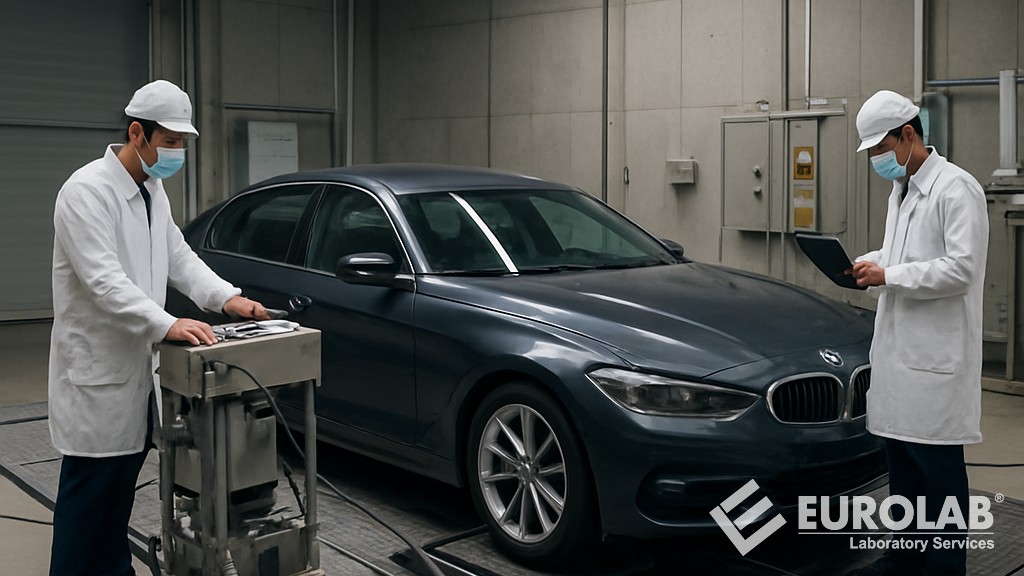
These can be foam-supported or unsupported, and may have additional insulation layers. These parts are typically manufactured from plastic composites, fiber-reinforced materials, or multilayer structures designed to protect the engine compartment from heat, reduce noise, provide protection against road debris/splash, and contribute to aerodynamics.
The full BMW PrV 152 standard encompasses a range of performance and durability requirements for these components, including mechanical strength, thermal resistance, environmental durability, and material integrity under automotive conditions.
A frequently referenced subsection is BMW PrV 152 § 2.4, which focuses solely on chemical resistance (resistance to environments). This standard assesses how well materials can withstand various automotive fluids and substances they might encounter in real-world use. For example,
This subsection applies to materials and components covered by the BMW PrV 152 standard:
The test ensures that these parts maintain their functional integrity, mechanical properties, and appearance when exposed to typical automotive fluids and environmental contaminants encountered during vehicle operation or service.
Underbody and engine compartment components are regularly exposed to leaks, spills, road sprays and service fluids. The BMW PrV 152 § 2.4 standard verifies long-term resistance to deterioration, swelling, cracking, softening, brittleness, discoloration, loss of adhesion or other types of damage that could compromise these aspects.
Failure to pass this test may lead to the part being rejected during supplier qualification or mass production approval.
The BMW PrV 152 § 2.4 test method generally follows these steps:
The BMW PrV 152 standard typically involves exposure (immersion, drop tests, or contact) and subsequent evaluation of changes in appearance, weight, mechanical properties (e.g., tensile strength, elasticity), or deterioration (swelling, cracking, discoloration). These protective panels and shields are critical for:
BMW requires suppliers and manufacturers to verify parts against the BMW PrV 152 standard and ensure they meet the brand's high standards of durability and quality before approving series production.
This specification is part of BMW’s broader set of standards for interior, exterior and under-hood plastics/composites.
For those performing material qualification, supplier approval, or failure analysis related to BMW engine compartment/underbody parts, the BMW PrV 152 standard (specifically BMW PrV § 2.4 standard for chemical resistance) is an important benchmark.
For many years, our organization, with its competent and experienced team, has been understanding the needs of its clients, providing the advanced testing services they require, and assisting them in the establishment, implementation, and improvement of management systems. Within this framework, we also provide testing services in accordance with the BMW PrV 152 standard.
To get an appointment, to get more detailed information or to request an evaluation, you can ask us to fill in our form and reach you.

