

The “KIA MS260-13 Sponge rubber quality” standard, developed by Hyundai-Kia Motors Corporation, the oldest motor vehicle manufacturer in Korea, describes a procedure for determining the quality of sponge rubber used in materials such as packaging, pads, etc. for waterproofing, dustproofing, cushioning, soundproofing and similar purposes.
The types and symbols of sponge rubber are listed in the tables provided in the standard as follows:
The general requirements in this standard are described as follows:
Sponge rubber must be subjected to tests for the essential requirements defined in the standard and, if applicable, the requirements of the sub-classification symbol and meet the requirements.
In this standard the detailed requirements are described on the following basis:
In general, the standard condition of the laboratory in tests is 23 degrees plus/minus 2 degrees and 50 percent plus/minus 5 percent relative humidity. When the laboratory cannot be kept in this condition, the ambient temperature and relative humidity should be reported. The test sample should be kept in the specified standard condition for at least 72 hours.
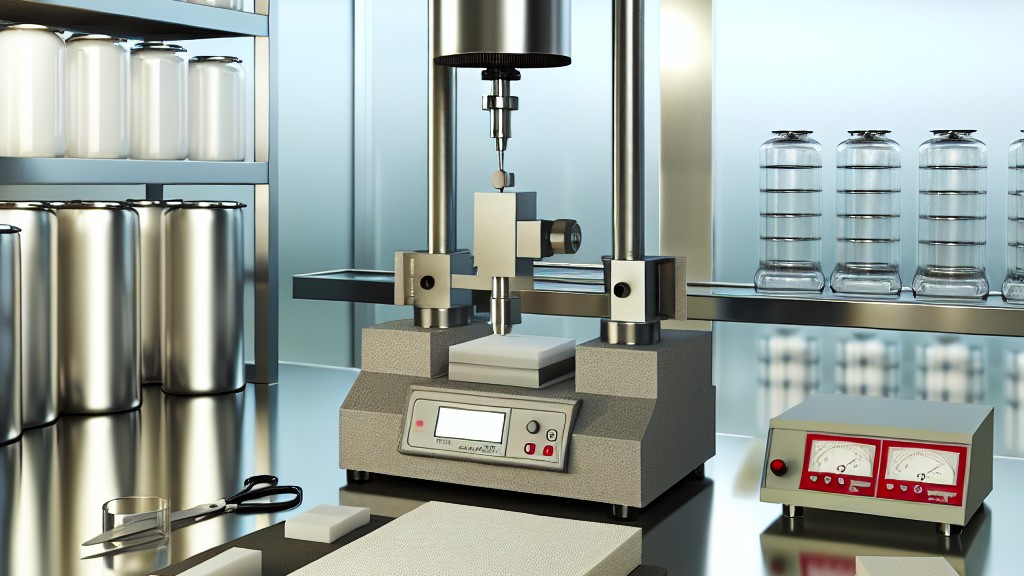
Hardness test: A sponge rubber sheet is placed on a flat stand with a plurality of 20 mm diameter holes at 6 mm center distance to easily evacuate air. The pressure plate is larger than the sample area and the surface is smooth. A block specimen with dimensions of 50 mm wide, 50 mm long and 25 mm thick is prepared. Then the test is continued as specified in the standard.
Oven aging test: After measuring the hardness of a test sample according to this standard, the test sample is subjected to oven aging in accordance with the “KIA MS200-41 Test standard - Soft vulcanized rubber” standard under the conditions in the table given in the standard. After removal, the sample is kept at room temperature for 60 minutes. Its hardness is measured again. The hardness change is calculated by the formula given in the standard.
Water absorption test: In order to prevent areas that have adhered to the mold during production, a sharp-edged sponge rubber is flattened and smoothed and used as a test sample. The test sample is kept horizontally for 25 hours in a container filled with distilled water at room temperature, 24 mm below the level. After removal, the entire surface is wiped with a twisted wet cloth and the ends are immediately cut off approximately 5 mm from each, including the cutting edge. Care is taken to ensure that no water remains in the section. The cut is sanded to a flat surface using approximately 100 mesh waterproof sandpaper. The weight and volume of the sample are measured. It is then dried at 70 degrees plus/minus 5 degrees until its weight is fixed. It is cooled in a dryer and its weight is measured. Its absorbency is calculated according to the formula given in the standard.
Compression set test: The thickness of a sponge rubber test specimen is measured exactly. The test specimen is compressed and clamped to 50 percent of its initial thickness using aluminum press plates with parallel surfaces on both sides. The clamped specimen is heated under the conditions specified in the table. After removing from the oven, it is left at room temperature for 30 minutes. The thickness is then measured. The compression set is calculated using the formula given in the standard.
Ozone resistance test: This test is carried out in accordance with the “KIA MS200-41 Test standard - Soft vulcanized rubber” standard. The test conditions should be in accordance with the table.
Cold brittleness test: This test is carried out in accordance with the “KIA MS200-41 Test standard - Soft vulcanized rubber” standard. The test is carried out at minus 40 degrees plus/minus 5 degrees.
Stain resistance test: A strip sample of 60 mm in length, 10 mm in width, and approximately 2 mm in thickness is placed between two panels to be stained (white baked paint panels) as shown in the figure given in the standard. A load of 4,9 N is applied and placed in a temperature control oven conditioned at 80 degrees plus/minus 2 degrees. It is kept in the temperature control oven for 16 hours. After removing from the oven, the paint panels are immediately removed from the test sample. The surface of the paint panels is rinsed and examined for staining. Then, the paint panels are exposed to an ultraviolet carbon weather-o-meter for 24 hours. The paint panels are rinsed and examined for staining. The staining of the coating is evaluated by comparing it with the coating panel subjected to the blank test.
For each test item described in this standard, the test report must be submitted to the relevant material team and quality control departments. Whenever materials, recycling and suppliers are changed, the test report must be submitted and approved.
Our organization has a strong staff that closely follows the developments in the world in the field of science and technology and constantly improves itself. Among the numerous test, measurement, analysis and evaluation studies provided for businesses in various sectors, there are also testing services in accordance with the "KIA MS260-13 Sponge rubber quality" standard.
To get an appointment, to get more detailed information or to request an evaluation, you can ask us to fill in our form and reach you.

