

The “GMW 14333 Fuel Resistance of Automotive Exterior Materials and Components” standard, developed by General Motors Worldwide (GMW), includes an engineering testing procedure used to evaluate how resistant automotive exterior materials and components are to exposure to fuels. This standard applies specifically to painted plastics, molded colored plastics, coatings, and other exterior components that may come into contact with gasoline or other automotive fuels during vehicle operation, maintenance, or accidental fuel spills.
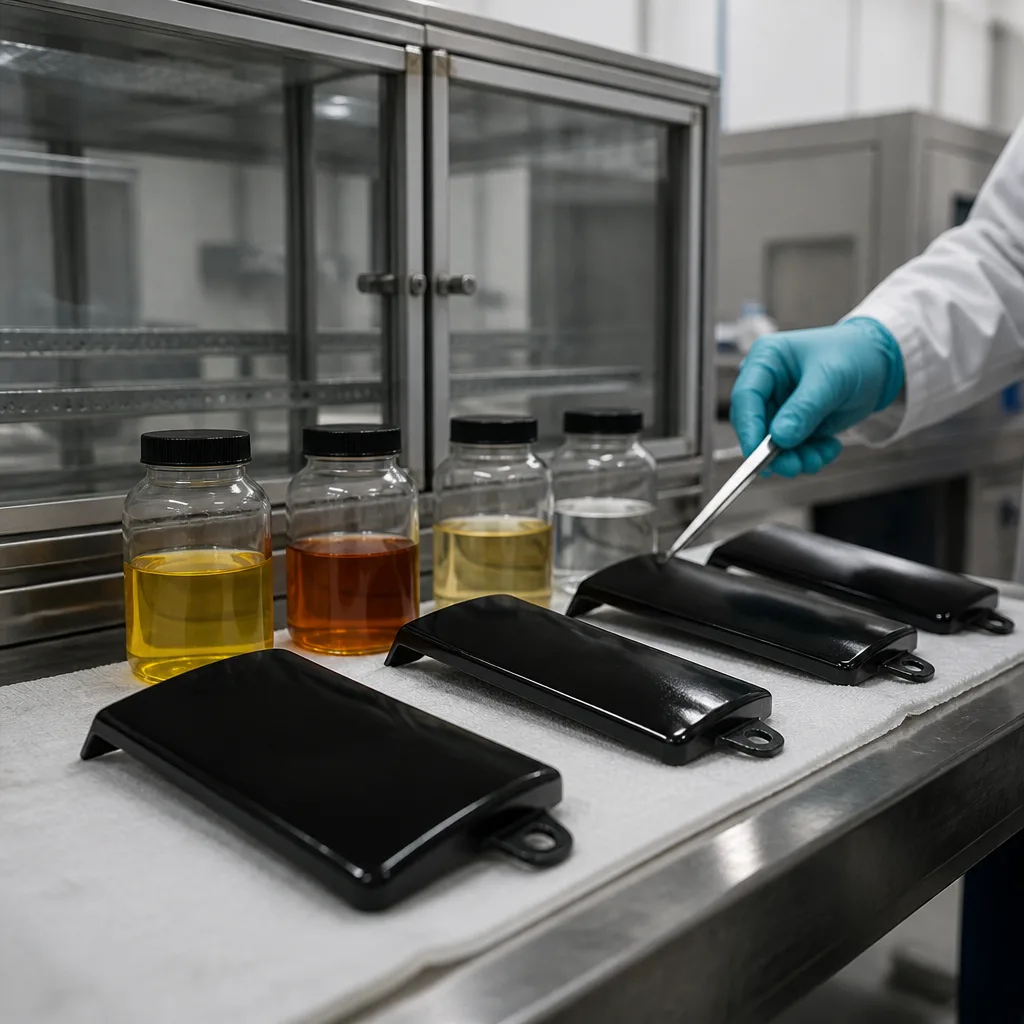
The primary purpose of the GMW 14333 standard is to define the effects of automotive fuels on vehicle exterior materials and components. Automotive exterior parts can be exposed to fuel in various ways:
Fuel exposure can cause various forms of degradation, including:
The GMW 14333 standard provides a controlled laboratory procedure to determine whether a material or component can maintain its required appearance and performance after fuel exposure. This standard is primarily designed for automotive exterior materials and components that may come into contact with fuel. Typical applications include:
This standard identifies painted or molded color vehicle components, particularly those located in areas with potential fuel exposure, as a critical application. Fuel resistance testing is commonly included in performance requirements for painted plastic components. However, the exact parts and acceptance requirements are typically determined by the relevant General Motors component specification, drawing, material specification, or engineering requirement.
The GMW 14333 standard utilizes the principle of controlled exposure of test specimens to a suitable automotive fuel or specified test fluid. The general principle is as follows: specimen is conditioned - exposed to fuel - exposure is repeated - recovery/reconditioning is allowed - specimen is inspected and evaluated. This procedure relies on the evaluation of the material after repeated short-term immersions or, depending on the specified method, after continuous fuel exposure. This is important because a material may withstand short-term contact with fuel but degrade after repeated exposure.
The GMW 14333 standard defines various possible test approaches:
For organic coatings, an intermediate hardness assessment is also performed after the fifth dip using the relevant nail hardness procedure. Exposure is then continued to complete the specified cycles.
After exposure, the samples are reconditioned and then evaluated.
This standard specifies that testing should be conducted at approximately 23 degrees plus/minus 5 degrees Celsius, unless otherwise specifically required by the relevant requirement. Temperature control is important because fuel-material interactions can change significantly with temperature.
Whenever possible, complete production components are tested. However, when component size, geometry, or configuration makes full component testing impractical, representative sections may be cut from the component. The cut edges are appropriately masked to prevent fuel penetration from areas that would not normally be exposed in the finished component. For organic coatings, specially prepared test panels may also be used. This standard defines representative panels with approximate dimensions of: 250 mm plus/minus 5 mm x 20 mm plus/minus 2 mm x 1 mm plus/minus 0,5 mm, with a substrate representing the production purpose. This production purpose principle is important because the laboratory panels must reproduce the actual substrate/coating system as closely as possible.
One of the key features of the GMW 14333 standard is that the exposure fluid must represent the fuel environment relevant to the intended application. Recent versions of this standard refer to specific fuel compositions and related standards for fuel preparation and characterization. A previous revision also describes a specific test fuel formulation containing the following components:
Proper conditioning of test samples is important because newly manufactured coatings, molded plastics, adhesives, and other materials may not yet have reached their intended final properties. This standard includes minimum holding times for specific samples. These requirements help ensure that the test measures the fuel resistance of the material, rather than simply measuring the effects of incomplete curing or stabilization.
The purpose of post-fuel exposure assessment is to determine whether the fuel exposure has led to unacceptable deterioration. Depending on the material and applicable specification, observations may include:
Specific fit/fail criteria are generally determined according to the applicable component or material specification.
Fuel resistance is particularly important for vehicle exterior components because fuel exposure can occur even if a component isn't intended to be continuously submerged in fuel. For example, gasoline could accidentally come into contact with the following during refueling:
A coating that appears acceptable under normal environmental conditions may soften or lose its adhesion after fuel exposure. Therefore, the GMW 14333 standard helps General Motors and its suppliers identify materials that can maintain their required performance when exposed to realistic fuel contact conditions.
For many years, our organization, with its competent and experienced staff, has been understanding the needs of its clients, providing the advanced testing services they require, and assisting them in the establishment, implementation, and improvement of management systems. Within this framework, we also provide testing services in accordance with the GMW 14333 standard.
To get an appointment, to get more detailed information or to request an evaluation, you can ask us to fill in our form and reach you.

