Fiat 50488-01 Scratch Resistance Test for Paints, Enamels, Protective Coatings and Related Products.
Developed by Fiat Chrysler Automobiles (FCA) (now Stellantis), an Italian-American automotive company, the “Fiat 50488-01 Scratch Resistance Test for Paints, Enamels, Protective Coatings and Related Products” standard is an automotive material and coating testing standard used to evaluate the stone chip resistance (gravel impact) of paints, enamels, protective coatings, and related surface treatments used on vehicle components.
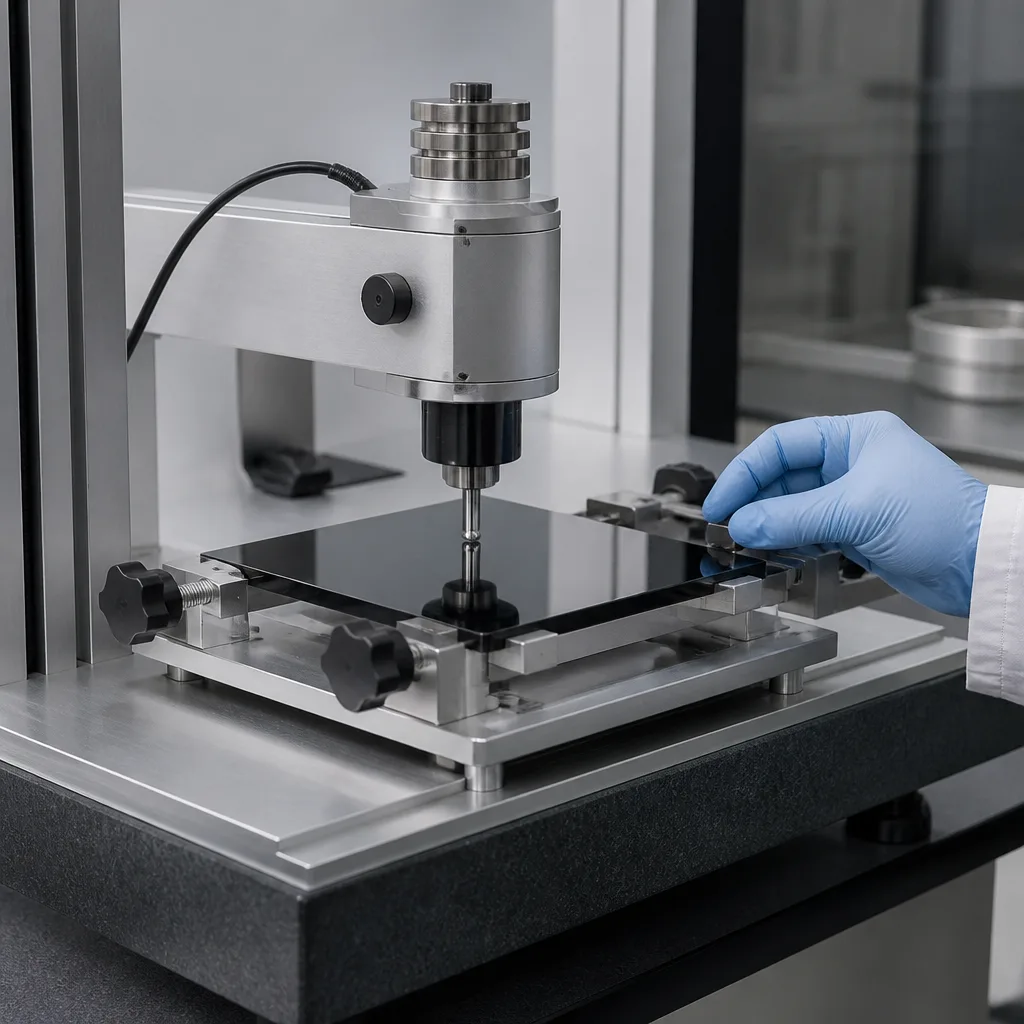
This standard is commonly referenced in coating qualification procedures for body panels, underbody protection systems, and painted metallic or plastic automotive parts.
Vehicles are generally exposed to the following while driving:
- The road is gravel.
- Kum
- Salt particles
- Pieces flying off the tires
- High-speed rock impact
These impacts can damage the paint layers and expose the underlying substrate. Once the protective coating is broken, corrosion can begin.
The Fiat 50488-01 standard was developed to simulate these real-world conditions in a controlled laboratory environment and to determine the following:
- How resistant a coating is to cracking
- Whether corrosion spreads after impact damage
- How well multilayer coating systems adhere after mechanical attack.
The described test method is particularly important for the following:
- Side skirts
- Wheel arches
- Lower body structures
- Lower body coverings
- Protective paints
- Powder coatings
- Electroplated metal parts
This method typically uses a gravel gauge-type device that pushes standardized gravel or ball particles toward a coated test panel at controlled pressure and angle. Loose paint particles are cleaned after impact, and the damage is visually assessed. In many applications, samples are also subjected to salt spray corrosion testing. The coating is graded according to the degree of damage and corrosion spread.
This standard is often associated with the following:
- Fiat 50180 standard for corrosion exposure.
- Fiat 50461 standard for coating adhesion evaluation.
- Liquid resistance test standard: Fiat 50473
In general, this testing method follows these steps:
- Sample preparation: Painted metal or coated plastic panels are prepared according to the coating system specifications.
- Gravel impact exposure: Standardized gravel is sprayed onto the surface under controlled conditions.
- Tape removal: Adhesive tape can be applied and removed to separate weak paint patches.
- Corrosion prevention: Some Fiat specifications require the following:
- 24-hour salt spray exposure after impact
- Assessment of corrosion spread from damaged areas.
- Visual assessment: The damaged area is compared against acceptance criteria or photographic evaluation standards.
- Evaluation criteria: Coatings are generally evaluated according to the following criteria:
- Number of cracks
- The extent of coating loss
- Surface exposure
- Corrosion spread
- Layer separation
- Loss of adhesion in impact zones
Many Fiat supply specifications require a minimum rating such as 7B for acceptable crack resistance performance.
The Fiat 50488-01 standard is important because stone chip damage is one of the main causes of:
- Early corrosion
- Paint defect
- Cosmetic deterioration
- Reduced vehicle durability
A coating that performs poorly in this test can cause the following:
- Rusting rapidly in winter conditions.
- Failure to meet warranty conditions
- Loss of adhesion after road exposure
- Requiring thicker or redesigned protective systems
For automotive manufacturers, this test helps to ensure the following:
- Long-term corrosion protection
- Consistent paint durability.
- Better customer perception
- Original equipment manufacturers must comply with coating specifications.
Common applications of the Fiat 50488-01 standard include:
- Original equipment manufacturers coating verification.
- First-stage supplier qualification assessment
- Paint and powder coating development
- Corrosion engineering laboratories
- Vehicle endurance programs
The areas where this standard is applicable are as follows:
- Electroplating systems
- Primer and topcoat systems
- Powder coatings
- Bituminous sub-body coatings
- Protective chip-preventing coatings
The Fiat 50488-01 standard is necessary because automotive coatings are constantly exposed to mechanical damage from road debris during normal vehicle use. Without a standardized stone chip resistance test, manufacturers would have difficulty predicting how coatings and painted components will perform over the vehicle's lifespan. The main reasons why this standard is important are:
- Corrosion prevention after paint damage: Small stone chips can penetrate clear coatings, primer paints, and undercoat layers. When bare metal is exposed, moisture and road salt can quickly initiate corrosion. This standard evaluates:
- Resistance of the coating to cracking.
- The damage remains localized.
- Corrosion spreading beyond the impact area.
- Simulation of real road conditions: Vehicles are subjected to thousands of impacts at high speed: gravel, sand, stones flying from tires, construction debris, etc. This standard reproduces these conditions in a controlled laboratory environment so that engineers can:
- Comparing coating systems
- Estimating field durability
- Improving material formulations
- Verifying supplier quality
- Maintaining vehicle appearance: Stone cracking is not just a structural problem, but also a cosmetic one. Poor chip resistance can lead to visible paint damage, pitting, peeling, loss of gloss, and premature aging. This standard helps manufacturers protect paint quality, appearance, customer satisfaction, and brand perception.
- Ensuring long-term coating adhesion: A coating may initially appear acceptable, but fail after impact stress. This test confirms the following:
- Paint layers remaining stuck after machining
- Spread of detachment from impact points
- Maintaining the integrity of protective systems.
- Supporting materials and supplier qualifications: Original equipment manufacturers, paint suppliers, coating technologies, surface treatments, anti-cracking materials, and underbody protection systems are certified using this standard.
In summary, the Fiat 50488-01 standard is a specific automotive durability test used to evaluate the resistance of painted and coated vehicle components to stone and gravel impact. This standard plays a critical role in validating coating systems for corrosion protection and long-term vehicle appearance, especially under challenging road conditions.
For many years, our organization, with its competent and experienced staff, has been understanding the needs of its customers, providing the advanced testing services they require, and assisting them in the establishment, implementation, and improvement of management systems. Within this framework, we also provide testing services in accordance with the Fiat 50488-01 standard.



