

The “MS941-03 Thermoplastic Polymer Materials” standard, developed by Hyundai Motor Company and Kia Corporation, is a material specification that defines the requirements for thermoplastic polymer materials used in automotive wiring harness connectors. This standard defines the necessary material classifications, performance criteria, and qualification tests to ensure that connector plastics maintain reliable electrical and mechanical performance throughout the vehicle's lifespan.
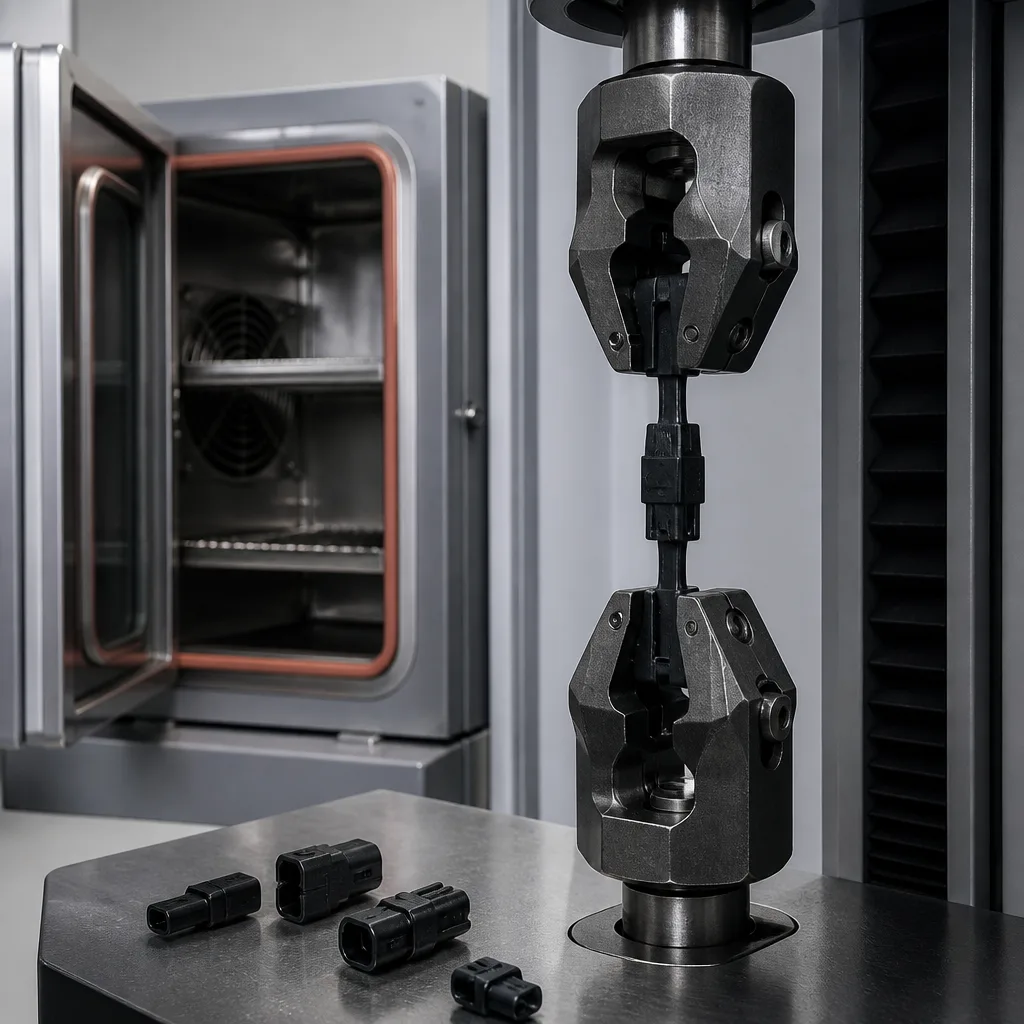
Unlike general plastics standards such as ISO or ASTM, the MS941-03 standard is an original equipment manufacturer (OEM) specific engineering specification designed for suppliers producing connector housings, terminal holders, gaskets, and other plastic electrical connector components for Hyundai and Kia vehicles.
The main objectives of this standard are:
The MS941-03 standard applies to thermoplastic materials used for the following purposes:
This specification focuses on the plastic material itself rather than the overall connector assembly.
The MS941-03 standard covers numerous engineering thermoplastics commonly used in automotive electrical systems. These include:
Material grades are classified using Hyundai/Kia internal type designations, which typically correspond to specific performance requirements.
The MS941-03 standard generally evaluates the following material properties:
These features enable the connectors to withstand mounting forces and prolonged vehicle vibrations.
Engine compartment connectors require significantly higher heat resistance than internal connectors.
Exposure should not cause the following:
Some grades are designed to meet specific flame retardant classifications.
The MS941-03 standard refers to standardized laboratory methods for the evaluation of the following:
Wherever possible, internationally recognized ISO, ASTM, or IEC methods are used, along with Hyundai/Kia-specific qualification procedures.
Only materials that meet all specified requirements are approved for use in Hyundai/Kia electrical connectors.
Materials approved under the MS941-03 standard are generally used in the following areas:
Complying with the MS941-03 standard offers several advantages:
The MS941-03 standard is primarily used by:
In conclusion, modern vehicles contain hundreds of electrical connectors that are exposed to vibration, humidity, chemicals, and extreme temperatures over many years. Even minor degradation of connector plastics can lead to loose terminals, electrical short circuits, or system failures. The MS941-03 standard helps prevent these problems by defining consistent material performance requirements and qualification testing for thermoplastic connector materials. This contributes to reliable electrical systems, fewer warranty claims, and increased vehicle durability.
In short, the MS941-03 standard is an engineering material specification for thermoplastic polymers used in automotive wiring harness connectors. It defines material classifications and qualification requirements covering aspects such as mechanical strength, thermal stability, electrical insulation, environmental durability, chemical resistance, and flame performance. By standardizing these requirements, the specification helps ensure that connector materials provide safe and reliable performance throughout a vehicle's operational life.
The main sections of this standard are as follows:
For many years, our organization, with its competent and experienced staff, has been understanding the needs of its clients, providing the advanced testing services they require, and assisting them in the establishment, implementation, and improvement of management systems. Within this framework, we also provide testing services compliant with the MS941-03 standard.
To get an appointment, to get more detailed information or to request an evaluation, you can ask us to fill in our form and reach you.

