

The “Ford FLTM BP 101-01 Rubber - Ozone-Induced Degradation” standard, developed by Ford Motor Company (Ford), describes a test method used to evaluate the resistance of rubber materials to ozone-induced degradation. Ozone present in the atmosphere can attack elastomeric materials, causing surface cracking, loss of elasticity, and premature failure. This test method provides a controlled procedure to assess how rubber components perform when exposed to accelerated ozone environments representing long-term service conditions.
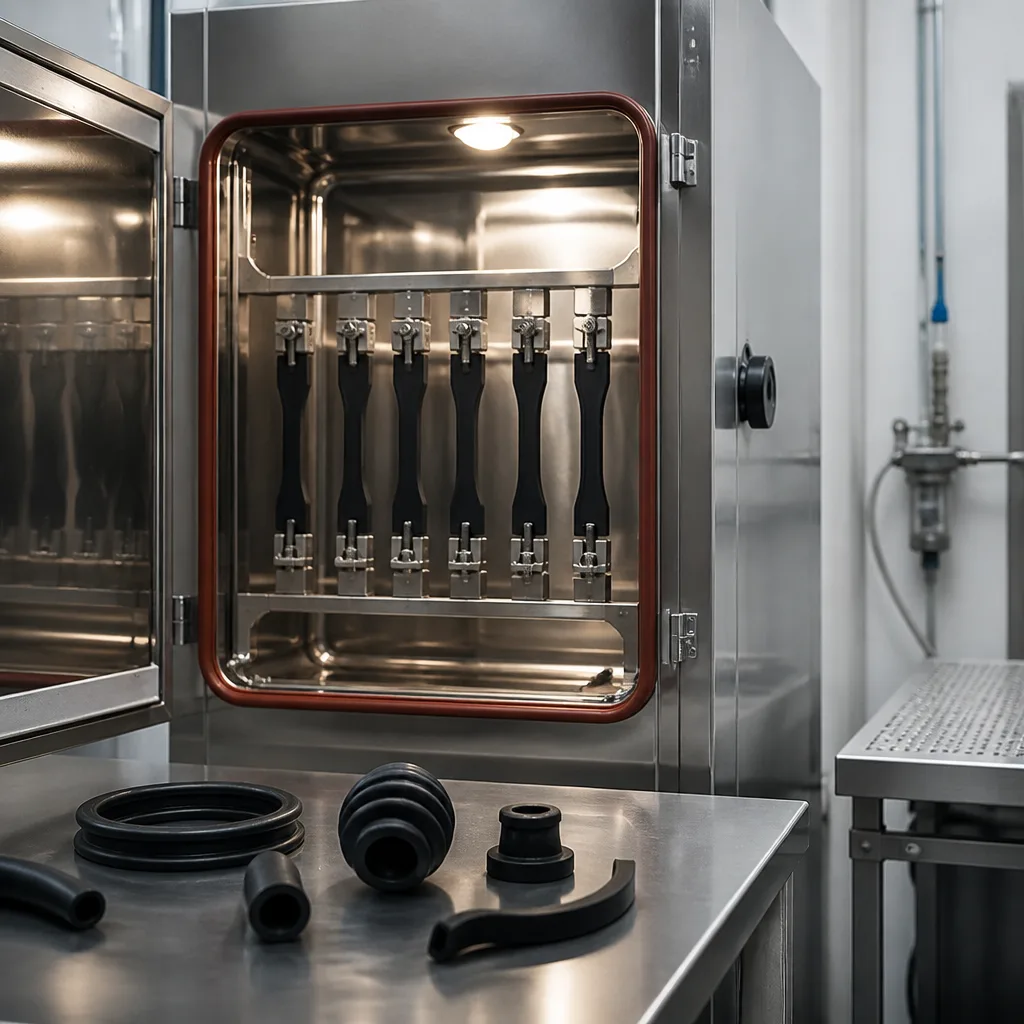
This standard is commonly applied to the following types of automotive rubber products:
The primary purpose of the Ford FLTM BP 101-01 standard is to determine a material's resistance to ozone cracking under static or dynamic stress conditions. Ozone attacks unsaturated bonds in rubber polymers, leading to surface cracks that can compromise functionality and durability. This method helps engineers in the following areas:
During testing, rubber samples are, in principle, stretched or mounted to simulate real service conditions and then exposed to a controlled ozone atmosphere. Typical exposure conditions include:
Before testing begins, samples are conditioned under the following conditions:
The Ford FLTM BP 101-01 standard includes various procedures depending on the component type:
After exposure, samples are visually inspected for ozone cracking. This standard classifies the results according to crack severity:
Higher resistance corresponds to lower crack ratings.
The Ford FLTM BP 101-01 standard refers to the following standards:
Ozone cracking is one of the most common environmental aging mechanisms affecting elastomers in vehicles. By applying this standard during material qualification, Ford ensures that rubber components maintain their performance throughout the expected vehicle lifespan.
The Ford FLTM BP 101-01 standard is required because it helps ensure that rubber components used in vehicles can withstand long-term ozone exposure without developing cracks that could lead to performance or safety failures. This standard is important for the following reasons:
This standard identifies materials that are vulnerable to ozone attack before they can be used in manufacturing processes.
This standard helps engineers predict long-term performance by simulating years of environmental exposure in a controlled laboratory test.
The materials must meet this standard. This reduces the likelihood of these problems over the vehicle's lifespan.
In these applications, ozone-induced cracking can lead to leaks, pressure loss, or system failure. Tests ensure these materials remain reliable under environmental stress.
This standard provides a standardized method for comparing materials and verifying their conformity to specifications.
This standard helps ensure that rubber components maintain their performance regardless of where the vehicle is used.
In summary, the Ford FLTM BP 101-01 standard defines a specific durability test that evaluates the resistance of rubber materials to ozone-induced degradation. Through controlled exposure and standardized crack assessment, this method helps manufacturers identify durable elastomer compounds that can withstand long-term environmental exposure. In short, it plays a crucial role in ensuring the reliability, safety, and longevity of automotive rubber components.
For many years, our organization, with its competent and experienced staff, has been understanding the needs of its customers, providing the advanced testing services they require, and assisting them in the establishment, implementation, and improvement of management systems. Within this framework, we also provide testing services to businesses in accordance with the Ford FL™ BP 101-01 standard.
To get an appointment, to get more detailed information or to request an evaluation, you can ask us to fill in our form and reach you.

