

Ford FLTM BZ 157-01 Determination of Organic Emissions from Non-Metallic Materials

Ford FLTM BZ 157-01 Determination of Organic Emissions from Non-Metallic Materials

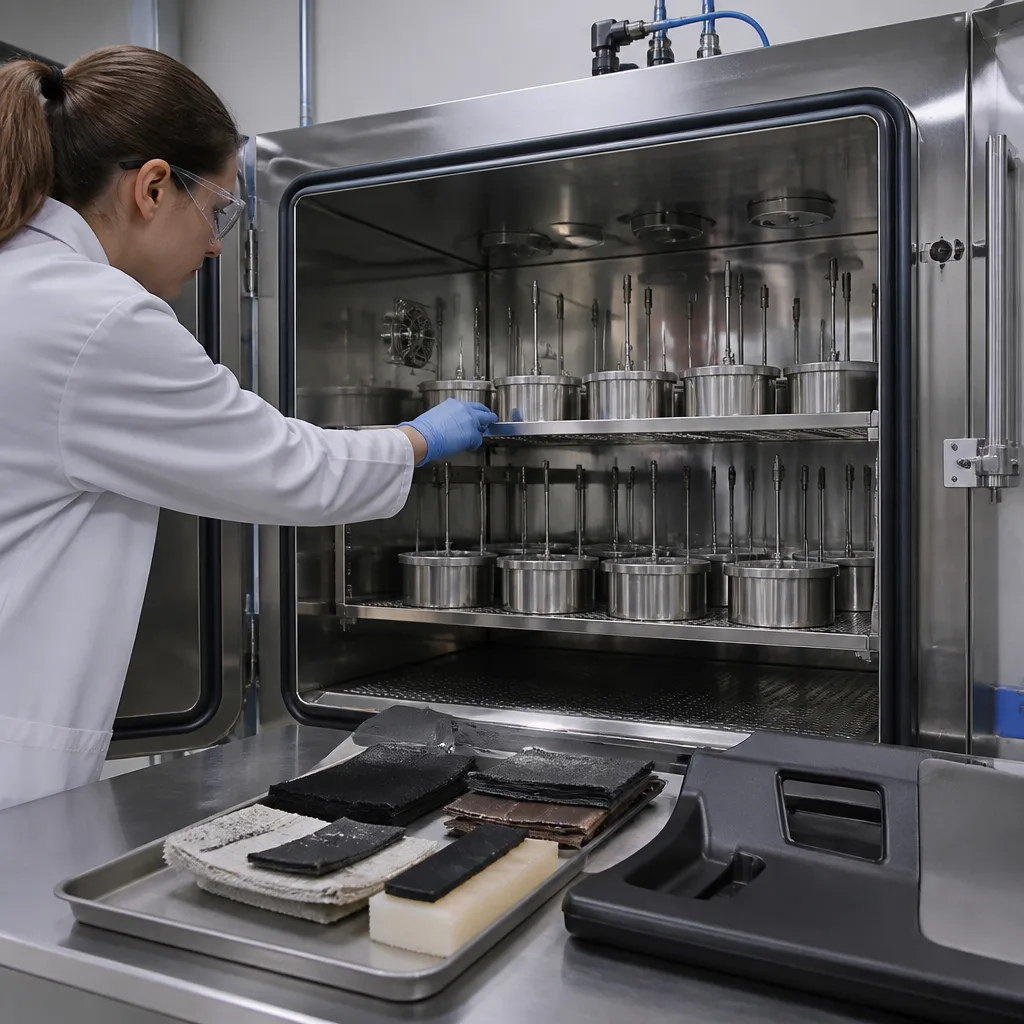
The “Ford FLTM BZ 157-01 Determination of Organic Emissions from Nonmetallic Materials Used in Vehicle Interiors by Headspace Gas Chromatography” standard, developed by Ford Motor Company (Ford), describes a laboratory test method used to determine volatile organic compound (VOC) emissions from nonmetallic materials used in vehicle interiors. This method utilizes headspace gas chromatography (HS-GC), typically in conjunction with a flame ionization detector (FID) or mass spectrometry (MS), to measure total volatile organic compounds (TVOCs) released from automotive materials under controlled thermal conditions.
Ford FLTM BZ 157-01 Determination of Organic Emissions from Non-Metallic Materials

As vehicle manufacturers place increasing emphasis on cabin air quality, passenger comfort, and regulatory compliance, the Ford FLTM BZ 157-01 standard has become a crucial evaluation tool for plastics, textiles, adhesives, foams, coatings, leather, and composite materials used in vehicle interiors.

The primary purpose of the Ford FLTM BZ 157-01 standard is to measure organic emissions released from interior materials that may contribute to:

  • Unpleasant car odors
  • Passenger discomfort
  • Condensation on interior glass surfaces
  • Decrease in perceived vehicle quality.
  • Potential health problems associated with volatile organic compound (VOC) exposure.

This standard provides a standardized procedure for comparing materials and ensuring interior components meet Ford’s vehicle interior environmental quality requirements. This standard applies to:

  • Interior furnishing materials
  • Plastics
  • Rubber components
  • Textiles
  • Carpets
  • foams
  • Adhesives and sealants
  • Leather and synthetic leather
  • Composite components

The described method is designed for non-metallic materials located in or near the passenger compartment.

In principle, the test measures volatile compounds released from a material after it has been heated under controlled conditions. Generally, this method follows these steps:

  • A representative sample is prepared.
  • The sample is placed in a sealed capless flask.
  • The sample is conditioned at high temperature.
  • According to the method, the material is tempered at 120 degrees.
  • Volatile organic compounds released into the cap space of the bottle are sampled.
  • Gaseous compounds are analyzed using gas chromatography.
  • Total VOC emissions (TVOC) are calculated from chromatographic results.

The Ford FLTM BZ 157-01 standard permits the following:

  • GC/MS (gas chromatography-mass spectrometry):
    • Preferred analytical method
    • Higher sensitivity
    • Better identification of individual compounds.
    • Improved reliability and accuracy.
  • GC/FID (gas chromatography-flame ionization detection):
    • Alternative method
    • Suitable for determining total VOC levels.
    • Some applications require Ford approval.

Ford notes that the GC/MS method is often preferred due to its superior analytical capabilities.

This method primarily determines total volatile organic compounds (TVOCs). Total volatile organic compounds represent the cumulative concentration of volatile organic substances emitted from the material being tested. Common compounds that can be detected include:

  • Toluene
  • Xylene
  • Ethylbenzene
  • styrene
  • Various solvents
  • plasticizers
  • Residual monomers
  • Production by-products

The specific compounds identified depend on the composition of the material.

The Ford FLTM BZ 157-01 standard is typically used with the following:

  • Ford FLTM BZ 108-01 VOC emission measurement using the bag method.
  • Ford FLTM BZ 156-01 Formaldehyde, aldehyde and ketone emissions
  • Ford FLTM BO 131-03 Interior Odor Assessment
  • Ford FLTM BO 116-03 Fog Light Specifications
  • Ford FLTM BZ 151-01 Micro chamber emission test

Together, these methods provide a comprehensive assessment of in-vehicle air quality.

The Ford FLTM BZ 157-01 standard is closely related to the automotive industry's VOC assessment practices and is often referenced alongside the German automotive standard VDA 277, which also addresses organic emissions from vehicle interior materials. Many testing organizations describe the Ford FLTM BZ 157-01 standard as a Ford-specific volatile organic compound emission method based on header space gas chromatography principles.

This standard is generally applied in the following situations:

  • Material qualification: The process before a material is approved for production.
  • Supplier verification: To verify compliance with Ford material specifications.
  • Product development: To compare alternative materials and formulations.
  • Root cause analysis: When complaints about excessive odor or volatile organic compounds arise.
  • Regulatory support: To demonstrate compliance with indoor air quality targets.

The method described offers the following benefits:

  • Rapid volatile organic compound screening
  • High repeatability
  • Objective emission measurements
  • Improved cabin air quality.
  • Improved passenger comfort
  • Better supplier quality control.
  • Reduced risk of customer complaints related to odor.

This standard is important for the following reasons:

  • It ensures good cabin air quality: This standard helps Ford in the following areas:
    • To consistently measure VOC emissions.
    • Identifying high-emission materials before production.
    • To reduce passengers' exposure to airborne chemicals.
    • To improve overall indoor air quality.
  • It prevents new car odor problems: Excessive VOC emissions can cause chemical odors, solvent-like odors, plastic odors, and adhesive-related odors. This standard allows Ford to inspect materials before they are used in production vehicles.
  • It supports customer health and comfort: This is a standard material qualification tool; reducing VOC emissions contributes to a healthier cabin environment.
  • It helps control material production quality: This test enables suppliers and Ford engineers to:
    • Comparing batches of materials.
    • Identifying variations in the process.
    • Improving production consistency.
    • Verifying compliance with material specifications.
  • Supports global regulatory and industry requirements: This standard helps Ford meet its internal requirements while also supporting alignment with industry practices and customer expectations in global markets.
  • It provides objective and reproducible results: This standard ensures the following:
    • Controlled sample preparation.
    • Defined test temperatures.
    • Standardized header field requirements.
    • Reproducible GC analysis.

This ensures consistent comparison of materials from different suppliers and production batches.

In conclusion, the Ford FLTM BZ 157-01 standard is a critical automotive emissions testing method designed to measure total volatile organic compound (TVOC) emissions from non-metallic interior materials using header space gas chromatography. By evaluating materials at high temperatures and quantifying their organic emissions, this standard helps Ford ensure high indoor air quality, reduce odor issues, and maintain customer satisfaction while supporting modern environmental and health expectations.

For many years, our organization, with its competent and experienced staff, has been understanding the needs of its customers, providing the advanced testing services they require, and assisting them in the establishment, implementation, and improvement of management systems. Within this framework, we also provide testing services in accordance with the Ford FLTM BZ 157-01 standard.

WhatsApp

