

The “GMW 14668 Minimum Performance Requirements for Decorative Chrome-Plated Plastic Parts” standard, developed by General Motors Worldwide (GMW), describes the minimum performance requirements for decorative chrome-plated plastic parts and components used in automotive applications.
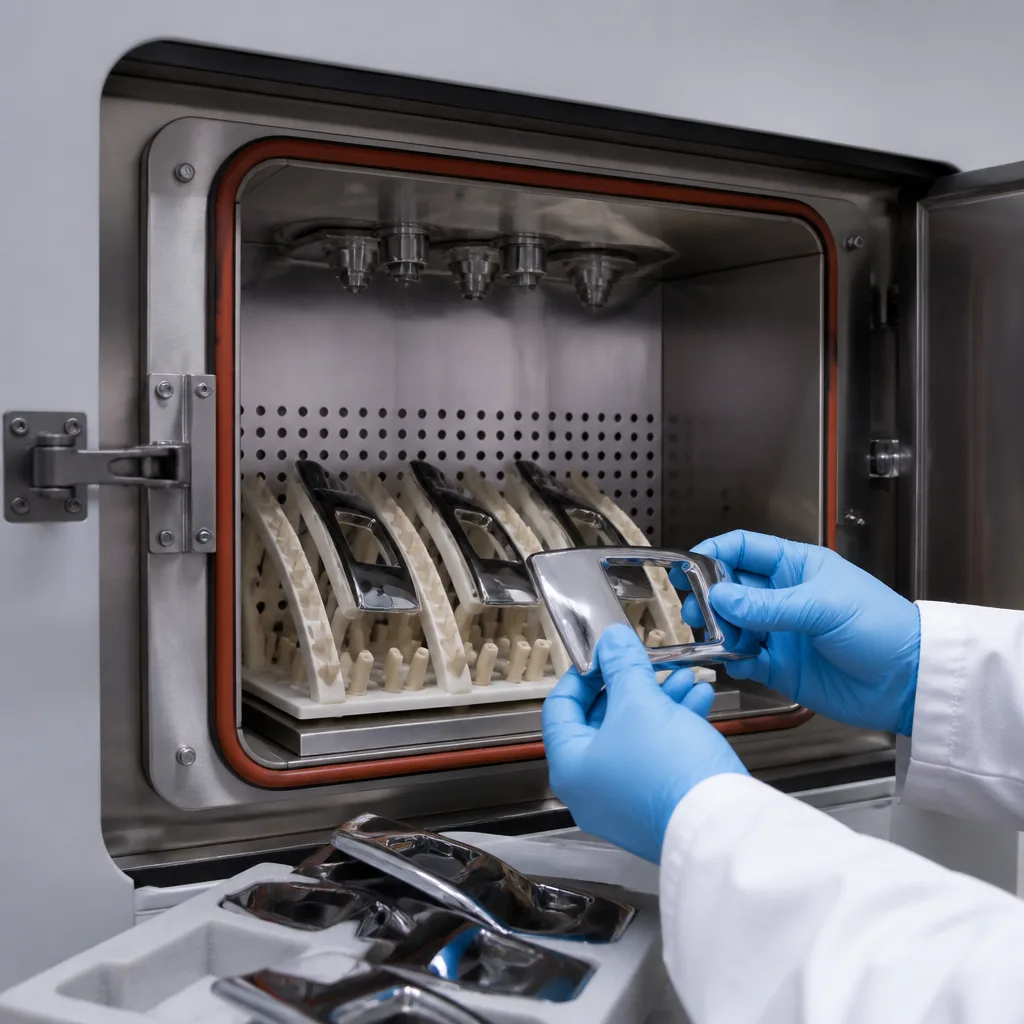
This specification is particularly important for automotive components made from plastics with multi-layer metallic coatings (typically containing copper, nickel, and chromium), such as ABS and ABS+PC. It defines requirements aimed at ensuring the decorative coating maintains its appearance, adhesion, corrosion resistance, and durability throughout the vehicle's lifespan.
The primary goal of the GMW 14668 standard is to ensure that decorative chrome-plated plastic components have adequate functional and cosmetic durability. Chrome-plated plastic parts are commonly used for items such as:
This standard defines the finish primarily as decorative and allows for different looks, including gloss, satin, brushed, dark, and grained finishes, depending on vehicle styling and applicable appearance requirements.
A typical coated plastic component consists of a non-conductive plastic substrate followed by several metallic layers. The copper layer helps provide leveling and corrosion protection, nickel provides most of the corrosion resistance and structural thickness, and chromium provides the characteristic appearance and surface properties.
The GMW 14668 standard covers copper-nickel-chromium electroplated plastic parts, including assemblies. This standard also distinguishes plating approaches and thickness requirements according to the intended application.
A key feature of the GMW 14668 standard is that the requirements vary depending on the component's location and service intensity. For example, the current specification defines indoor applications as follows:
Examples of components that might require a higher-performance Type 2 approach include interior door handles, manual gear shift lever decorative rings, and frames. Exterior components are generally exposed to more severe environmental conditions and may therefore require additional corrosion and mechanical damage resistance.
The GMW 14668 standard also recognizes different chrome plating processes:
Codes are related to internal and external applications.
This distinction is important because automotive manufacturers are increasingly controlling the chemical and environmental properties of coating processes while maintaining the required performance.
GMW 14668 standard is not just an appearance specification. It includes a series of tests designed to evaluate a complete coated plastic system. Key evaluations include:
These tests are important because stresses in the plastic substrate can contribute to cracking, blistering, or deterioration of the coating surface.
One of the most important aspects of the GMW 14668 standard is the control of coating thickness. A coating that is too thin may indicate:
On the other hand, excessive coating can increase the following:
Therefore, the goal is not simply to maximize coating thickness, but to achieve the specified thickness suitable for the component and service conditions. For complex plastic components, local geometry can make achieving uniform coating thickness challenging. Industry sources indicate that coating simulations/analyses are used for challenging geometries where the minimum thickness may be uncertain.
The GMW 14668 standard is important because decorative chrome-plated plastic parts are subjected to a combination of mechanical, thermal, chemical, and environmental stresses. A component may look perfect immediately after manufacturing, but may subsequently develop the following:
Therefore, this standard provides a common performance framework for material suppliers, coating suppliers, component manufacturers, laboratories, and General Motors engineering organizations.
In conclusion, the GMW 14668 standard goes beyond simply specifying the appearance of chrome, controlling properties such as adhesion, coating thickness, thermal stability, corrosion resistance, substrate behavior, and mechanical/environmental durability.
For many years, our organization, with its competent and experienced staff, has been understanding the needs of its clients, providing the advanced testing services they require, and assisting them in the establishment, implementation, and improvement of management systems. Within this framework, we also provide testing services in accordance with the GMW 14668 standard.
To get an appointment, to get more detailed information or to request an evaluation, you can ask us to fill in our form and reach you.

