

The “GMW 3347 Lint Retention and Acquisition Properties of Textiles” standard, developed by General Motors Worldwide (GMW), includes a test procedure used to evaluate the tendency of automotive textile materials to attract, collect, and retain lint or loose fibers during simulated use. This standard is particularly applicable to automotive seat fabrics, especially napped fabrics.
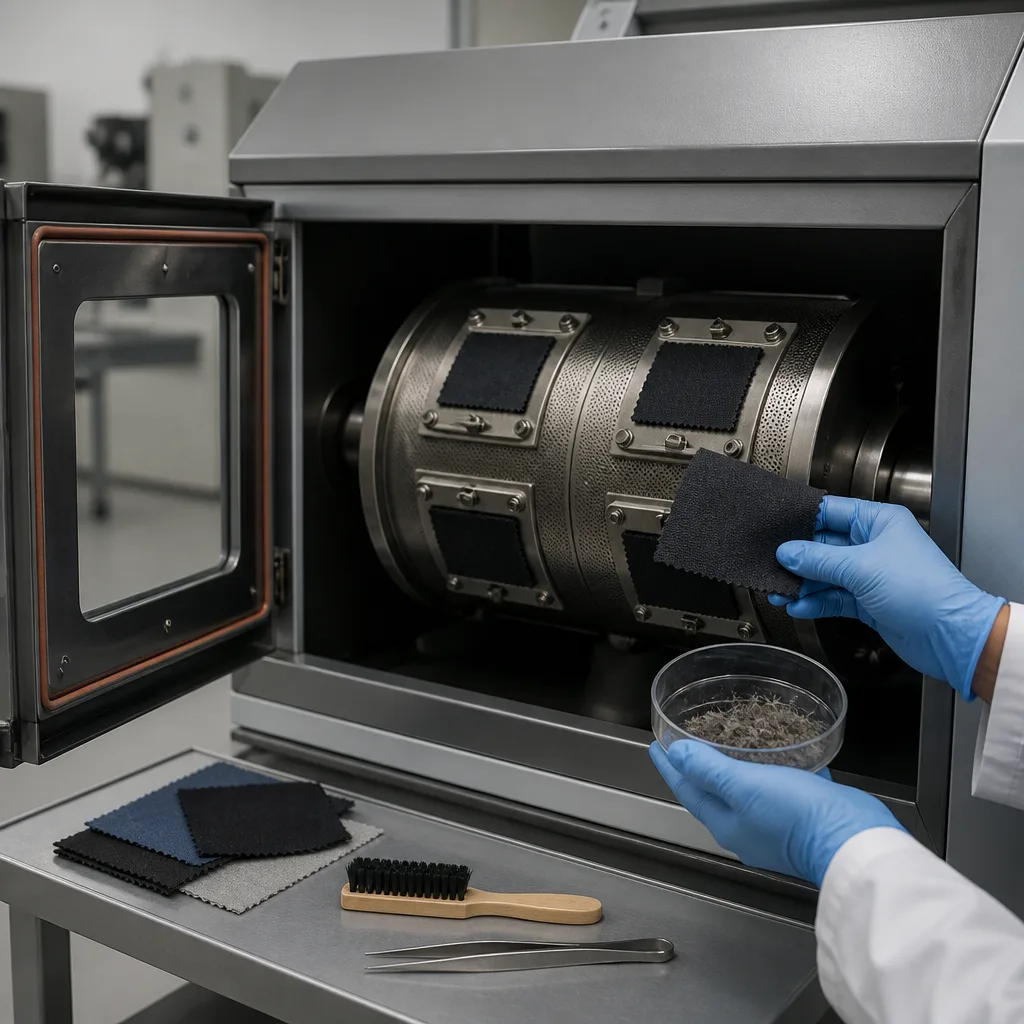
The primary purpose of the GMW 3347 standard is to determine how susceptible a textile surface is to visible lint contamination and how effectively that lint adheres to the material. In an automobile interior, fibers from clothing, blankets, carpets, or other textiles can contaminate seats and upholstery surfaces. Excessive lint accumulation can cause the material to appear dirty, worn, or neglected, even if the material itself is intact. This standard therefore provides a laboratory method for comparing textile materials and evaluating their appearance-related performance.
The GMW 3347 standard is primarily designed for the following:
The described test method is particularly important for fabrics where surface fibers can easily trap foreign fibers.
GMW 3347 standard simulates feather soiling through random friction/rolling motion. The basic principle is as follows:
This design aims to reproduce the random contact and friction that automotive fabrics might experience during normal vehicle use.
An important feature of the GMW 3347 standard is that it distinguishes between two related characteristics:
This distinction is important because one material may initially attract lint but easily release most of it. Another material may attract fewer lint but strongly retain the fibers once they reach the surface. Therefore, the GMW 3347 standard evaluates both the initial tendency to contaminate and the material's ability to retain the contaminant.
The test method uses a rolling setup in a laboratory setting instead of simply placing feathers on the fabric. Three samples and cotton fibers are subjected to random mechanical movement inside a cylindrical chamber. A mildly abrasive chamber lining enhances fiber-fabric interaction and creates a repeatable contamination mechanism. After the rolling phase:
The grading is defined as an arbitrary grading scale, meaning that numerical grading is primarily intended for controlled comparison of materials according to the GMW procedure, not as a universal physical measure of feather mass.
The GMW 3347 standard provides information on various practical features:
Automotive interiors are in constant contact with passengers and other textile materials. Seat fabrics can accumulate fibers from clothing and surrounding components. A material with poor lint-holding performance can develop a visibly soiled appearance relatively quickly. Therefore, the GMW 3347 standard is useful for material selection, supplier qualification, product development, and quality control. This method can help an automotive manufacturer determine whether a proposed fabric can maintain an acceptable appearance under conditions representative of vehicle use.
This procedure applies especially to the following:
GMW 3347 standard should not be confused with tests for pilling, abrasion, seam strength, or tear resistance. For example,
These properties can influence each other, but they measure different failure mechanisms. The GMW 3347 standard is specifically concerned with the appearance and behavior of lint and fibers on textile surfaces.
For automotive manufacturers, interior appearance is a significant part of perceived vehicle quality. Even a technically strong fabric can be undesirable if it easily attracts and retains visible fibers. The GMW 3347 standard provides a controlled method for determining such behavior before a material is incorporated into production tools. Therefore, testing is valuable in the following situations:
In summary, the GMW 3347 standard is a test procedure developed to evaluate the tendency of automotive fabrics to collect and retain lint. This method simulates contamination by randomly rolling and rubbing textile samples with cotton fibers in a mildly abrasive cylindrical chamber. The process then evaluates both the lint initially collected and the lint remaining after vacuuming.
The GMW 3347 standard is important for automotive seats and other textile interior applications because it helps manufacturers select fabrics that can maintain a clean and attractive appearance throughout vehicle use. It complements other textile performance tests such as abrasion, pilling, wear resistance, and mechanical strength testing.
For many years, our organization, with its competent and experienced staff, has been understanding the needs of its clients, providing the advanced testing services they require, and assisting them in the establishment, implementation, and improvement of management systems. Within this framework, we also provide testing services in accordance with the GMW 3347 standard.
To get an appointment, to get more detailed information or to request an evaluation, you can ask us to fill in our form and reach you.

