

The “GMW 3221 Conditioning of Organic Materials” standard, developed by General Motors Worldwide (GMW), is an engineering standard that defines the procedure for conditioning organic materials before they are subjected to testing. The purpose of conditioning is to bring test samples to a controlled temperature and relative humidity level so that test results are repeatable, comparable, and representative.
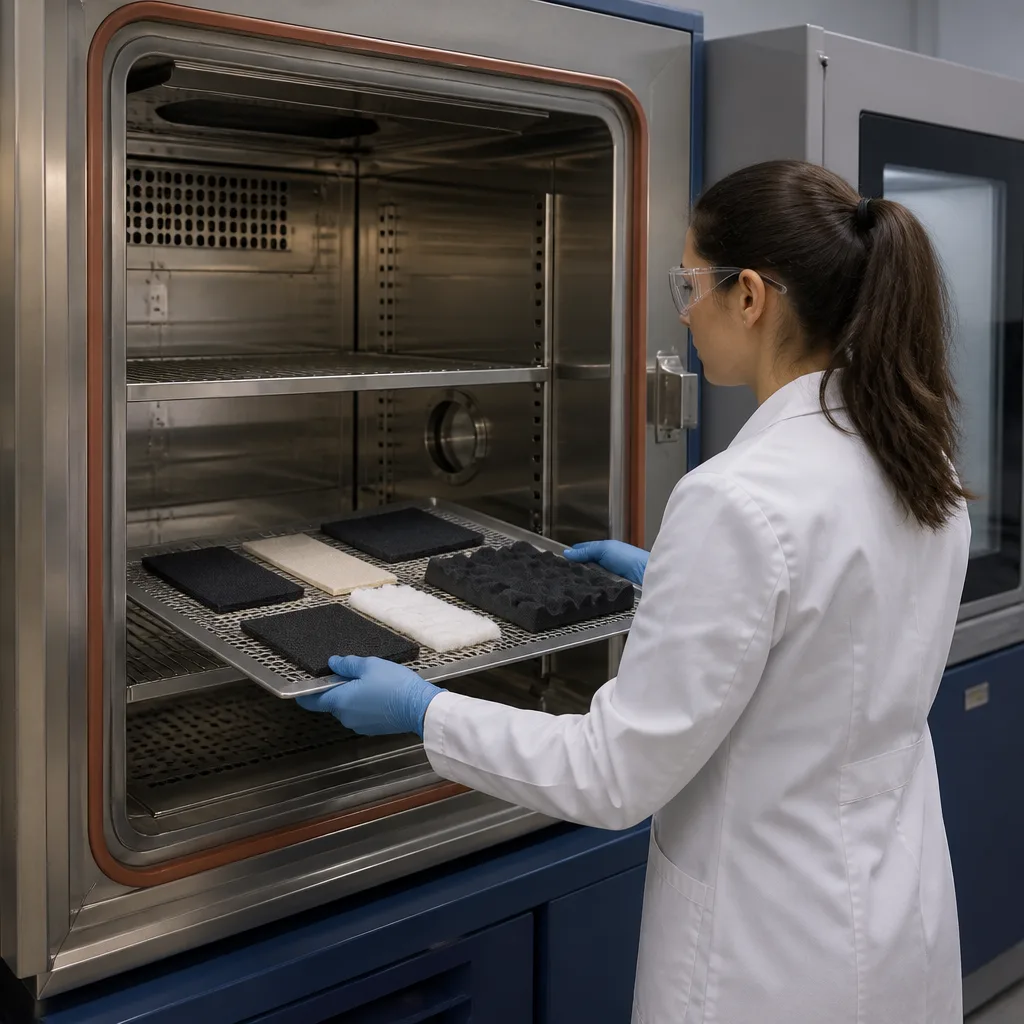
This standard is particularly important for automotive materials such as textiles, polymers, foams, fibers, and other organic materials whose physical properties can vary depending on temperature and humidity.
Organic materials can absorb or release moisture and react differently to temperature changes. As a result, a material tested immediately after storage in a dry or humid environment may yield different results than the same material tested under controlled laboratory conditions.
The GMW 3221 standard establishes a common conditioning procedure prior to testing. This reduces environmental variation and helps laboratories obtain consistent results when evaluating materials from different suppliers, production batches, or development stages. In practical terms, this standard helps answer an important question: was the material tested under controlled and repeatable conditions?
The GMW 3221 standard applies to automotive organic materials, test laboratories, and conditioning chambers. Examples of materials associated with the procedure include polyamides, polyurethanes, wool, cotton, fiberboard, and similar organic materials.
The conditioning procedure can be used prior to a wide range of automotive material testing, including mechanical properties, appearance, wear, adhesion, dimensional behavior, and other properties affected by environmental conditions.
The GMW 3221 standard uses specified combinations of temperature and relative humidity. Frequently referenced conditions include:
Code A and Code B do not represent different test methods. They are simply different levels of moisture control within the conditioning procedure. Which code to use depends on the applicable material specification or test procedure. The applicable code should always be taken from the relevant General Motors material specification or test requirement, rather than being assumed.
The basic principle of the GMW 3221 standard is simple:
Conditioning is important because humidity and temperature can significantly affect organic materials. For example, textile materials may change in the following ways:
Foams and polymers can also exhibit variations in stiffness, compression behavior, and other physical properties. Without controlled conditioning, two laboratories might test the same material samples but obtain different results because the samples were exposed to different environmental conditions before testing. Therefore, the GMW 3221 standard provides a common starting condition for laboratory testing.
The GMW 3221 standard is not a performance test in itself. Instead, it is a conditioning procedure that supports other material and component testing. For example, other General Motors specifications may refer to the GMW 322 standard for preparing test specimens before conducting their main evaluations. This standard is also listed as a reference in General Motors procedures involving automotive materials and components.
In short, the GMW 3221 standard is an important supporting standard within General Motors' materials testing system.
For automotive manufacturers, material test results are used to determine whether a material meets design and performance requirements. If environmental conditioning is inconsistent, test results may not accurately reflect the expected behavior of the material. The GMW 3221 standard therefore contributes to this:
This standard is particularly valuable when comparing materials between suppliers or when comparing production materials to previously approved samples.
In summary, the GMW 3221 standard is a supporting General Motors test procedure designed to establish controlled temperature and humidity conditions before testing automotive organic materials. Its primary purpose is not to measure a specific material property, but to ensure that subsequent test results are repeatable and comparable. Through the use of defined conditioning codes such as Code A and Code B, the GMW 3221 standard provides laboratories and suppliers with a standardized environmental preparation method. This is crucial for automotive material qualification, as checking the condition of the sample before testing can be as important as checking the test itself.
For many years, our organization, with its competent and experienced staff, has been understanding the needs of its clients, providing the advanced testing services they require, and assisting them in the establishment, implementation, and improvement of management systems. Within this framework, we also provide testing services in accordance with the GMW 3221 standard.
To get an appointment, to get more detailed information or to request an evaluation, you can ask us to fill in our form and reach you.

