

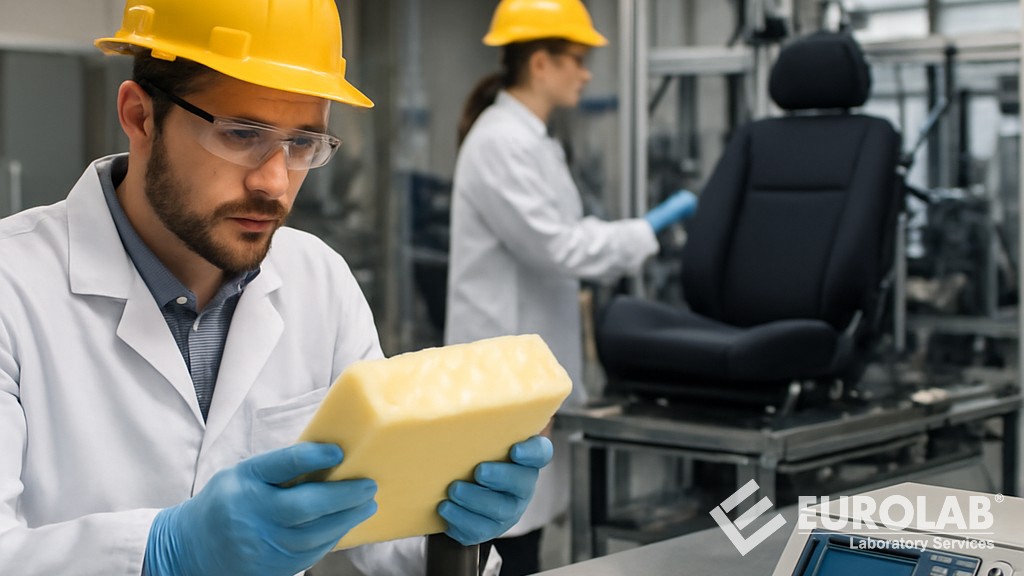
The “VW TL 52053 PUR flexible foam for vehicle seats - Material requirements” standard, developed by the Volkswagen automotive company, describes the material requirements for seat system components made from fully molded polyurethane (PUR) foam.
The VW TL 52053 standard relates to a textile, fabric, artificial leather (leather-look material) or related interior upholstery material. For example, requirements for seat covers, headliners, door panels or trim in terms of abrasion resistance, lightfastness, flammability (e.g. FMVSS 302 equivalent) or volatile organic compound (VOC) emissions.
The VW TL 52053 standard is a Volkswagen technical delivery specification that defines material requirements for elastomer-based components commonly used in automotive seals and functional parts. These standards are part of a broader Volkswagen internal engineering system that ensures consistency, safety, and durability in vehicle components.
Like other technical delivery standards, this standard is mandatory for suppliers working with the Volkswagen group and is widely applied in automotive production and verification processes.
The VW TL 52053 standard generally covers the following:
It belongs to the same family of standards as related standards such as VW TL 52052, which define performance requirements for elastomer molded parts under chemical and thermal stress.
The VW TL 52053 standard focuses on ensuring that elastomer materials meet the following stringent performance criteria:
These requirements ensure that the materials remain functional for the entire lifespan of the vehicle.
Materials covered under the TL 52053 standard are subject to standardized test procedures, including:
Volkswagen standards generally require the following:
The VW TL 52053 standard was developed to address very real-world problems arising from the use of elastomer (rubber) parts in demanding automotive environments. Without such a standard, vehicles could frequently experience failures, safety risks, and inconsistent quality. This standard is considered important for the following reasons:
If ingredients are not listed correctly, it can lead to the following:
The VW TL 52053 standard ensures that these materials maintain their sealing performance over time, preventing the following:
These substances can rapidly degrade standard rubber. This standard ensures the following:
This is very important because chemical attack is one of the main causes of premature material failure in automotive systems.
Without strict requirements:
The VW TL 52053 standard ensures that materials maintain the following:
This standard includes aging tests to ensure the following:
By applying rigorous testing and verification, this standard,
This standard ensures that materials meet safety expectations in real-world conditions.
In conclusion, the VW TL 52053 standard is a critical material specification for elastomer components used in demanding automotive environments. By setting stringent requirements for mechanical strength, chemical resistance, and thermal stability, it ensures:
For manufacturers and suppliers, compliance with the VW TL 52053 standard is crucial to meeting Volkswagen's performance expectations and ensuring reliable vehicle operation in real-world conditions.
For many years, our organization, with its competent and experienced team, has been understanding the needs of its clients, providing the advanced testing services they require, and assisting them in the establishment, implementation, and improvement of management systems. Within this framework, we also provide testing services compliant with the VW TL 52053 standard.
To get an appointment, to get more detailed information or to request an evaluation, you can ask us to fill in our form and reach you.

