

The “Fiat 50496 Colorfastness of Automotive Interior Fabrics to Water” standard, developed by Fiat Chrysler Automobiles (FCA) (now Stellantis), an Italian-American automotive company, describes a test method that evaluates how well interior fabrics (seats, door panels, headliners) resist color bleeding, staining, or fading when exposed to water or moisture.
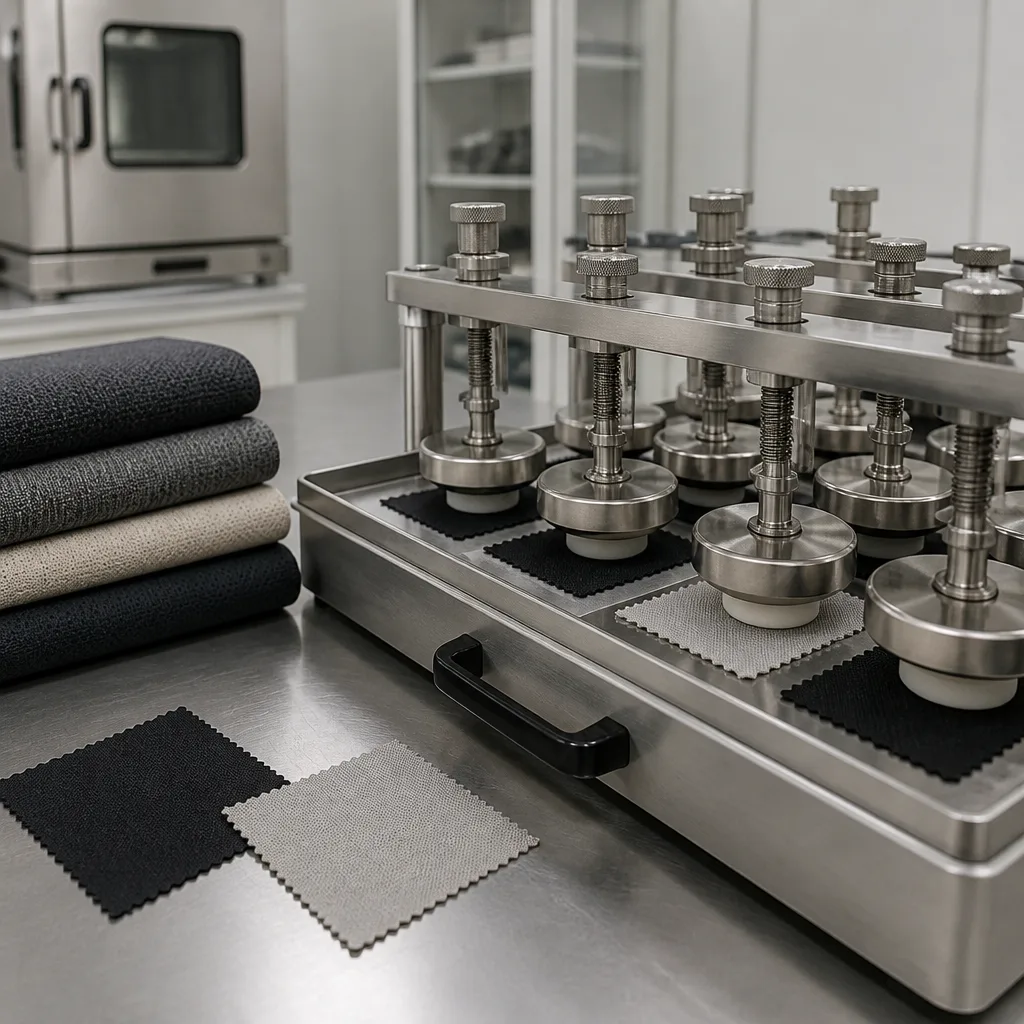
This method ensures that interior materials meet durability and quality criteria for vehicles. The aim is to prevent fabrics used in seats, headliners, door panels, and other interior trim from bleeding, fading, or transferring color when exposed to moisture.
This standard ensures that interior materials maintain their appearance and performance in real-world conditions such as spills, moisture, or wet clothing. It is part of a series of tests for textiles, plastics, paints, and other interior materials. Suppliers and testing laboratories conduct this testing to certify materials for vehicles.
Color fastness tests generally follow these steps:
This standard helps ensure long-term aesthetic quality and customer satisfaction in vehicle interiors.
In short, the Fiat 50496 standard evaluates the color fastness of automotive interior textiles when exposed to water. The described method is primarily used for fabrics used in vehicle interiors such as seat covers, carpets, headliners, door panels, and non-woven lining materials.
This standard is frequently used as a reference in vehicle interior material specifications to ensure that textile components maintain their appearance and hygiene properties throughout the vehicle's lifespan.
Vehicle interiors are regularly exposed to moisture from the following sources:
When textile materials are not water-resistant, various defects can occur:
The Fiat 50496 standard was developed to verify that interior fabrics remain visually and chemically stable under these conditions. This standard applies to the following products:
This standard is frequently referenced alongside other Fiat standards relating to the following topics:
Many Fiat interior fabric specifications explicitly require compliance with the Fiat 50496 standard for approval.
This testing method evaluates how a textile product behaves after controlled contact with water. Typical areas of evaluation include:
When the test is performed, the material is usually,
The final assessment is usually done using the grayscale grading system, which is commonly used in textile color fastness testing.
Generally, this method follows these steps:
Essentially, mold or unpleasant odors are not permitted. This requirement is included in various Fiat interior fabric specifications, which refer to the Fiat 50496 standard.
This standard is important because interior textile defects are highly visible to customers and can affect perceived vehicle quality:
The Fiat 50496 standard applies to the following sectors:
In summary, the Fiat 50496 standard is a specific automotive textile testing standard used to evaluate the colorfastness and water resistance behavior of vehicle interior fabrics. This test helps manufacturers ensure that interior materials are resistant to staining, dye migration, odor formation, and deterioration caused by moisture exposure.
For many years, our organization, with its competent and experienced staff, has been understanding the needs of its customers, providing the advanced testing services they require, and assisting them in the establishment, implementation, and improvement of management systems. Within this framework, we also provide testing services in accordance with the Fiat 50496 standard.
To get an appointment, to get more detailed information or to request an evaluation, you can ask us to fill in our form and reach you.

