

Developed by Hyundai Motor Company and Kia Corporation, the “MS940-01 Fire Resistance for Electrical and Electronic Components” standard is an automotive engineering standard designed to evaluate the fire resistance of plastic materials used in vehicle electrical and electronic components. This standard specifies flammability testing methods, performance requirements, and acceptance criteria to ensure that electronic components do not contribute to fire spread under normal operating or malfunction conditions.
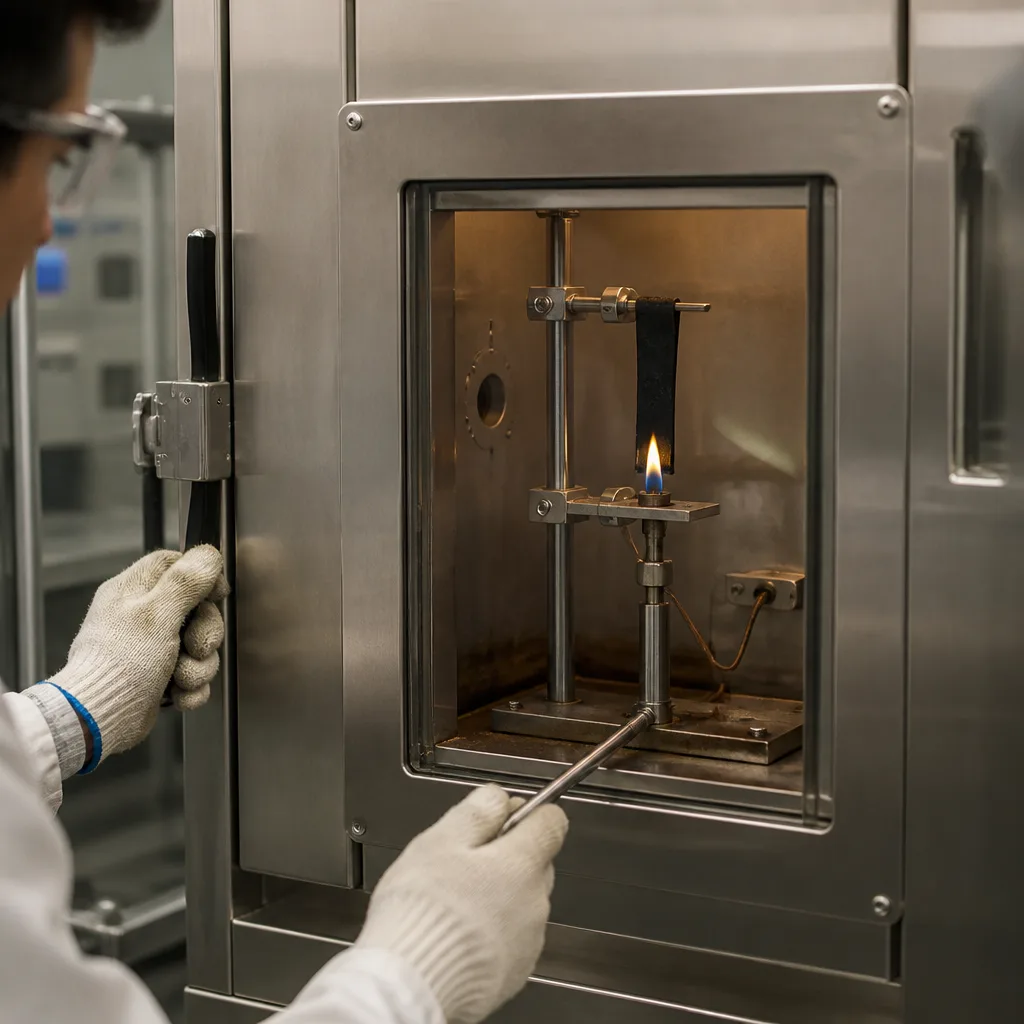
As modern vehicles increasingly incorporate complex electronic components (including infotainment systems, advanced driver assistance systems, ADAS, electric powertrains, and battery management systems), the use of flame-resistant materials has become a critical safety requirement. The MS940-01 standard helps manufacturers select appropriate polymer materials and verify that they meet the required fire performance for their intended applications.
The main objectives of this standard are:
The MS940-01 standard applies primarily to plastic materials used in automotive electrical and electronic components. These include:
This standard is particularly important for hybrid and battery electric vehicles due to the increasing number of high-energy electric systems.
Electrical systems can become ignition sources for the following reasons:
If flammable plastics ignite, flames can quickly spread to nearby wiring, insulation, or internal materials. The MS940-01 standard minimizes these risks by requiring plastics to self-extinguish or burn slowly enough to prevent the spread of fire.
The MS940-01 standard requires flame-retardant plastic materials to meet the following criteria:
The MS940-01 standard adopts flammability (performance) classifications similar to those used in the UL 94 standard, depending on the application and the associated fire risk. Typical classifications include:
High-risk electrical systems typically require V-0 performance, while many conventional components may only require HB performance.
The horizontal burn test evaluates the following:
These standard test samples are exposed to a controlled flame for a specified period of time. The material is considered successful if:
The vertical burn test is more rigorous. The sample is placed vertically and exposed twice to a standardized flame. The evaluation includes:
Performance determines whether the material meets the following criteria:
V-0 represents the highest level of flame resistance among these classifications because the material extinguishes quickly without igniting the cotton gauge through flaming droplets.
The MS940-01 standard defines different flammability requirements depending on the component type. Examples are as follows:
The MS940-01 standard refers to several widely accepted fire testing standards, including:
The MS940-01 standard is widely used in the development of the following:
Compliance with the MS940-01 standard provides the following advantages:
Consequently, modern vehicles, especially hybrid and electric vehicles, contain hundreds of electronic modules and increasingly complex electrical architectures. If the surrounding materials are not sufficiently flame-resistant, a single electrical malfunction can become a source of ignition.
The MS940-01 standard provides a standardized method for characterizing plastic materials used in automotive electrical and electronic components, ensuring their resistance to ignition, limitation of flame spread, and self-extinguishing under controlled test conditions. By combining horizontal and vertical flammability tests with application-specific performance requirements, this standard plays a vital role in improving vehicle fire safety, supporting regulatory compliance, and enhancing the long-term reliability of automotive electrical systems.
For many years, our organization, with its competent and experienced staff, has been understanding the needs of its clients, providing the advanced testing services they require, and assisting them in the establishment, implementation, and improvement of management systems. Within this framework, we also provide testing services compliant with the MS940-01 standard.
To get an appointment, to get more detailed information or to request an evaluation, you can ask us to fill in our form and reach you.

