

Developed by BMW, a multinational vehicle manufacturer, the “BMW AA P 224 Condensate Water Stationary Atmosphere Test” standard specifies a condensate water stationary atmosphere test designed to evaluate the moisture resistance of surface coatings, painted components, and suspended parts (such as doors, hoods, or upholstery) used in BMW vehicles.
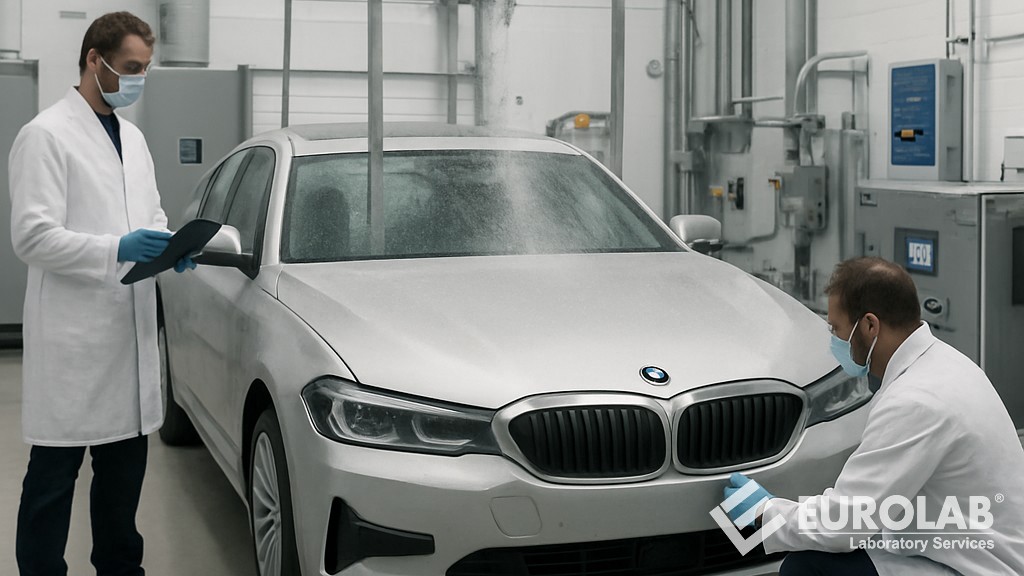
This test evaluates how well automotive paints, adhesives, and protective coatings withstand prolonged exposure to high humidity conditions that simulate real-world environmental stresses such as condensation in garages, tropical climates, or rainy regions. Poor performance can lead to problems over time such as blistering, loss of adhesion, corrosion under the paint, or deterioration in appearance.
The aim of this standard is to verify the durability and corrosion protection of coatings and materials against continuously high humidity environments. During testing, samples are exposed to a constant condensation water atmosphere in a sealed chamber, typically at high temperatures (often around 40 degrees Celsius) and near 100% relative humidity. This causes continuous condensation on the test parts. The exposure time varies depending on BMW's specific requirements for the component (e.g., from hours to days or weeks), but focuses on constant humidity conditions rather than cyclical variations. Following exposure, parts are inspected for visual defects (bubbles, cracks, discoloration), loss of adhesion (usually via cross-screening or tape tests), corrosion progression, or other deterioration. The results help qualify coatings for production approval.
This test method is a constant humidity test, unlike cyclic corrosion tests such as the BMW AA 0224 (BMW AA P 175) standards, which combine salt spray with moisture phases. This method is widely accepted in corrosion testing laboratories and environmental chambers. Many third-party testing facilities offer accreditation or the ability to perform the BMW AA P 224 standard as part of automotive qualification programs. This standard is part of BMW’s broader Group standard (GS) range and is designed for demanding conditions.
For those working on BMW supplier qualification, part approval, or corrosion testing protocols, the BMW AAP 224 standard is a crucial moisture-focused requirement for many painted exterior and interior components.
The BMW AAP 224 standard (BMW AAP 0213 Condensate Water Constant Atmosphere Test Standard) requires condensate water constant atmosphere testing because high humidity and prolonged condensation represent real-world environmental stresses that can severely degrade automotive coatings, paints, adhesives, and protective layers over a vehicle's lifespan.
Moisture and condensation pose a major threat to automotive parts for the following reasons.
Consistently high humidity mimics everyday exposure scenarios: Vehicles frequently encounter conditions such as these:
In these cases, moisture doesn't just stay on the surface; it condenses directly onto the painted panels (doors, hoods, bumpers, upholstery), forming an almost continuous film of water. This is more aggressive than occasional rain because the water layer allows dissolved ions, oxygen, and pollutants to remain in prolonged contact with the coating.
The damage mechanisms caused by prolonged concentration are as follows:
These failures reduce corrosion protection, compromise aesthetics (critical for premium brands like BMW), and can lead to warranty claims, customer dissatisfaction, or safety issues if corrosion affects structural parts.
A specific constant humidity test, such as the BMW AAP 224 standard, is required for the following reasons:
In short, the BMW AAP 224 standard exists solely to prevent costly field failures caused by moisture and to ensure that painted components remain durable, attractive, and protective in a variety of climates worldwide. This is a crucial part of BMW’s rigorous material approval process for suppliers. When it comes to qualification for BMW parts, passing this standard (along with other tests) is generally mandatory for painted interior and exterior components.
For many years, our organization, with its competent and experienced team, has been understanding the needs of its clients, providing the advanced testing services they require, and assisting them in the establishment, implementation, and improvement of management systems. Within this framework, we also provide testing services in accordance with the BMW AAP 224 standard.
To get an appointment, to get more detailed information or to request an evaluation, you can ask us to fill in our form and reach you.

