

The “Fiat 7-M0002 Evaluation of the Gloss of Plastics” standard, developed by Fiat Chrysler Automobiles (FCA) (now Stellantis), an Italian-American automotive company, is an automotive material and surface testing specification used to evaluate the gloss (shine) properties of interior or exterior vehicle components. This standard is commonly associated with plastics, coated surfaces, vinyls, upholstery, and decorative automotive materials. Independent testing laboratories define this specification as a surface gloss test specifically for automotive applications.
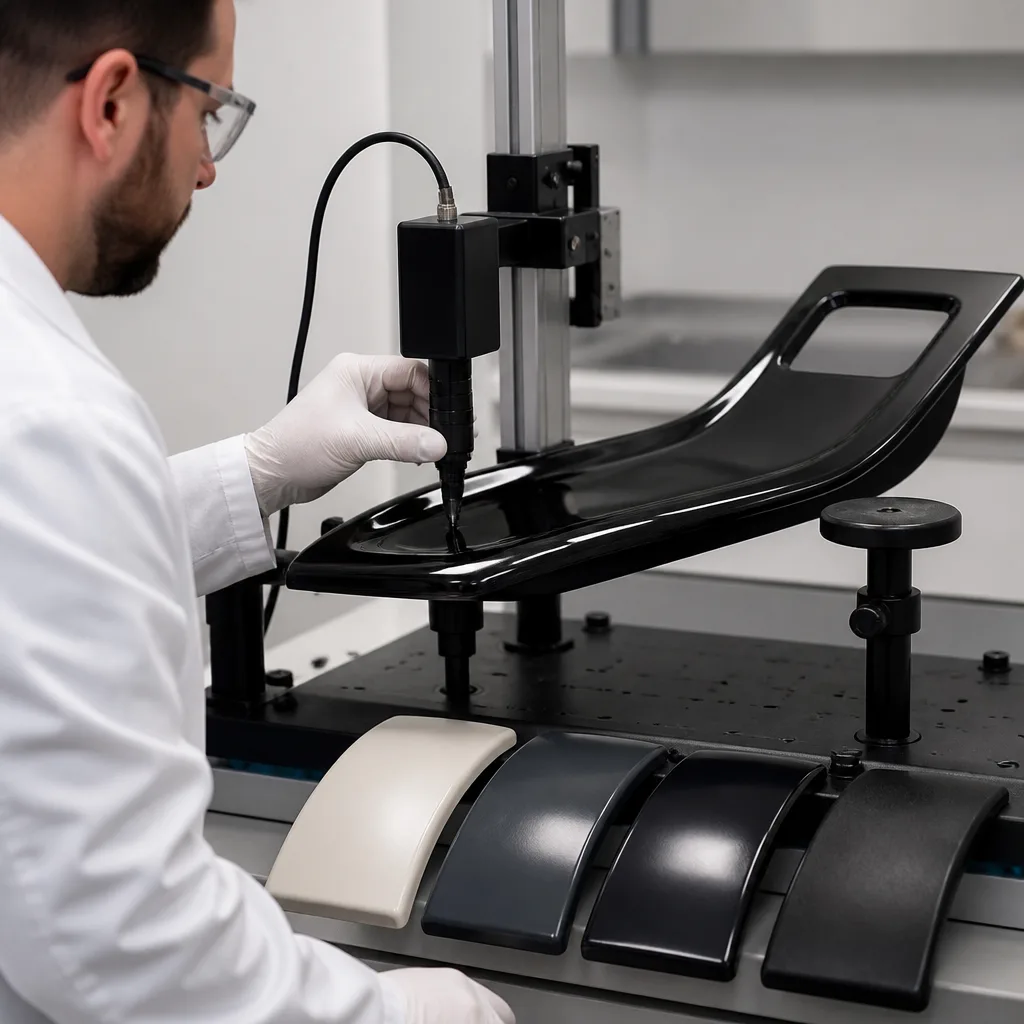
The primary goal of the Fiat 7-M0002 standard is to ensure that automotive components have a controlled and consistent visual appearance. Gloss level is critical in vehicle production because it affects:
Even subtle differences in gloss between instrument panel sections, door trims, consoles, or coated plastic parts can make a vehicle look poorly assembled. The Fiat 7-M0002 standard helps suppliers and original equipment manufacturers verify that all parts meet approved aesthetic requirements before production begins.
This standard evaluates the following:
The test is typically performed with a gloss meter, which measures the amount of light reflected from a surface at a specific angle, such as 20 degrees, 60 degrees, or 85 degrees. The chosen angle depends on the type of material and the expected surface properties.
The materials typically tested under this standard include:
This testing method essentially follows these steps:
Results are typically expressed in units of brightness (GU).
The Fiat 7-M0002 standard is important because modern vehicles rely heavily on polymeric and coated materials. These materials can exhibit different gloss behaviors for the following reasons:
Without gloss control standards, suppliers may offer visually incompatible components, negatively impacting the perception of vehicle quality.
The Fiat 7-M0002 standard is often used in conjunction with other automotive surface performance standards, which typically cover the following topics:
These standards together ensure both functional durability and visual consistency.
This standard is necessary because it helps manufacturers in the following areas:
In safety-related interior areas such as the instrument panel, brightness control is particularly important because excessive reflectivity can cause glare on the windshield and reduce driver visibility.
This standard was initially developed for Fiat automotive programs, but the methodology reflects broader automotive industry practices used by many original equipment manufacturers such as Volkswagen, BMW, and Mercedes-Benz.
Modern automotive interiors increasingly demand stricter aesthetic specifications, as customers see a close correlation between surface quality and overall vehicle value.
In short, in modern vehicle production, aesthetic quality is as important as mechanical performance, especially for interior upholstery and decorative surfaces that customers see and touch every day. This standard is considered important for the following reasons:
In conclusion, the Fiat 7-M0002 standard is a specific automotive gloss assessment standard focusing on the visual quality and reflectivity of automotive surfaces. This standard ensures that interior and exterior trim materials meet Fiat's approved gloss requirements, promoting consistent appearance, manufacturing quality control, and customer satisfaction. It plays a significant role in modern automotive surface engineering, particularly for polymeric and decorative components.
For many years, our organization, with its competent and experienced staff, has been understanding the needs of its customers, providing the advanced testing services they require, and assisting them in the establishment, implementation, and improvement of management systems. Within this framework, we also provide testing services in accordance with the Fiat 7-M0002 standard.
To get an appointment, to get more detailed information or to request an evaluation, you can ask us to fill in our form and reach you.

