

The “Fiat 9-03168 Door Panel Armrests and Handles - Chemical Resistance” standard, developed by Fiat Chrysler Automobiles (FCA) (now Stellantis), an Italian-American automotive company, is a technical specification used for material and component testing in the automotive industry. This standard describes the method for testing the resistance of door panel armrests and handles to chemical environments.
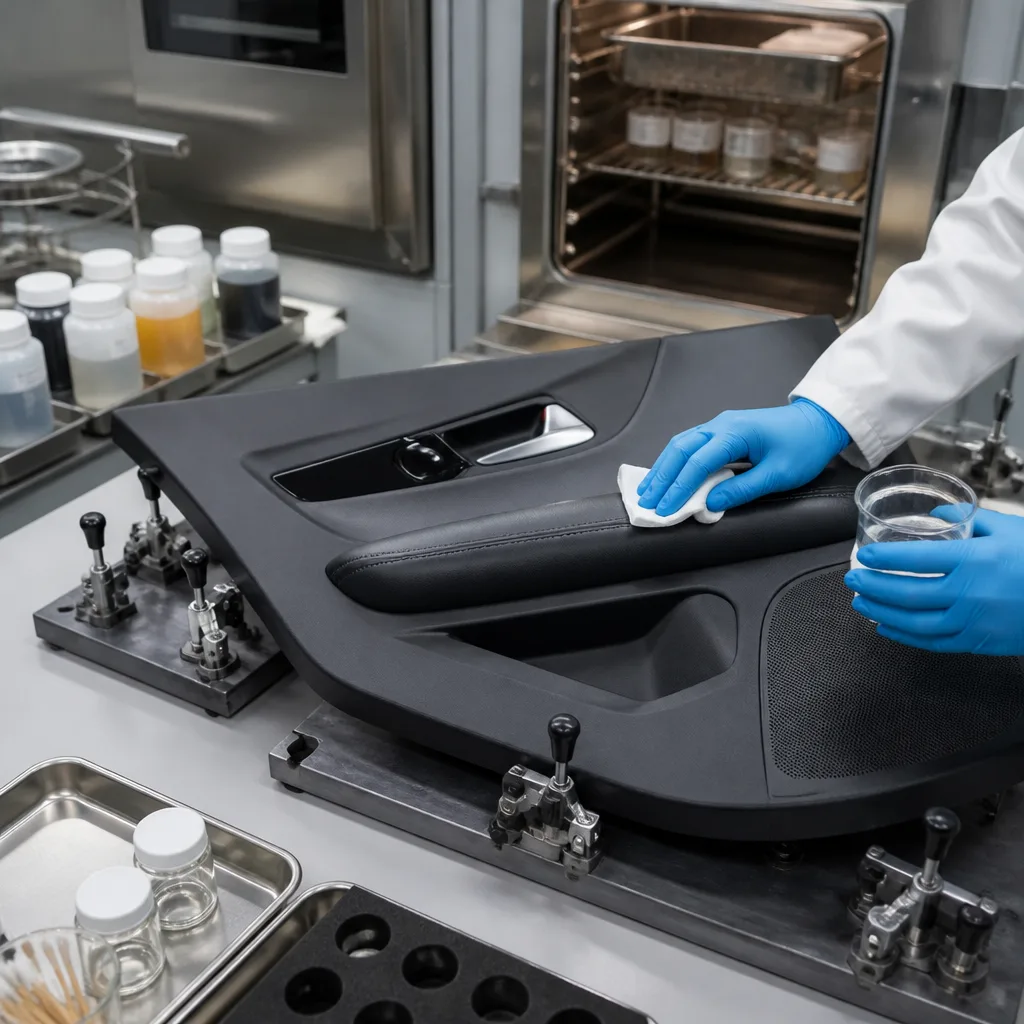
This specification defines requirements and test methods for how well certain indoor plastic or coated surfaces (particularly armrests and door handles) can withstand exposure to common chemicals. These include:
The goal is to ensure that these high-contact internal components do not deteriorate, discolor, crack, or lose their appearance and functionality over time due to chemical exposure.
The described test method evaluates whether armrests and fixed handles mounted on door panels can maintain their appearance, structural integrity, and functionality after exposure to chemicals commonly encountered during vehicle use.
Door panel armrests and handles are among the most frequently touched interior components in a vehicle. During normal use, they are subjected to the following:
Over time, these exposures can damage surfaces and underlying materials. The purpose of the Fiat 9-03168 standard is to verify the resistance of components to the following conditions:
This standard helps ensure long-term durability and perceived quality in the vehicle interior.
The components typically tested using this testing method are:
These parts are particularly sensitive because they are subjected to constant physical contact and repeated cleaning throughout the life of the vehicle.
In general, this method follows these steps:
Automotive original equipment manufacturers' chemical resistance tests typically involve exposure to: synthetic sweat, sunscreen, hand lotion, alcohol-based cleaners, detergents, coffee and soda, windshield washer fluid, engine oil, fuel traces, and interior cleaning chemicals. These substances simulate real-world customer usage conditions.
Interior door components significantly impact a customer's perception of vehicle quality. Failures such as peeling armrests, sticky handles, bulging trim, or cracking soft-touch materials are among the most common wear and tear complaints in automotive interiors. Without proper chemical resistance verification,
Because armrests and handles are high-contact areas, Fiat applies stricter durability requirements to ensure consistent appearance and usability throughout years of service.
This testing method is particularly important for the following materials:
The lightweight decorative materials increasingly used in modern automotive interiors must balance the following:
Chemical resistance standards help engineers validate these materials before mass production begins.
Tests under the Fiat 9-03168 standard reveal the following:
These failures are critical because door armrests also contribute to passenger ergonomics and the absorption of side impact energy.
The Fiat 9-03168 standard is necessary because armrests and fixed door panel handles are constantly exposed to chemical and physical stress during daily vehicle use. Without proper resistance testing, these internal components can rapidly deteriorate, leading to cosmetic defects, reduced durability, and customer dissatisfaction. The Fiat 9-03168 standard is considered important for the following reasons:
In conclusion, the Fiat 9-03168 standard is a key original equipment manufacturer durability specification designed to ensure that door panel armrests and fixed arms maintain their appearance, tactile quality, and structural integrity after exposure to automotive chemicals. This testing supports long-term interior durability, improves customer satisfaction, and helps prevent common failures such as peeling, cracking, discoloration, and coating degradation in heavily used interior components.
For many years, our organization, with its competent and experienced staff, has been understanding the needs of its customers, providing the advanced testing services they require, and assisting them in the establishment, implementation, and improvement of management systems. Within this framework, we also provide testing services in accordance with the Fiat 9-03168 standard.
To get an appointment, to get more detailed information or to request an evaluation, you can ask us to fill in our form and reach you.

