

The standard "SAE J365 Method for Testing Resistance of Upholstery Materials to Abrasion" developed by the American Society of Automotive Engineers (SAE) describes a test method used to determine the abrasion resistance of test specimens such as particleboard, fabric, vinyl-coated fabric, leather, and similar upholstery materials.
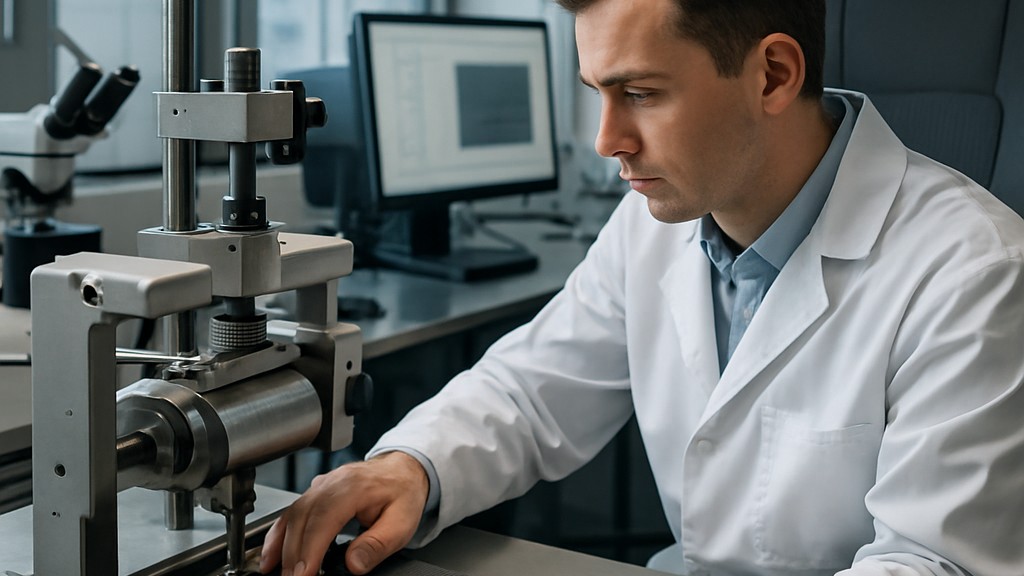
Prior to testing, test specimens should be conditioned for at least 24 hours at a temperature of 23°C plus/minus 2°C and a relative humidity of 50% plus/minus 10%. Unless otherwise specified, testing should be conducted under the same controlled conditions.
For textiles, coated fabrics, leather, or similar flexible materials, a sample approximately 130 mm in diameter with a 6,5 mm center hole is prepared. The sample is placed on the rubber pad of the sample holder and then secured using the 54 mm outer diameter clamp plate and clamp nut. The pressure ring is pressed against the test sample to ensure the sample is pulled taut on the sample holder without wrinkles or bulges. The pressure ring adjustment screw is tightened without causing wrinkles or bulges in the sample.
For fiberboard, rubber floor mats, carpets, and other semi-rigid materials, a sample approximately 106 mm in diameter with a 6,5 mm center hole is prepared. The test sample is placed on the rubber pad on the sample holder and then secured using a 32 mm outer diameter clamp plate and clamp nut. If necessary, the clamping ring is placed over the test sample. The clamping ring adjustment screw is tightened without causing the sample to wrinkle or swell.
The wear detection element is lowered onto the test sample and the wear is applied for the number of cycles specified in the engineering specifications.
The test sample is compared to an approved master wear sample determined by the relevant parties or as required by the relevant engineering specification, and wear resistance is observed and reported. Any deviation from the procedure is reported.
In the fast-paced world of automotive design and manufacturing, where aesthetics meet functionality, the durability and appearance of interior trim materials are paramount. Drivers and passengers interact daily with surfaces such as dashboards, door panels, seats, and floor mats, and these surfaces are subject to constant wear and tear from clothing, tools, and incidental contact. To address this challenge, the Society of Automotive Engineers International (SAE) has developed a series of standards to evaluate material performance under real-world conditions. Among these, SAE J365 stands out as a critical test method for evaluating abrasion resistance in upholstery materials.
Abrasion, the unsightly marks left by friction, can reduce a vehicle's perceived quality over time, leading to costly repairs or customer dissatisfaction. The SAE J365 standard provides a standardized and repeatable procedure for measuring this resistance, ensuring automotive interiors remain in pristine condition for years to come.
The primary goal of the SAE J365 standard is to enable manufacturers to predict material performance by simulating everyday wear scenarios in a controlled environment. It targets upholstery materials, defined as flexible or semi-rigid surfaces in vehicle interiors, excluding structural components. These include:
This standard measures abrasion resistance, helping to:
Unlike more aggressive abrasion tests, such as the SAE J1536 standard for Taber abrasion, the SAE J365 standard focuses on low-force, directional abrasion to mimic human interaction, making it ideal for aesthetic evaluations.
As electrification and shared mobility become widespread, and vehicles are subject to a variety of usage patterns, standards like SAE J365 are more vital than ever. They reduce warranty claims (scratching accounts for up to 5 percent of interior complaints) and support environmentally friendly innovations by verifying the performance of recycled materials.
The SAE J365 standard uses a simple yet rigorous device to simulate abrasion. The test fixture typically consists of a weighted tip or abrasive arm that moves in a controlled path across the sample surface under varying loads and speeds. The abrasion device features:
For testing, the sample is securely positioned and 50 to 500 cycles are initiated (determined by the user based on expected wear). The arm moves through a fixed stroke length (e.g., 10 cm) at 30-60 strokes per minute. Environmental factors, such as humidity, that could affect the material's flexibility are monitored.
After testing, the sample is examined visually and under a magnifying glass for signs of wear, discoloration, or surface deterioration. Resistance is either rated on a scale (e.g., 1-5, where 5 indicates no visible damage) or measured in cycles to failure (defined as 10 percent loss of gloss or visible deterioration).
Ultimately, the SAE J365 standard is an example of how standardized testing bridges the gap between laboratory precision and real-world durability. By providing protection against scratches, a mild but persistent hazard, it ensures automotive interiors delight users for miles.
Our organization, which has been serving for many years and meticulously following global developments in science and technology, employs a skilled team and extensive infrastructure to conduct testing, measurement, and analysis in a wide range of areas for businesses across all sectors. In this context, we also provide testing services in accordance with the "SAE J365 Method for Testing the Resistance of Flooring Materials to Friction" standard.
To get an appointment, to get more detailed information or to request an evaluation, you can ask us to fill in our form and reach you.

