

In the fast-paced automotive manufacturing industry, quality standards serve as the backbone for ensuring vehicle safety, reliability, and performance. One such standard, Q/SQR 04-098-2009, sets out specific technical requirements for materials used in automotive components, with a particular emphasis on polypropylene (PP) plastics. As Chery expanded its global footprint in the late 2000s, standards like Q/SQR 04-098-2009 proved effective in aligning production processes with international standards while meeting the unique demands of the automotive sector. In an industry where even the smallest material defect can have significant consequences, the role of the Q/SQR 04-098-2009 standard in promoting innovation and quality control is undeniable.
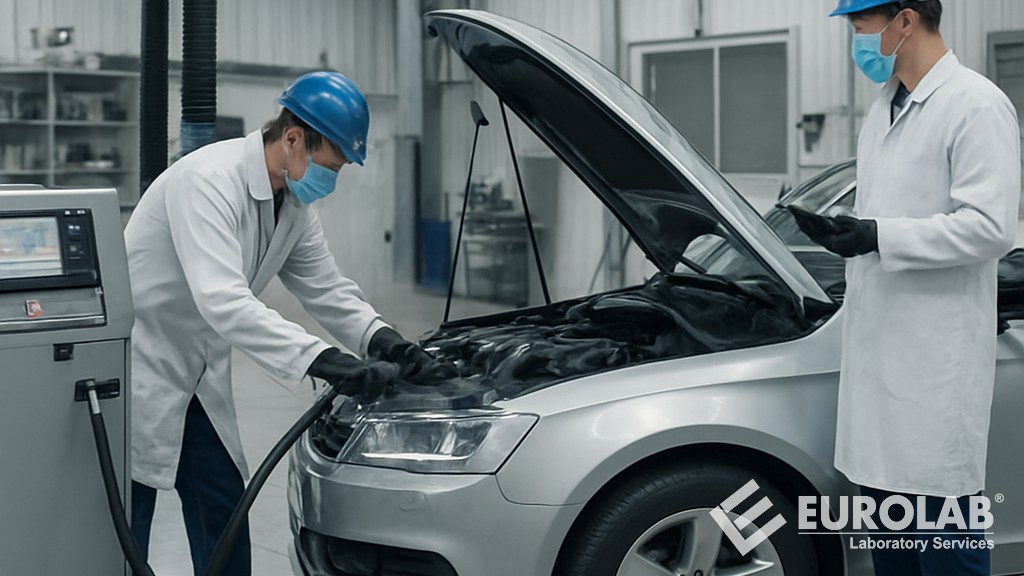
The “Q/SQR 04-098-2009 Emission Characteristics Test - Organic Substance Emission Test” standard, developed by Chery Automobile, one of China's leading global automobile brands, describes the emission testing method for organic substances in non-metallic interior trim and materials required for automobiles. This standard applies to emission tests of organic substances in non-metallic interior trim and materials required for automobiles.
When testing for organic matter emission, the headspace flask containing the sample is placed in a headspace sample injector and maintained at 120 degrees for 5 hours. Then, the needle tip is passed through the sealing strip on the flask, and nitrogen gas or helium gas is injected into the flask via the needle tip to increase the pressure of the gas containing the organic matter emission in the upper space of the flask. The gas containing the organic matter is expelled from the flask via the needle tip, passes through the quantitative tube and transfer tube along with the carrier gas, and after entering the injection port, is separated in a capillary tube separation column. The separated components, along with the carrier gas, enter a hydrogen ion flame ionization detector according to the retention time. This detector converts the component concentration into electrical signals, and a computer converts these signals into a gas chromatogram. Then, the sample organic matter emission can be calculated using the chromatogram peak of each component.
Polypropylene, a versatile thermoplastic polymer valued for its lightweight nature, chemical resistance, and moldability, has become increasingly important for interior trim, bumpers, and under-hood parts. However, variations in polypropylene (PP) formulations can lead to problems such as brittleness under heat or poor impact resistance. These are the problems that the Q/SQR 04-098-2009 standard aims to prevent.
This standard is part of a broader suite of Chery standards, such as Q/SQR S1-27-2012, and reflects the company's iterative approach to quality management. It aligns with ISO 16949, the automotive industry's quality management system, and ensures Chery suppliers meet rigorous testing protocols.
The Q/SQR 04-098-2009 standard essentially establishes a comprehensive classification system for automotive-grade polypropylene (PP) materials, along with identification codes and performance criteria. This standard categorizes polypropylene material into various types based on composition, additives, and intended applications, guaranteeing traceability from raw materials to finished vehicle parts. The following key categories are defined in this standard:
The Q/SQR 04-098-2009 standard mandates rigorous testing to verify material properties:
Failure to pass any test results in rejection, and suppliers are required to provide a certificate of analysis. The emphasis on fracture mechanics, which evaluates crack propagation under load, highlights the standard's forward-thinking approach, leveraging material science principles to predict long-term durability.
The adoption of the Q/SQR 04-098-2009 standard was a turning point for Chery, enabling the company to produce vehicles that could compete with established giants in terms of material quality. Implementing this standard reduced defect rates by up to 15 percent, leading to cost savings and increased customer satisfaction.
Q/SQR 04-098-2009 and similar standards are evolving to include smart materials, such as PP composites with embedded sensors for predictive maintenance.
For many years, our organization, with its competent and experienced staff, has been understanding the needs of its clients, providing the advanced testing services they require, and assisting them in the establishment, implementation, and improvement of management systems. Within this framework, we also provide testing services to businesses in accordance with the "Q/SQR 04-098-2009 Emission characteristic test - Organic matter emission test" standard.
To get an appointment, to get more detailed information or to request an evaluation, you can ask us to fill in our form and reach you.

