

Developed by General Motors Europe (GME), the “GME 60349 Test Method for Determining the Adhesion Strength of Felts and Similar Materials” standard is an engineering materials testing standard that includes a test method for determining the cohesive strength of felts and similar nonwoven materials. This standard is primarily used to evaluate the internal bond strength of fibrous materials commonly found in automotive interiors and to ensure they maintain their structural integrity during manufacturing and throughout the vehicle's lifespan.
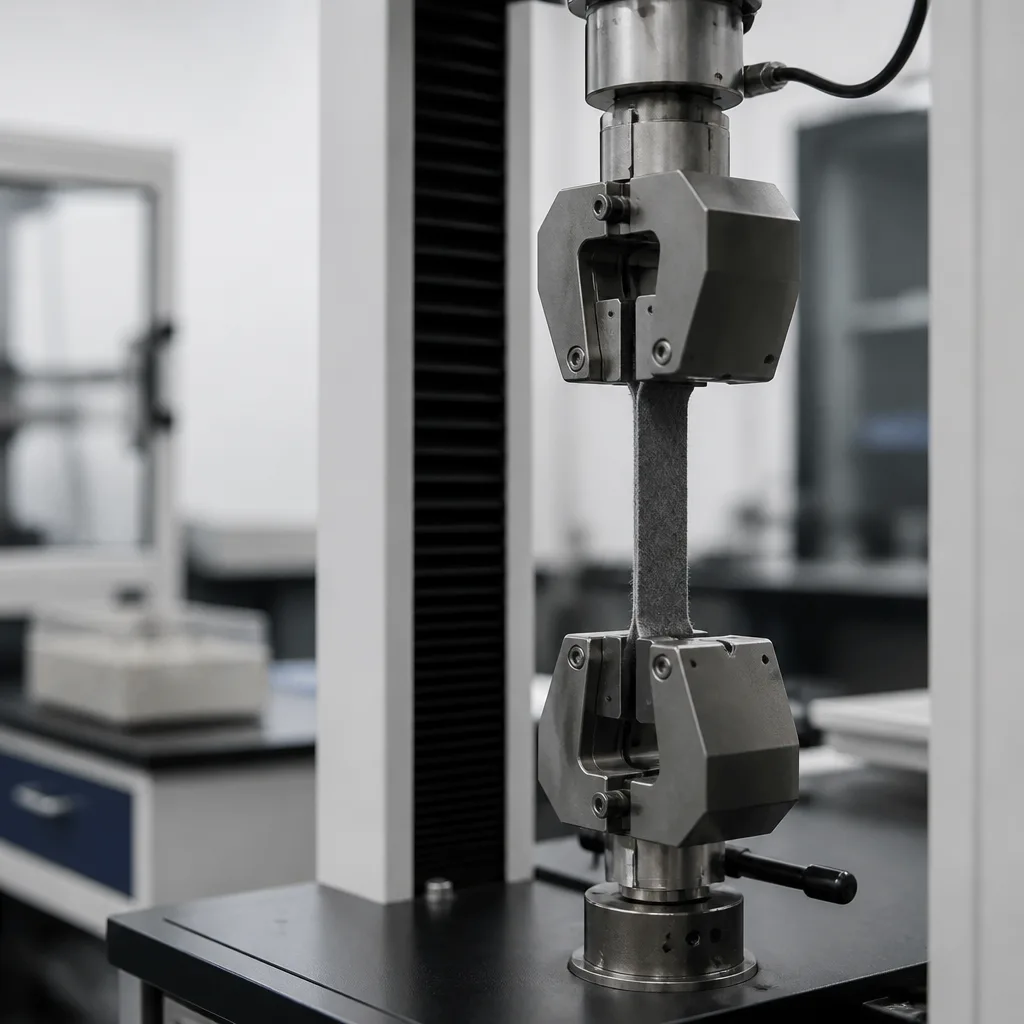
This testing method is particularly important for materials used in insulation, carpets, headliners, luggage linings, parcel shelves, and other interior components where mechanical strength and dimensional stability are critical.
The primary purpose of the GME 60349 standard is to provide a consistent laboratory procedure for measuring the cohesive strength of felt-like materials. Cohesive strength refers to the ability of the fibers within a material to remain bound together when subjected to mechanical forces.
This standard helps engineers determine whether a material has sufficient internal strength to withstand the following:
By using a standardized testing method, suppliers and General Motors manufacturing facilities can objectively compare materials and verify compliance with engineering specifications.
The GME 60349 standard primarily applies to the following:
These materials are widely used because they provide lightweight construction, acoustic insulation, thermal performance, and cost-effective production.
In principle, this standard evaluates the force required to separate or disrupt the internal fiber structure of a test specimen. The general testing process includes:
The measured results indicate the quality of the fiber bond and the overall structural integrity of the material.
Tests performed according to the GME 60349 standard typically use the following equipment:
Proper calibration of all equipment is essential to obtain repeatable and reliable results.
Several material properties influence test results. Factors affecting adhesion strength include:
Because of these variables, sample conditioning before testing is a crucial part of the procedure.
Materials evaluated according to the GME 60349 standard are generally used in the following:
These applications require sufficient internal strength to maintain the shape and performance of the vehicle throughout its lifespan.
Implementing the GME 60349 standard offers several advantages:
This standard enables manufacturers to identify weak materials before they are incorporated into their production processes.
Modern vehicles increasingly rely on lightweight nonwoven materials to improve fuel efficiency, reduce noise, and enhance passenger comfort. These materials must maintain their integrity despite constant exposure to vibration, temperature fluctuations, humidity, and mechanical stress. Without sufficient adhesive strength, fibrous materials can lead to:
The GME 60349 standard provides a standardized method for assessing these risks before production.
The GME 60349 standard is often used in conjunction with other General Motors material specifications that evaluate complementary properties, such as those listed below:
Together, these standards provide a comprehensive evaluation of automotive interior materials.
In conclusion, the GME 60349 standard is a crucial material testing standard for determining the adhesion strength of felt and similar nonwoven materials. By providing a repeatable and standardized test methodology, it helps ensure that fibrous automotive materials possess the internal bond strength required to withstand manufacturing processes and long-term vehicle service. This standard plays a vital role in supplier quality assurance, material selection, and the production of durable, high-performance automotive interior components.
For many years, our organization, with its competent and experienced staff, has been understanding the needs of its clients, providing the advanced testing services they require, and assisting them in the establishment, implementation, and improvement of management systems. Within this framework, we also provide testing services compliant with the GME 60349 standard.
To get an appointment, to get more detailed information or to request an evaluation, you can ask us to fill in our form and reach you.

