

The standard “VW PV 3233 Acoustic test brake line holder - Test setup and measurement evaluation” developed by the Volkswagen automobile company describes the requirements for testing and test setup of brake line holders on vehicles.
Brake hose holders with bases in accordance with the VW TL 82443 standard are generally used to connect hydraulic brake hoses on the vehicle. During operation, functional noises are generated in the hydraulic unit. These include safety functions such as: anti-lock brake system (ABS), electronic stability program (ESP) and electronic differential lock (XDS). Special attention is also paid to some comfort control functions.
For brake line holders with acoustic separation requirements, the following requirements apply: the components of the brake drive must not transmit disturbing noises into the vehicle interior or cause noise themselves within the functional temperature range. This may require special design of the fasteners and targeted material selection.
This standard describes a test setup for the reproducible measurement of the acoustic properties of brake hose holders. Dynamic stiffness is a measure of the acoustic evaluation of the transmission behavior of functional noises in the vehicle.
This test method serves as proof of the acoustic quality of brake hose holders in new developments and allows serial monitoring of acoustic component requirements. To comply with this requirement, the frequency-dependent limit value for dynamic stiffness specified in the standard must not be exceeded.
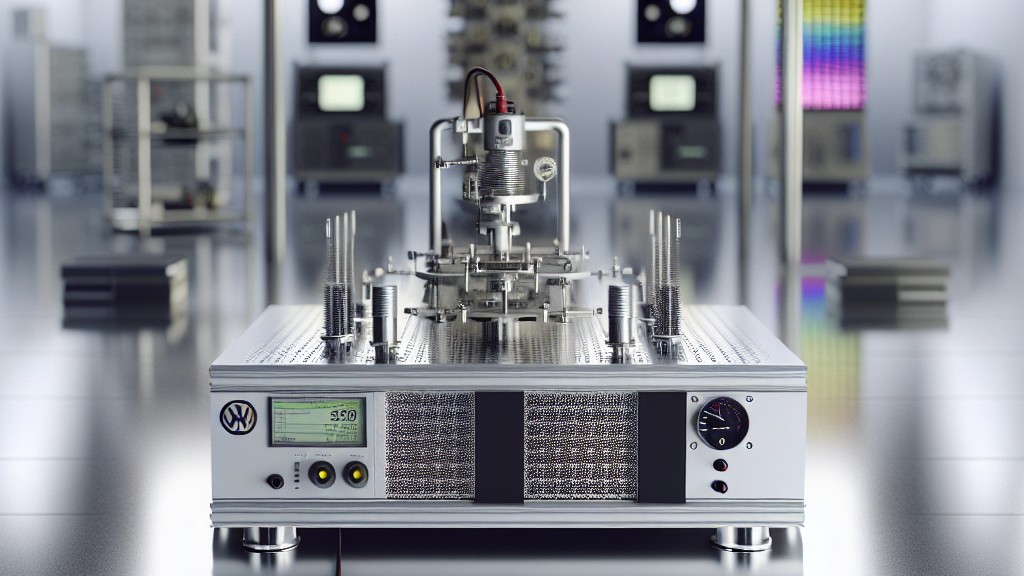
The test setup for measuring dynamic stiffness with support plate and shaker excitation is shown in the figure given in the standard. A solid mounting plate firmly attached to the foundation is required to prevent resonances. The test temperature for ambient conditions should be 20 degrees plus/minus 2 degrees.
To account for variation in the series, 10 pieces per brake line holder type must be tested with all permitted brake line diameters. When using new, unused pieces from series assemblies, it is necessary to precondition the pieces in air or three percent water by weight for two months.
A separate test fixture must be made for each brake line diameter. The dimensions of the solid steel support forks are included in the part model ENT 080 489 JA.
Depending on the pipe diameter to be tested, the different geometry results in a specific weight for the holding fork. In order to obtain comparable measurement results, the weights are defined in the table titled “Test weights” given in the standard. All cable diameters intended to be inserted into the clip must be checked.
The test setup must be arranged so that the excitation of the shaker occurs vertically via the receiver yoke. At the beginning of the measurement, the alignment of the coarse-threaded bolt in the brake line holder must be done in the initial position without applying force (adjustment according to the force sensor indicator).
If the elements securing the brake line in the clip are arranged rotationally symmetrically, the excitation should be in the direction of the weld stud. If the arrangement is not rotationally symmetrical, the dimensions should be agreed upon in consultation with the specialist department. Data regarding the shaker excitation are included in the table given in the standard.
When testing, the brake line clips are pressed onto the coarse-threaded bolt using the installation method designed for the clip (hammer blow or manual installation with a uniform installation force of 50 N plus/minus 5 N). For multi-channel clips, the brake lines in all channels should be installed in an unstressed position at a 0-degree angle. The remaining tracks should be equipped with 30 mm long loose brake pipes. To simulate a tensioned brake line installation on the vehicle, additional layers should be measured, with the test line being tensioned at a 5-degree angle.
Before starting the measurements, the settling time should be 60 s, the measurement time should be 10 s, the sampling rate should be 5 kHz and the high pass filter should be 7 Hz.
To eliminate the effect of the weight of the test fixture containing the threaded rod and acceleration sensor on the measured force during the evaluation, the force component of these masses is subtracted from the measured forces. Dynamic stiffness is calculated from two quantities, force and displacement.
Our organization has a strong staff that closely follows the developments in the world in the field of science and technology and constantly improves itself. Among the numerous test, measurement, analysis and evaluation studies provided for businesses in various sectors, there are also test services within the scope of the "VW PV 3233 Acoustic test brake line holder - Test installation and measurement evaluation" standard.
To get an appointment, to get more detailed information or to request an evaluation, you can ask us to fill in our form and reach you.

