

The “PSA D42 1775 Resistance to abrasion of interior and exterior plastic parts” standard, developed by PSA, a French multinational automotive company, describes a method for determining the scratch resistance of exterior body fasteners (bumpers, protectors) and parts used in interior plastic trim (instrument panels, shelves). These parts may have a smooth or granular surface appearance. They may include a decorative coating such as paint.
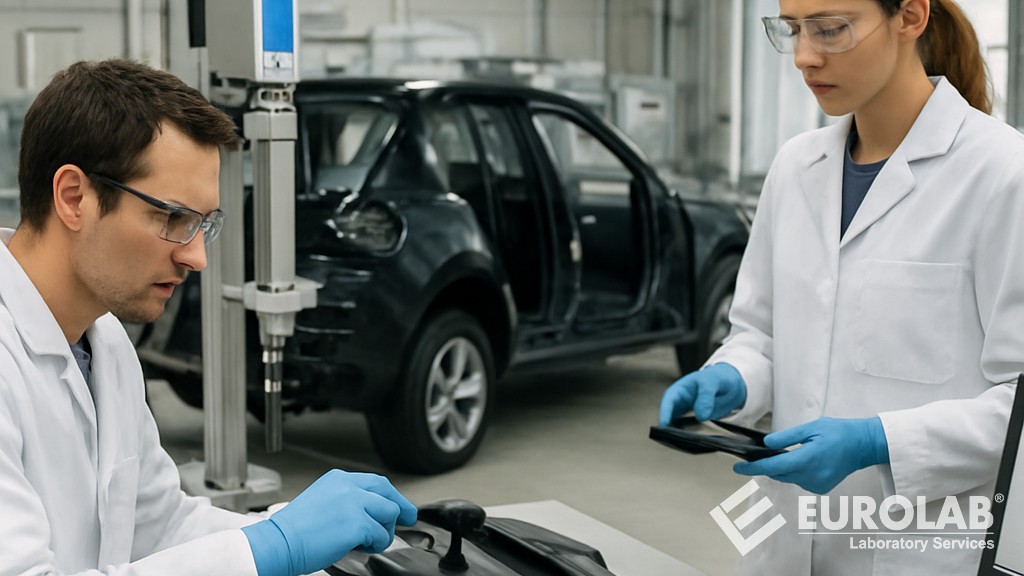
The test consists of subjecting the surface of a test tube to planar friction by rubbing sandpaper attached to an abrasive tool. A piece or pad of the material to be tested is placed inside the planar test tube. The tool moves perpendicular to the surface of the test tube.
Test specimens or samples must be representative of the scale being characterized. To ensure this representativeness, the baseline characteristics of the population under study must be determined. The selection criteria for test specimens or samples should be stated in the test report in accordance with the PSA A10 0156 standard. If there is any doubt about sampling, PSA should be contacted.
When preparing test samples, planar test tubes measuring 50 mm x 50 mm or larger are used. If a piece small enough to accommodate test tubes of this size is available, it is mandatory to use a test tube of at least 20 mm x 40 mm and prepare a reference sample. Test tubes are conditioned at room temperature for at least 16 hours, and for moisture-sensitive materials, for at least 24 hours. The surface or back of the test tubes should be free of abrasion marks (e.g., ejector marks, adhesion lines). They must also be straight across the direction of movement.
The PSA D42 1775 standard includes a specific test method for evaluating the resistance of interior and exterior plastic parts used in vehicles to abrasion-induced scratching or wear-induced scratching. Generally, PSA standards are part of a broader set of specifications created by the PSA Group to ensure the quality, durability, and safety of materials in their vehicles. These are proprietary standards used by suppliers and testing laboratories to meet the requirements of car manufacturers. The D42 category of these standards typically focuses on plastic and rubber components and covers properties such as impact resistance, abrasion, and marking.
The PSA D42 1775 standard defines a controlled wear test to simulate real-world wear on plastic surfaces such as instrument panels, door panels, bumpers, or trim pieces. Key elements of this method include:
This method ensures that plastics maintain their aesthetic and functional integrity over time, preventing unsightly scratches in high-contact areas.
In the automotive industry, interior and exterior plastics must withstand the conditions of daily use and meet stringent quality standards. Poor scratch resistance can lead to:
Advanced laboratories typically offer accredited tests conforming to the relevant standards (e.g., PSA D42 1007 standard for general wear or PV 3952 standard for scratch testing).
The PSA D42 1775 standard is considered necessary for various practical, commercial, and regulatory reasons that directly affect vehicle quality, cost, and customer satisfaction. The automotive industry mandates this standardized scratch-wear test for the following reasons:
Without a controlled test like the PSA D42 1775, manufacturers would rely on guesswork or field complaints to identify substandard materials, which would be too late and costly.
This ensures that a dashboard molded in various countries delivers the same performance.
Consequently, the PSA D42 1775 standard is necessary because scratches are inevitable.
For many years, our organization, with its competent and experienced staff, has been understanding the needs of its customers, providing the advanced testing services they require, and assisting in the establishment, implementation, and improvement of management systems. Within this framework, we also provide testing services to businesses in accordance with the "PSA D42 1775 Resistance of internal and external plastic parts to scratching due to abrasion" standard.
To get an appointment, to get more detailed information or to request an evaluation, you can ask us to fill in our form and reach you.

