

To meet the ever-increasing demands for component cleanliness and proper workmanship, it is necessary to define binding rules for all suppliers and parties involved in the production process to ensure compliance with these demands up to the point of assembly. These rules define the degree of cleanliness of both components and load-bearing elements, and ensure that components are assembled directly without re-cleaning prior to assembly.
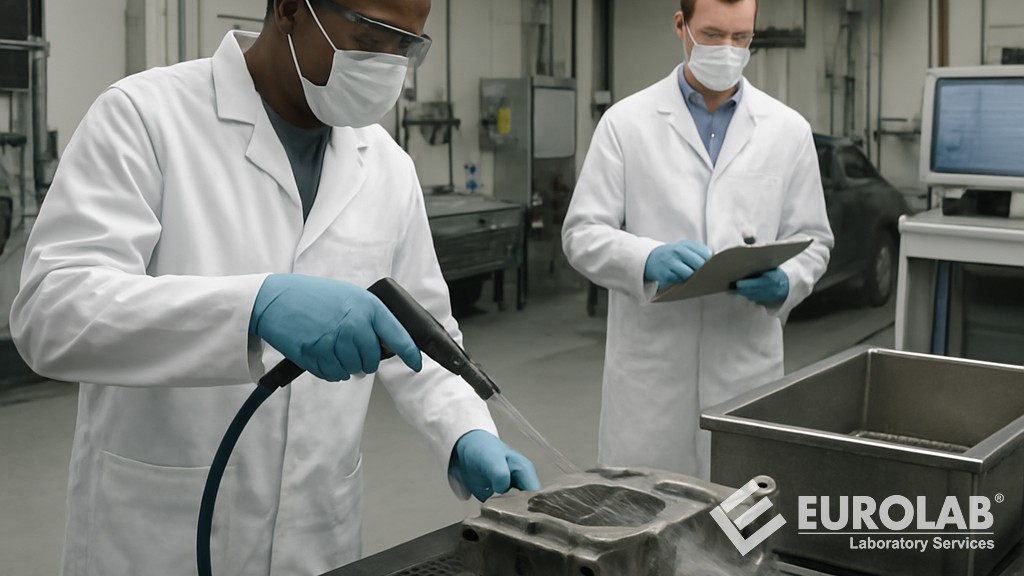
The “VW 96006 Cleaning of components and load-bearing equipment - Definitions and test procedure” standard, designed by the Volkswagen automotive company, was developed for this purpose.
This standard describes the degree of cleanliness of both finished components and modules, as well as their associated load-bearing components. It applies to all newly developed components and must be considered during development, procurement, purchased part quality planning, process control, and by all suppliers. It must also be stated in performance/component specifications, manufacturability certificates, and process control documentation. This standard does not cover components whose surfaces should not be cleaned to provide corrosion protection, such as BiW sheet metal parts. BiW refers to the body sheet metal formed when all components of a vehicle are welded together, excluding moving parts such as hoods and fenders, upholstery such as glass and seats, or chassis subassemblies. The classification of components according to their degree of cleanliness must be carried out by VW teams and documented in the relevant component's performance specification.
In the high-risk world of automotive manufacturing, where precision engineering meets rigorous quality controls, even the smallest contaminants can lead to disaster. A single speck of dust or debris on a critical component can cause failures, recalls, or safety issues. VW 96006, a key in-house standard developed to ensure the cleanliness of parts and load-bearing surfaces throughout the production chain, sets a benchmark for particulate control in assembly processes. This standard is not just a guideline, but a mandatory protocol for suppliers and manufacturers aiming to meet Volkswagen's demanding requirements.
As electric vehicles and advanced driver assistance systems (ADAS) push component complexity to new heights, the importance of such cleaning standards is steadily increasing.
The VW 96006 standard essentially defines four levels of cleanliness, each tailored to the sensitivity of the component or load-bearing material. These levels are assessed using a wipe test, a simple but rigorous method in which a lint-free cloth is wiped over a surface, followed by residue analysis under magnification or gravimetric measurement. These levels include:
The wipe test procedure is rigorously designed: a standard solvent (e.g., isopropanol) is used, even pressure is applied (2-5 N), and the residue is scored on a scale from 0 (clean) to 5 (very dirty). Particle size distribution is also categorized: anything above 200 µm is a red alert for SG1/SG2 particles. Non-metallic particles (fibers, oils) are examined separately from metallic particles, as they pose different risks.
Tests must be conducted in controlled cleanrooms with calibrated equipment. Results are documented with protocols including photographs, particle counts, and compliance scores. Non-compliance with specifications may result in rejected shipments and costly rework.
The VW 96006 standard is not negotiable for suppliers. Suppliers are inspected by Volkswagen during on-site visits.
The VW 96006 standard has influenced competing organizations, aligning with their own technical specifications. Suppliers have reduced warranty costs by reporting 20-30% fewer defects after compliance. Environmentally, this standard aligns with VW's sustainability goals by promoting solvent recycling and waste reduction.
In the age of electrification, where even a single particle of silicon carbide can short-circuit a battery pack, the importance of this standard is steadily increasing.
The VW 96006 standard is the invisible force that ensures every Volkswagen gets on the road without problems. For engineers and suppliers, this standard is proof of how ordinary quality control mechanisms drive automotive excellence.
For many years, our organization, with its competent and experienced staff, has been understanding the needs of its customers, providing the advanced testing services they require, and assisting in the establishment, implementation, and improvement of management systems. Within this framework, we also provide testing services to businesses in accordance with the "VW 96006 Cleaning of components and load-bearing equipment - Definitions and test procedure" standard.
To get an appointment, to get more detailed information or to request an evaluation, you can ask us to fill in our form and reach you.

