

The material defined in the “Ford WSS-M2D507-B4 and B5 Thermoplastic elastomer (TPS) styrene block copolymer, 70/80 Durometer A hardness, interior” standard, developed by Ford Motor Company (Ford), is a thermoplastic elastomer based on styrene block copolymer. These specifications were initially published for materials used in interior applications. Typical applications include mats (cup holders, waste bins) or thumbwheels. These specifications should only be used for applications with minimum compression set requirements.
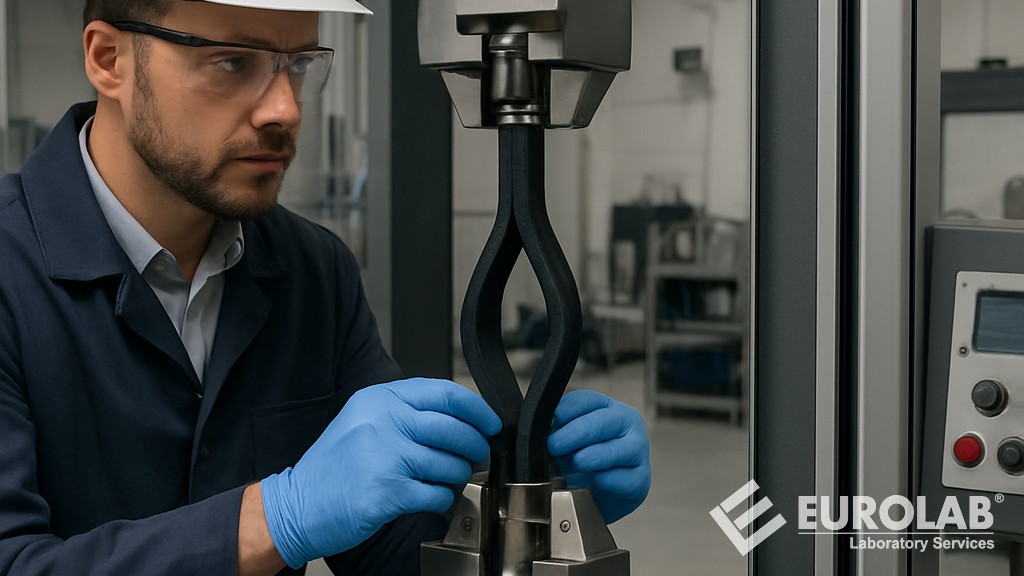
Ford Motor Company's World Standards (WSS) system defines stringent engineering specifications for materials used in vehicle manufacturing. Among these, the WSS-M2D507-B4 and WSS-M2D507-B5 standards are fundamental specifications for elastomeric materials, focusing on rubber-like compounds designed for durability, flexibility, and performance in automotive environments.
The Ford WSS-M2D507 standard series encompasses Ford's material standards for elastomers (synthetic rubber materials). Specifically:
All Ford WSS specifications, including these, should be used in conjunction with the WSS-M99P1111-A standard, which is the general standard for manufacturing materials implementing quality systems, restricted substance compliance (e.g., RoHS, REACH), and supplier approval processes.
Typical performance criteria for Ford WSS-M2D507-B4 and B5 elastomers are as follows:
These tests conform to ASTM standards referenced in Ford specifications (e.g., ASTM D412 for tensile properties, ASTM D2240 for hardness).
These materials are commonly used for:
By providing long-term reliability under challenging conditions, they contribute to Ford's emphasis on durability across a variety of trucks and different vehicle models.
The Ford WSS-M2D507-B4 revision is typically a baseline or prior revision that incorporates standard requirements for general-purpose elastomers. In contrast, the Ford WSS-M2D507-B5 revision is an update that typically includes improved features such as better heat resistance, lower emissions (for interior air quality), or improved recyclability. In some cases, B5 may allow for bio-based or low volatile organic compound (VOC) formulations to meet evolving environmental regulations. Suppliers must be listed on Ford's approved sourcing list to provide materials that meet these specifications.
Ford's WSS system ensures consistency across global supply chains. Materials that do not meet these standards may lead to warranty issues, recalls, or performance problems. For aftermarket or repair parts, it is recommended to use equivalents that meet or exceed Ford WSS-M2D507-B4 and B5 standards.
Durometer A (often written as Shore A or simply Durometer A) is a standard measure of the stiffness of soft, flexible materials such as rubber, elastomers, silicone, soft plastics, and thermoplastic elastomers (TPEs).
Materials generally need to be 70 plus/minus 5 Durometer A (65-75 A). This range represents the correct balance for:
A lower value indicates a softer, more flexible material, while a higher value indicates a harder, more rigid material (but still within the rubber/elastomer range). If a specification says “70 Shore A,” it clearly indicates how hard or soft the rubber part should be; there's no need to guess. Therefore, Durometer A is one of the most common requirements in automotive rubber specifications worldwide.
For many years, our organization, with its competent and experienced staff, has been understanding the needs of its customers, providing the advanced testing services they require, and assisting in the establishment, implementation, and improvement of management systems. Within this framework, we also provide testing services to businesses in accordance with the "Ford WSS-M2D507-B4 and B5 Thermoplastic elastomer (TPS) styrene block copolymer, 70/80 Durometer A hardness, interior" standard.
To get an appointment, to get more detailed information or to request an evaluation, you can ask us to fill in our form and reach you.

