

The standard “VW PV 3378 Adhesion test of rubber-metal and/or rubber-plastic composite components for evaluation of adhesive bonding according to materials - Determination of fracture strength, evaluation of fracture pattern and resistance under humid heat conditions”, developed by the Volkswagen automotive company, describes a procedure used to evaluate assemblies by comparing adhesion, the resistance of the adhesive system under humid heat conditions (hydrolysis resistance), and the aging behavior of the assembly in its new state.
For the purposes of this standard, the following terms and definitions apply:
The VW PV 3378 standard defines three test methods for determining the adhesion of rubber composite parts:
Examples include U, D, S, O connections, rubber bushings for balance bars, and swingarm connections (small bushing and large circular connection). In these parts, reinforcement is provided by a core, possibly an outer sleeve, and in some cases one or more intermediate sleeves.
These rubber/composite parts are reinforced with metal or plastic supports, typically with two or more different attachment points to the engine, housing, or transmission. Depending on the design, both elastomer support housings and rubber-coated stops/space limiters are used, and they differ in terms of application.
This method is used to examine rubber-metal or rubber-plastic composite components that cannot be identified using Method A or Method B. Method C should be selected if, due to the part's design, geometry, or assembly location, a universal testing machine cannot apply a load force to fracture.
Examples include parts with very thin rubber tracks, parts with very complex and sometimes asymmetrical geometries, parts with reinforcements placed very close to the metal core, and parts with relatively small dimensions (e.g., encoder rings, sealing caps, rubberized discs and washers, rubberized stops/space limiters, valve stem seals, and tuned mass dampers).
For all methods, at least 5 separate parts must be tested in each case. This requirement must also be met for older part conditions (after heat and humidity aging). For example, at least 5 parts are needed to inspect a part as received, and 5 additional parts are needed to inspect a part after heat and humidity aging.
In the high-risk world of automotive manufacturing, where every component must withstand extreme conditions, Volkswagen has long been a pioneer in setting rigorous quality criteria. The VW PV 3378 standard stands out as a specific protocol for evaluating the durability of materials under combined mechanical and environmental stresses. This standard is a critical tool for ensuring the longevity and safety of plastic and composite parts in vehicles. It reflects the company's commitment to innovation and reliability in an industry where demand for lightweight and durable materials is increasing. As electric vehicles and autonomous driving technologies reshape the automotive world, standards like VW PV 3378 are even more vital. These standards prevent failures that could jeopardize passenger safety or vehicle performance.
Instrument panel trims, bumper strips, and battery housing gaskets on various models must pass the VW PV 3378 standard test to ensure they do not crack under moisture-induced stress and do not lead to water ingress or structural weakness.
For engineers, suppliers and enthusiasts, the VW PV 3378 standard is a testament to proactive design in an era dominated by climate variability and materials innovation. As VW rapidly moves towards a zero-emission future, this standard remains indispensable, ensuring that every drive is safe.
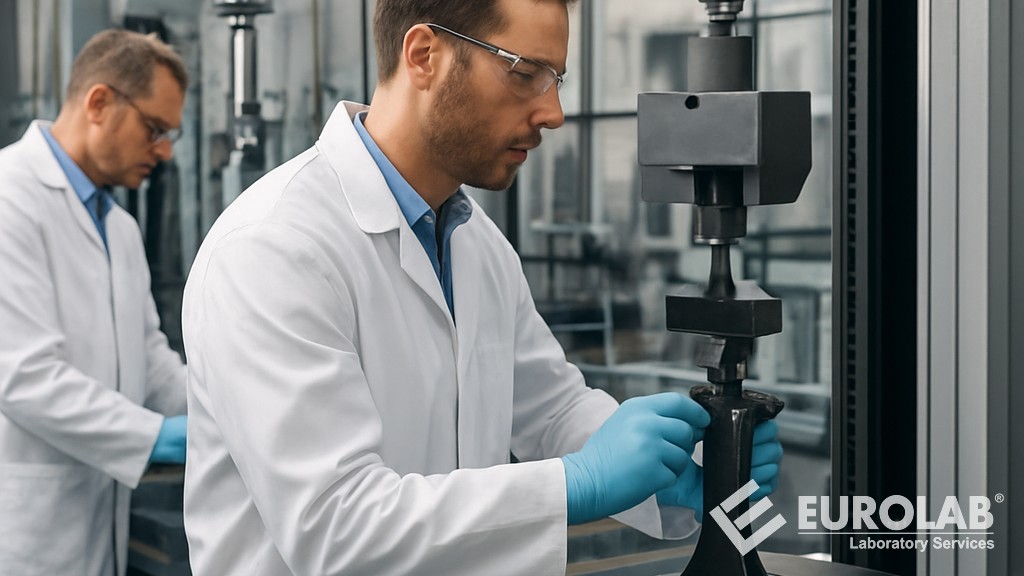
For many years, our organization, with its competent and experienced staff, has been understanding the needs of its customers, providing the advanced testing services they require, and assisting in the establishment, implementation, and improvement of management systems. Within this framework, we also provide testing services to businesses in accordance with the "VW PV 3378 Adhesion test of rubber-metal and/or rubber-plastic composite components for evaluation of adhesive bonding according to materials" standard.
To get an appointment, to get more detailed information or to request an evaluation, you can ask us to fill in our form and reach you.

